

A lot of people don’t really consider their window treatments till they’re standing in some half-furnished room, staring at plain glass, and it suddenly feels sort of undone. That’s normally when the frantic buying kicks in. Whatever will work, whatever arrives quickly, whatever is discounted. And it almost always looks exactly like that.
Here’s the thing — if you live in Washington DC, your windows aren’t generic. Your home probably isn’t either. Getting this choice right makes a bigger difference than most homeowners expect.
Curtains or Drapes? They’re Not the Same Product
This is where a lot of people get tripped up. The two terms get used as if they mean the same thing, but they don’t.
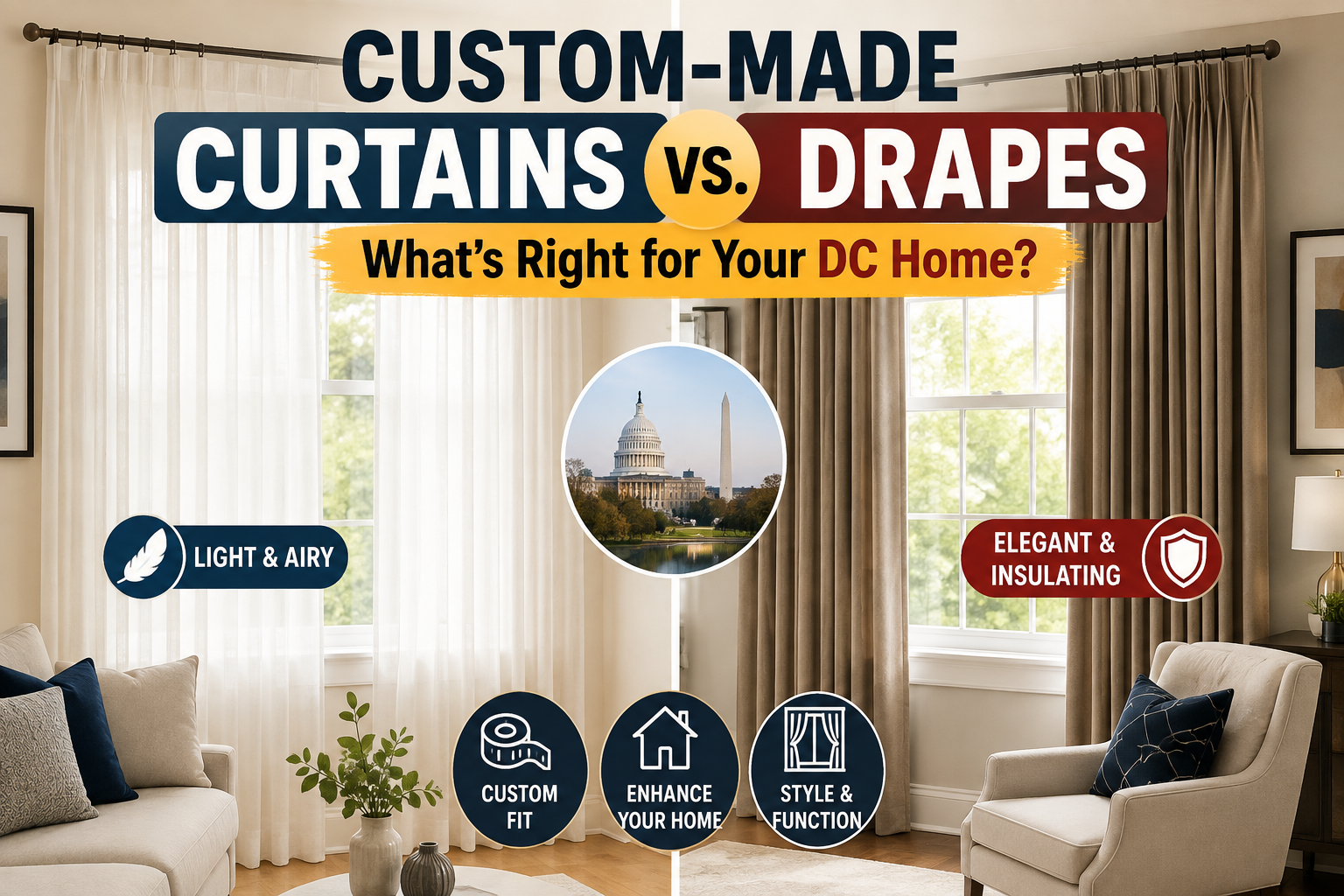
Curtains are lightweight. Cotton, linen, sheer fabric— that sort of thing. They let the light in, gently soften a window, and kind of give a room that casual, lived in vibe. Works really well in a kitchen or a sunroom where you’re not going for strict control of the daylight, more like texture and warmth, you know. Plus, they tend to be the more budget friendly starting point. The catch is that the ready made sizes usually don’t sit right, and if a curtain is even a little too short it starts to look inexpensive, no matter how good the material is.
Drapes are a different product. Heavier fabric, usually lined, floor-length. The lining matters — it’s what gives a drape that full, weighted hang you see in professionally designed rooms. It also blocks light, helps with insulation, and extends the life of the fabric. Custom drapes Washington DC homeowners order for their formal living rooms or primary bedrooms aren’t just decorative. They’re doing real functional work.
One way to keep it straight: curtains dress the window. Drapes dress the room.
DC Homes Don’t Come in Standard Sizes
Washington’s residential architecture is genuinely varied. Georgetown rowhouses tend to have tall narrow windows, with original millwork that s over a hundred years old or so, not really surprising. Capitol Hill Victorians usually show 10 or 11-foot ceilings plus bay windows that sit right out front, like facing the sidewalk directly. Meanwhile newer condos in Navy Yard or NoMa kind of shift the whole vibe, with floor-to-ceiling glass running across an entire wall, instead of those older cutouts.
A 96-inch pre-made panel that works in a suburban tract home looks wrong in most of these spaces. On a high ceiling, it floats above the floor. On a wide bay window, two panels don’t cover the span. The fabric looks thin, the whole thing looks like a placeholder.
Custom made curtains Washington DC specialists measure your actual windows, not approximate ones. They account for ceiling height, window width, architectural trim, and how light moves through the room. That’s what you’re paying for — fit that works in your specific home.
Privacy is also a bigger issue in DC than people think. Many rowhouses sit right at street level with living rooms facing the sidewalk. Sheer curtains look pretty but solve nothing. A lined drape, or a layered setup with both, handles that without making the room feel dark and closed off.
Matching the Treatment to the Room
Not every room needs the same solution.
Living rooms and dining rooms are where drapes earn their keep. A lined panel adds weight, formality, and visual height. If ceilings feel low, mount the rod as high as possible and let the panels run to the floor. It works. Curtains can do this too but rarely pull it off with the same conviction.
Bedrooms depend on what kind of sleeper you are. Need real darkness? Blackout-lined drapes. If light doesn’t bother you, a semi-lined curtain that diffuses rather than blocks works fine and feels less heavy.
Kitchens and informal spaces are where curtains belong. Easy to wash, they handle humidity well, and the casual look fits the room. Heavy drapes in a kitchen feel out of place.
Home offices sit somewhere in between. Glare off a screen is a genuine problem. A lightly lined curtain with good coverage handles it without darkening the whole room.
Why Custom Is Worth the Investment
Ready-made options exist because they’re convenient. But they’re designed for the broadest possible market, which means they’re not really designed for any specific home.
Custom made curtains Washington DC workrooms build around your measurements. Fabric weight, lining type, pleat style, panel width — all of it gets specified for your actual windows. A properly fullness-calculated panel, generally 2 to 2.5 times the window width, hangs with a richness that pre-made panels can’t match.
Custom drapes Washington DC professionals can go further: interlining for extra insulation in older rowhouses where drafts are real, blackout lining calibrated to your light conditions, hardware that works with existing trim. None of that comes off a store shelf.
Lead time is longer. Cost is higher upfront. But these are treatments you won’t replace every two years.
A Few Practical Notes Before You Decide
Weight determines how a panel hangs, not color. A dark, thin fabric still won’t drape the way a lined panel does. This catches people off guard when choosing fabric.
Mount the rod high and wide. Four to six inches above the frame, six to eight inches past either side. Makes the window look bigger. Works on any budget.
Layering solves a lot of problems. Sheer closest to the glass, lined drape on the outer rod. Daytime light and nighttime privacy, without choosing one or the other.
DC humidity is hard on fabric. Seasonal moisture variation shows up faster in fabrics that can’t handle it. A good workroom factors this in from the start.
Bamu Blinds Gets DC Homes
Bamu Blinds has been helping homeowners across DC, Maryland, and Virginia work through exactly this kind of decision for years. They start with your home, not a product line. Their team looks at the actual windows, how light moves through the space, the function of each room, and your design preferences before anything gets recommended. Capitol Hill rowhouse or a newer build in McLean — they’ve worked with both. The approach stays the same: figure out what the space actually needs, then build from there. From the first consultation through installation, the attention to detail is consistent. That’s what good custom work requires.
FAQs
- What’s the most practical difference between curtains and drapes for a DC home?
Curtains feel lighter and kind of informal. They fit kitchens, sunrooms, and those casual areas where you want soft , filtered light, and also that easy vibe. Drapes are heavier, often lined too, and they’re kind of made for spaces where light control, privacy, and a more finished look really matter. In street-facing rowhouses or any more formal rooms, drapes typically end up winning on both sides.
- Are custom window treatments worth the cost in Washington DC?
For most DC homes, yes — especially older ones where window dimensions don’t match any standard pre-made size. A custom treatment fits the actual window, lasts longer, and looks noticeably better. Higher upfront cost, but not one you’ll repeat every few years the way you might with budget ready-made panels.
- How long does it take to get custom curtains or drapes made and installed?
Typically four to eight weeks from order to installation, depending on the workroom and fabrics. If you’re working around a move or renovation, bring it up early. Bamu Blinds can give you a realistic timeline from the first conversation so there are no surprises later.
