

Start With Your Commute
A daily commute becomes easier when every essential item has a sensible place. The right work bag can keep your laptop, documents, charger, wallet, and personal items together without making you feel overloaded. Before choosing a style, think about how you travel each day and what you carry from morning until evening. A short car journey requires different features from a long train ride, cycling route, or crowded city walk.
Consider the distance between your home, workplace, café, and regular meeting locations. A lightweight tote may suit someone who drives, while a backpack can provide better balance for people who walk or use public transport. If your routine changes often, choose a flexible design that can move comfortably between different settings. The best option should support your schedule instead of forcing you to adjust your habits around it.
Choose the Right Size
Size matters because an oversized carryall can become heavy, while a small one may leave important items unprotected. Start by listing what you take to work, including your computer, notebook, water bottle, headphones, lunch, keys, and small personal accessories. Measure your laptop before shopping, as a device that barely fits can make the bag difficult to close and may damage the corners. A few extra centimetres of space can make daily packing much easier.
Avoid selecting a large design simply because it looks spacious. Extra room often encourages unnecessary items to collect at the bottom, creating weight and clutter. A medium-sized option with thoughtful compartments may be more useful than a large open interior. Look for enough capacity for your normal routine, along with a little flexibility for papers, a light jacket, or items purchased during the day.
Protect Your Technology
Modern professionals often carry expensive technology, so protection should be a major consideration. A padded laptop compartment helps reduce the impact of small bumps, while a separate sleeve can prevent scratches from chargers, pens, or keys. If you carry a tablet, external hard drive, camera, or phone, check whether the interior provides enough protection for each device. Soft lining is useful because it reduces contact with rough surfaces.
Water resistance is another valuable feature, especially for commuters who travel during unpredictable weather. A coated exterior or rain cover can protect electronics from sudden showers, although no material should be treated as completely waterproof unless the manufacturer confirms it. Strong zippers also help keep moisture and dust away from the contents. For additional safety, place important devices inside slim protective cases before storing them in the main compartment.
Prioritise Comfortable Carrying
A beautiful design loses its value if it causes shoulder, neck, or back discomfort. Examine the handles, shoulder strap, and weight distribution before making a decision. Wide handles are usually more comfortable than thin ones, especially when the bag contains a laptop and other heavy items. An adjustable strap lets you change the carrying position according to your clothing, body shape, and travel method.
Backpacks should sit close to the body without pulling backward, while shoulder bags should not slide constantly during movement. If you prefer carrying a bag by hand, make sure the handles provide enough clearance for your wrist and coat sleeve. A luggage sleeve can also be useful for people who combine office travel with train or airport journeys. Comfort is not an optional luxury; it directly affects energy levels throughout the day.
Look for Smart Organisation
Organisation transforms a simple container into a reliable daily companion. Multiple pockets can separate technology, stationery, personal items, and documents so that you do not need to empty everything while searching for one small object. A dedicated phone pocket, key clip, pen holder, and zipped section can save time during busy mornings. Interior dividers also help maintain the shape of the bag when it is only partly filled.
Think about the way you naturally pack rather than choosing compartments based only on appearance. If you regularly carry folders, select a section wide enough to keep papers flat and neat. If you use several cables, a small pouch may work better than many narrow pockets. Good organisation should make items easy to see and reach while preventing them from moving around during the commute.
Select Durable Materials
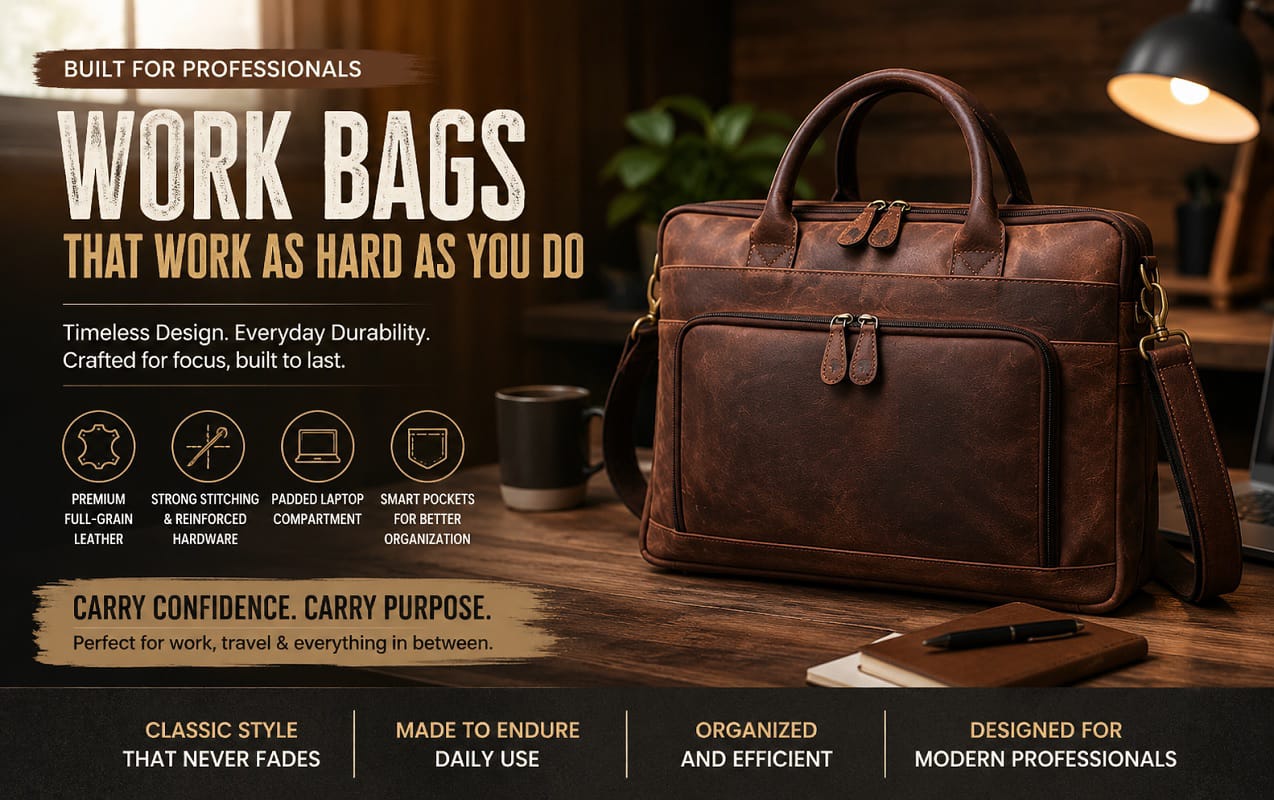
Material affects appearance, weight, durability, and maintenance. Full-grain leather can develop a distinctive character over time, while treated leather may offer a smoother finish and easier cleaning. Canvas and technical fabrics are often lighter and may suit active commuters who want a relaxed appearance. Synthetic materials can also provide practical resistance to moisture and scratches when they are carefully constructed.
Inspect the stitching, edges, lining, and hardware before buying. Reinforced seams are important around handles because these areas receive the most strain. Metal zippers should move smoothly without catching, and clasps should feel secure rather than loose. A durable design may cost more at the beginning, but it can offer better value when it remains useful through changing jobs, seasons, and daily routines.
Match the Style to Work
Your daily carry should fit naturally with your professional environment. A structured leather design can complement formal clothing, client meetings, and traditional offices, while a soft tote or clean backpack may suit creative studios and flexible workplaces. Neutral shades such as black, brown, navy, and tan are easy to combine with different outfits. A simple design can look polished without appearing overly formal.
Style also communicates how you approach details. Minimal branding often creates a refined appearance, while carefully chosen hardware can add personality without becoming distracting. Consider whether the bag works with business clothing, casual Friday outfits, and after-work plans. A versatile option gives you more value because it does not need to be replaced whenever your schedule moves from the office to dinner, travel, or a social event.
Think Beyond the Office
A useful carryall should work during more than one part of the day. Many professionals move between a workplace, coffee shop, coworking space, client appointment, gym, or evening class. A flexible interior makes it easier to carry these extra essentials without needing a second bag. Look for a design that can hold a notebook, reusable bottle, compact umbrella, and small personal pouch without looking overfilled.
Adaptability is especially helpful for freelancers, entrepreneurs, and people who work from different locations. A clean silhouette can look appropriate in a meeting while still providing enough room for everyday necessities. If you travel occasionally, features such as a secure zip, trolley sleeve, and easy-access pocket can make the same bag useful on short business trips. Choose a style that supports your whole day rather than just the hours spent at your desk.
Build a Practical Packing Routine
Even a well-designed work bag becomes inconvenient when it is packed without a system. Keep frequently used items in accessible pockets and place heavier objects close to the centre of the bag. Store cables in one pouch, personal items in another, and important documents in a protected sleeve. This simple routine reduces morning stress and prevents small objects from disappearing into the bottom.
Review the contents at the end of each week. Remove receipts, empty bottles, old packaging, and items that no longer belong in your daily kit. Cleaning the interior regularly also protects the lining from dust and accidental spills. A lighter bag is easier to carry, faster to organise, and less likely to become damaged by unnecessary pressure.
Care for the Material
Regular care can preserve the appearance and function of your office companion. Wipe away surface dust with a soft cloth and deal with small marks before they become permanent. Leather may benefit from suitable conditioning, while fabric designs should be cleaned according to their care instructions. Never use harsh household chemicals without checking whether they could affect the colour, finish, or protective coating.
Storage also makes a difference when the bag is not being used. Keep it in a cool, dry place away from direct sunlight, and avoid hanging a heavy design from a thin hook for long periods. If the shape begins to collapse, fill it lightly with clean paper or a soft cloth. Small maintenance habits help preserve the structure and make the bag look presentable for longer.
Make a Thoughtful Long-Term Choice
Choosing the ideal office companion is less about following a trend and more about understanding your daily needs. The best work bag balances capacity, comfort, protection, organisation, and personal style in a way that feels natural. Before buying, imagine using it on a busy Monday, during a rainy commute, and at an important meeting. This practical test can reveal whether the design is genuinely suitable or simply attractive in a product photograph.
Think about how your work may change over the next few years. You might upgrade your laptop, begin travelling more often, or move into a role that requires additional documents and equipment. A timeless design with dependable construction can adapt to these changes better than an item chosen only for its current appearance. When every feature supports your routine, your daily commute feels calmer, more organised, and far more professional.