

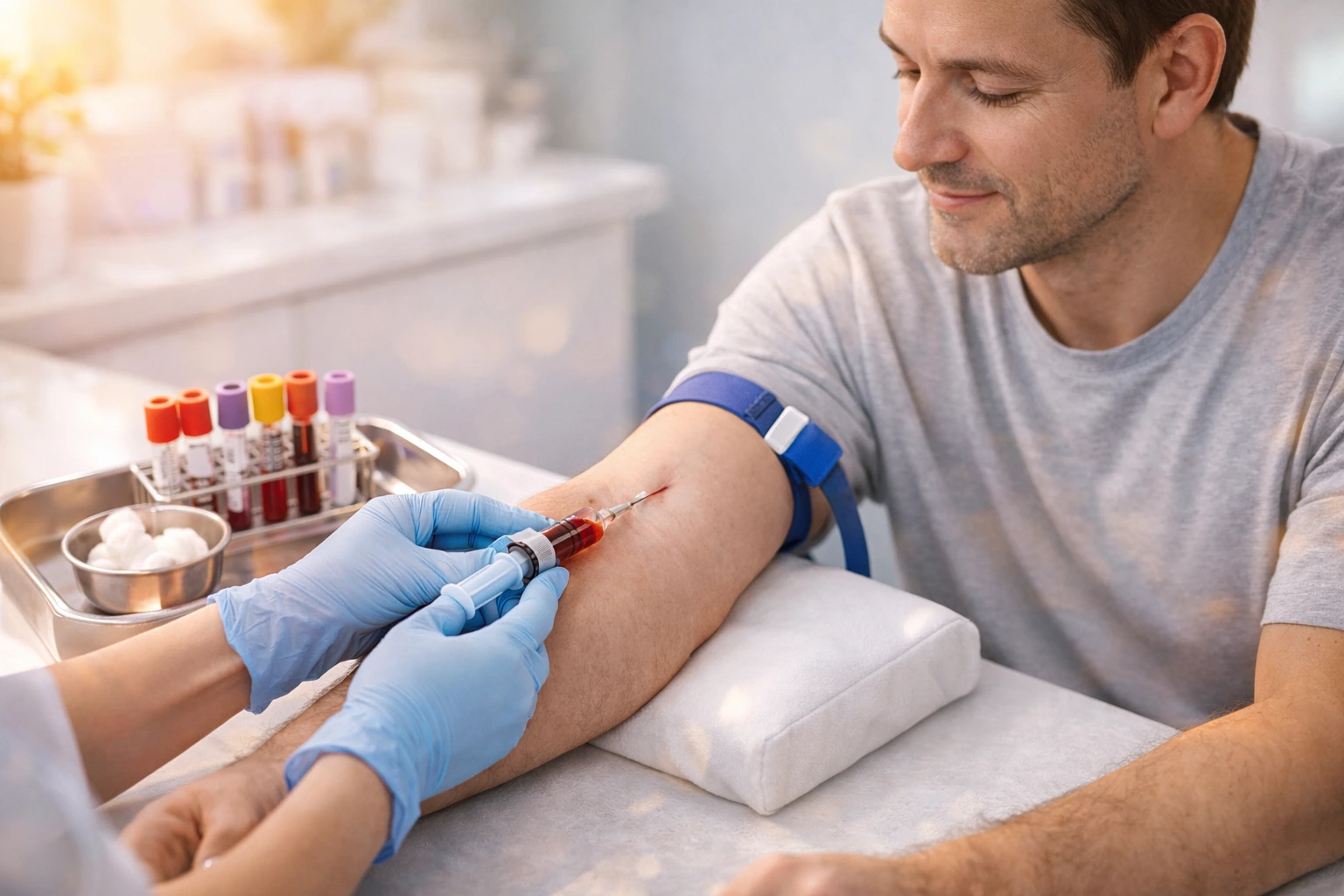
A blood test is one of the most important tests in healthcare, as it can help with routine health checks, investigating symptoms such as fever, identifying certain deficiencies, monitoring an existing health condition, and evaluating how the body is responding to treatment.
Although blood collection is usually a straightforward procedure, understanding why blood tests are performed, how to prepare, and what happens after the sample is collected can help patients feel more informed about their healthcare.
What Is The Process Blood Test?
A blood test involves collecting a small sample of blood for laboratory analysis. In most cases, the sample is collected from a vein in the arm by a trained healthcare professional.
Once the blood test is collected, the sample is labelled and transported to a lab, where it is analysed according to the type of test requested.
Different blood tests measure different substances or characteristics in the blood. A doctor chooses the appropriate investigation based on factors such as symptoms, medical history, age, risk factors, and the purpose of testing.
Common Blood Tests and What They May Assess
| Blood test | What it may assess |
| Complete blood count (CBC) | Red blood cells, white blood cells, haemoglobin and platelets |
| Blood glucose test | Blood sugar levels |
| Lipid profile | Cholesterol and triglyceride levels |
| Liver function tests | Markers associated with liver function |
| Kidney function tests | Markers associated with kidney function |
| Thyroid function tests | Thyroid-related hormone levels |
| Iron studies | Iron levels and related markers |
| Vitamin tests | Levels of selected vitamins and nutrients |
The exact purpose and interpretation of any test should be discussed with a qualified healthcare professional.
Why Do Doctors Recommend Blood Tests?
Blood testing will provide information that may not be apparent from symptoms alone.
A doctor may recommend testing as part of a routine health check or to investigate concerns such as persistent tiredness, unexplained changes in weight, dizziness, or other symptoms. Blood tests can also help monitor certain health conditions and evaluate the effects of treatment.
In many cases, lab testing is only one component of the diagnostic process. A healthcare professional may consider blood test results together with symptoms, medical history, physical examination findings, imaging, or other investigations.
This is why a lab report should not generally be assumed without considering the broader clinical picture.
What Happens During a Blood Test?
A typical blood collection takes only a short amount of time.
The healthcare professional first confirms the patient’s identity and may ask about any preparation instructions. The selected area, commonly the inside of the arm, is cleaned before a needle is inserted into a vein.
The required amount of blood is collected into tubes. After the needle is removed, the healthcare professional will apply pressure to the area and cover it with a small dressing.
Some people experience a brief pinching sensation during collection. Mild tenderness or bruising can sometimes occur afterward.
The sample is then labelled and sent for analysis.
Does Every Blood Test Require Fasting?
No. Not necessarily every blood test requires fasting.
Some tests may require the patient to avoid food for a specified period before sample collection, while others can be performed without fasting.
Preparation requirements depend on the specific investigation. Patients should therefore follow the instructions provided by their doctor or laboratory instead of assuming that fasting is necessary.
If fasting has been recommended, patients should clarify whether they can drink water and whether they should take their regular medication before the test.
Do not stop or change prescribed medication unless a healthcare professional specifically instructs you to do so.
Can a Blood Test Be Done at Home?
For certain investigations, professional home sample collection can be arranged instead of visiting a diagnostic centre.
During a home collection appointment, a qualified healthcare professional visits the patient’s residence, collects the required specimen, and prepares it for transportation to the laboratory.
This option may be particularly convenient for people who have difficulty travelling, have busy schedules, require regular monitoring, or prefer to have sample collection performed in a familiar environment.
For residents of Dubai looking for professional home sample collection, blood test services can provide a convenient alternative to travelling to a laboratory for eligible investigations.
It is important to note that home collection does not necessarily mean that the laboratory analysis itself happens at home. In many cases, the sample is collected at the patient’s residence and subsequently processed at a laboratory.
What Are the Benefits of Home Blood Sample Collection?
Home sample collection can make certain diagnostic services more convenient.
Convenience
Patients do not necessarily need to spend time travelling to a laboratory or waiting in a diagnostic centre.
Accessibility
Home collection can be useful for older adults, people with limited mobility, or individuals who find travelling difficult.
Time efficiency
Scheduling collection at home can help patients fit routine testing around work, family, and other responsibilities.
Comfort and privacy
Some people may feel more comfortable having a healthcare professional collect a sample in their own home rather than in a busy clinical environment.
However, the suitability of home collection depends on the specific test and the patient’s circumstances.
How Should You Prepare for a Blood Test?
Preparation varies depending on the investigation.
Before your appointment, check whether you need to:
- Fast for a specified period
- Drink water before sample collection
- Avoid strenuous physical activity
- Follow specific dietary instructions
- Take medication at a particular time
- Provide information about medications or supplements
If you are unsure about any preparation requirement, contact your doctor or testing provider before the appointment.
Following the instructions correctly can help ensure that the sample is collected under the conditions required for the particular investigation.
How Long Does It Take to Get Blood Test Results?
The turnaround time depends on the type of investigation and the laboratory processing the sample.
Some routine investigations may be completed relatively quickly, while specialised tests can take longer. Your healthcare provider or laboratory should be able to provide an estimated timeframe.
If several tests are ordered at the same time, results may also become available at different times.
How Should Blood Test Results Be Interpreted?
Laboratory reports commonly include reference ranges that indicate values typically expected within a particular population.
However, a result outside the reference range does not automatically mean that someone has a disease. Likewise, a result within the reference range does not necessarily rule out every possible health problem.
Factors such as age, medical history, medications, symptoms, and other test results can influence how laboratory findings are interpreted.
Patients should therefore avoid self-diagnosing based solely on a laboratory report. If a result is abnormal, unexpected, or unclear, it is best to discuss it with a qualified healthcare professional.
When Should You Speak to a Doctor?
A blood test can provide useful information, but it does not replace a medical consultation.
You should speak with a healthcare professional if you have persistent or unexplained symptoms, have been advised to undergo laboratory testing, or receive results that you do not understand.
If symptoms are severe, sudden, or rapidly worsening, seek appropriate medical attention rather than waiting for routine laboratory testing.
Frequently Asked Questions
1. What is a blood test used for?
A blood test can help healthcare professionals assess different aspects of health, investigate symptoms, monitor certain medical conditions, and evaluate the effects of treatment. The specific information obtained depends on the type of test performed.
2. How long does a blood test take?
The actual blood collection usually takes only a few minutes. However, the time required to receive results depends on the type of investigation and the laboratory processing the sample.
3. Do you always need to fast before a blood test?
No. Fasting is required for some investigations but not for all blood tests. Patients should follow the specific instructions provided by their healthcare professional or laboratory.
4. Can blood samples be collected at home?
Yes, certain laboratory investigations can be performed through professional home sample collection services. A trained healthcare professional collects the sample at the patient’s residence before it is transported to a laboratory for analysis.
5. Can I drink water before a blood test?
This depends on the specific test and the preparation instructions provided. If fasting is required, patients should ask their healthcare provider whether plain water is permitted.
6. Should I interpret my blood test results myself?
It is better to discuss laboratory results with a qualified healthcare professional. Results need to be considered alongside symptoms, medical history, medications, and other relevant clinical information.
Final Thoughts
Blood testing is an important part of modern healthcare and can provide valuable information about different aspects of the body’s health.
Understanding the purpose of the investigation, following preparation instructions, and discussing results with a healthcare professional can help patients approach testing with greater confidence.
For people who prefer a more convenient approach to sample collection, professional home services may make eligible laboratory investigations easier to access. Regardless of where a sample is collected, appropriate testing procedures, laboratory analysis, and professional interpretation remain important parts of quality healthcare.
