

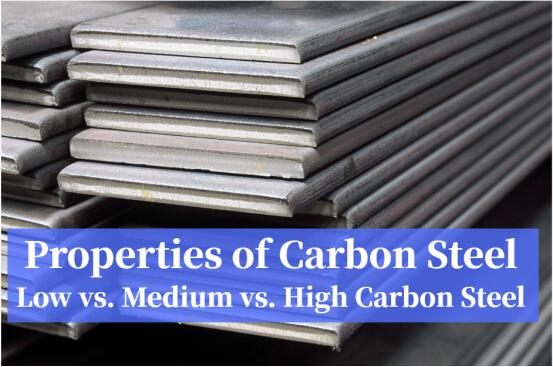
Not every component needs to be lightweight or exotic. Sometimes a part just needs to be strong, dependable, and reasonably priced, and this is exactly where carbon steel continues to earn its place in manufacturing decades after flashier materials have come and gone. It is not the material that gets the most attention in design conversations, but it is often the one quietly holding a structure together.
The Practical Case for Carbon Steel
Carbon steel’s appeal comes down to a fairly straightforward combination of qualities: strong mechanical performance, real durability under repeated stress, and a cost profile that makes sense for large scale production. For components that need to bear load, resist wear, and hold their shape over years of use, carbon steel routinely outperforms lighter or more expensive alternatives on a pure cost to strength basis. This is exactly why it remains the default choice for structural brackets, mounting plates, washers, and similar parts across so many industries.
A Real Example of the Material at Work
The SPCC galvanized oiler valve plate is a useful illustration of how this plays out in an actual part. Made from cold rolled steel and finished with a galvanized surface treatment, this kind of component is built for stable strength and dimensional accuracy in industrial and mechanical applications. The galvanizing step matters just as much as the base material choice, since it adds a layer of corrosion protection that extends the working life of the part considerably compared to leaving the raw steel surface unprotected.
Carbon steel stamping work built around materials like SPCC cold rolled steel typically supports a thickness range from around 0.02 millimeters up to 3.0 millimeters, which covers everything from thinner precision components to heavier structural parts within the same manufacturing capability.
Where Carbon Steel Shows Up Across Industries
The automotive industry leans heavily on carbon steel for chassis components, mounting parts, and structural supports, largely because vehicle structures need to hold up under constant mechanical stress and vibration over years of use without failing. Industrial equipment manufacturers use carbon steel for machine components, brackets, and mechanical structures that need to withstand repeated stress during long term operation, often in environments where downtime for a failed part is genuinely costly. General manufacturing relies on carbon steel washers, plates, and customized components across an enormous range of products, precisely because the material handles such a wide variety of structural and fastening roles reliably.
Customization Still Matters Even for a Common Material
It would be easy to assume that a material as common as carbon steel does not require much customization, but that is not really accurate. Projects still vary significantly in dimensions, structural design, and surface treatment requirements. Some parts need galvanizing for corrosion protection, others need different finishing depending on where and how they will be used. Production volume matters too, since a manufacturer needs to be able to support everything from an initial prototype run through small batch production and into full mass manufacturing without a major shift in quality or lead time between those stages.
What to Actually Ask a Supplier
For carbon steel components specifically, it is worth asking a supplier what grade of steel they are proposing and whether that grade fits your actual strength and durability requirements, rather than accepting a generic answer. It also helps to ask what surface treatment options are available, since an unprotected carbon steel part can corrode far faster than a galvanized or otherwise treated one in the same environment. Finally, ask how dimensional consistency is verified across a production batch, since structural parts in particular need to fit correctly every single time, not just on the first sample that gets approved.
A Material That Has Earned Its Reputation
Carbon steel is not the material anyone brings up when they want to sound impressive, but it has earned its widespread use through decades of proven performance in exactly the kind of structural and mechanical roles that keep machinery, vehicles, and equipment running reliably. For any project that genuinely needs strength, durability, and a sensible cost per part, it remains one of the most dependable choices a manufacturer can recommend.
