

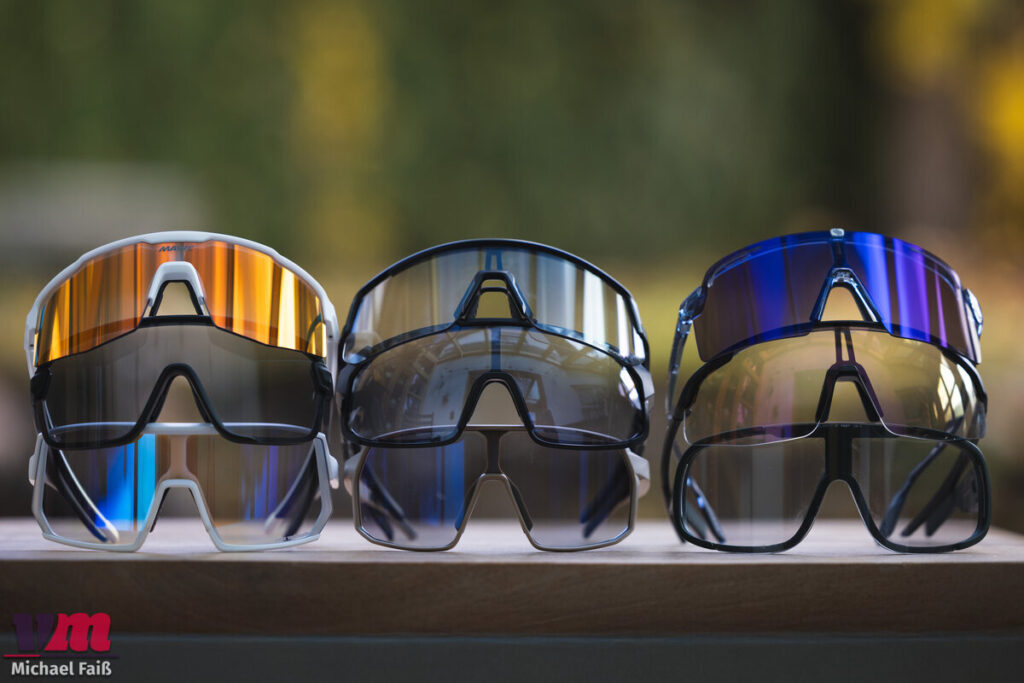
Not all cycling lenses solve the same problem, and understanding what each type of lens technology is actually built for makes it much easier to have an informed conversation with a supplier rather than picking based on marketing terms alone. Whether you are a rider choosing your own eyewear or a brand deciding what to stock, it helps to know what each option is genuinely good at.
Polarized Lenses and Glare
Polarized lenses are designed specifically to cut down glare from reflective surfaces, which matters a great deal on the road. Wet pavement, car windshields, and even bright open sky can all create glare that makes it harder to judge distance and read the road surface accurately. Polarized lenses filter out that reflected light selectively, which improves depth perception and reduces the eye strain that builds up over a long ride squinting against glare.
This makes polarized lenses particularly well suited to road cycling, where sunlight reflecting off asphalt and nearby vehicles is a near constant factor. The tradeoff is that polarization is a fixed property of the lens itself, so a rider heading out at dusk or into a shaded trail does not get the same benefit that they would in bright, glary conditions.
Photochromic Lenses for Changing Light
Photochromic lenses take a different approach, adjusting their tint automatically as light conditions change rather than staying fixed at one level of darkness. This matters for anyone riding through mixed conditions in a single outing, moving between direct sun, shaded tree cover, and possibly indoor or tunnel sections. Rather than switching glasses mid-ride or squinting through lenses that are too dark for a shaded section, a photochromic lens adjusts on its own, keeping visibility consistent without the rider having to think about it.
This makes photochromic lenses a strong choice for anyone doing longer rides where lighting conditions genuinely shift throughout the route, such as morning rides that start in low light and move into full sun, or routes with a mix of open road and forested trail.
Interchangeable Lenses for Maximum Flexibility
Interchangeable lens systems solve a different problem entirely: rather than relying on one lens to handle every condition, the frame is built to accept multiple lens options that a rider can swap depending on the day’s conditions. This appeals particularly to riders who train and compete across a wide range of environments and would rather carry a few lens options than compromise with a single all purpose tint.
A cycling sunglasses supplier offering all three lens types, standard polarized options, photochromic models, and interchangeable lens systems, gives a buyer or brand the flexibility to match the product to its actual intended use case rather than defaulting to whichever option happens to be available.
Why This Matters for Sourcing Decisions
For a brand or retailer deciding what to stock, understanding these distinctions matters because different rider segments genuinely want different things. A commuter riding a consistent route at similar times of day may be perfectly served by a standard polarized lens. A long distance or touring cyclist dealing with changing light throughout a route benefits more from photochromic technology. A competitive or highly variable-condition rider may prefer the control that interchangeable lenses provide. Stocking a narrow range based on a single assumption about what “cyclists” want tends to leave gaps that a more informed product lineup would have covered.
A Quick Way to Judge Lens Quality Regardless of Type
Whichever lens technology is chosen, a few fundamentals still apply across the board. Full UV400 protection should be non-negotiable regardless of tint or technology, since UV exposure risk does not go away just because a lens is clear, polarized, or photochromic. Durable, scratch resistant lens material also matters, since a lens that degrades quickly under regular outdoor use stops doing its job long before a rider expects to replace it.
Understanding what each lens type is actually built to solve, rather than treating them as interchangeable marketing terms, makes it much easier to choose eyewear that genuinely fits how and where the riding actually happens.
