

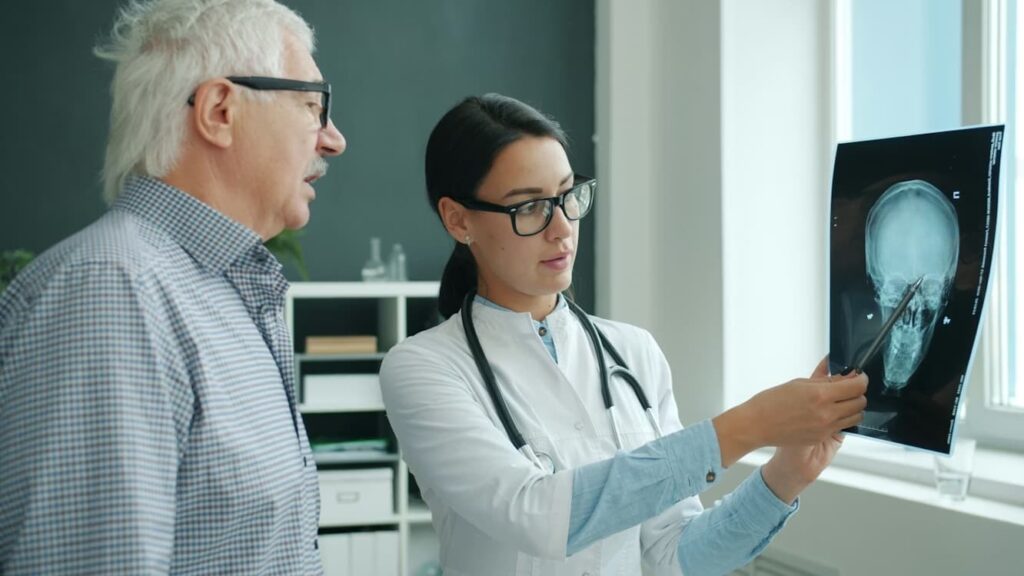
Researchers at Effat University are contributing to two of the most promising developments in AI-assisted cancer diagnosis — a comprehensive review of skin cancer detection techniques and a novel method for analysing breast cancer imaging.
Ask an oncologist what the biggest obstacle to reducing cancer mortality is and the answer is rarely a lack of treatment options. It is a lack of access to the people and systems that get patients to treatment in time. Skin cancer can be survived by up to 95% of people who receive early treatment. That number tells you everything about what is at stake when detection is delayed — and detection is delayed constantly, in healthcare systems all over the world, because the specialists needed to make accurate diagnoses are stretched thin.
The problem is structural. Identifying whether a skin tumour is benign or malignant requires trained expertise. That expertise is concentrated in urban centres, in well-resourced hospitals, in countries with the healthcare infrastructure to produce and retain dermatologists at scale. In regions with high patient demand, limited facilities, or inadequate specialist coverage, the bottleneck is not treatment — it is the diagnostic step that has to come first.
Machine learning addresses this constraint in a way that little else currently can. A model trained on a large library of tumour images learns to classify new images accurately, without requiring a specialist to be available, nearby, or unoccupied. Researchers at Effat University in Jeddah are contributing to this effort through two distinct but complementary lines of work — one that maps which AI techniques are performing best in skin cancer diagnosis, and one that introduces a new approach to breast cancer detection using deep learning.
Which AI Technique Works Best for Skin Cancer?
A paper co-authored by Effat University’s Saeed Mian Qaisar takes on a question that matters enormously for anyone building or deploying diagnostic AI: among the wide range of machine learning and deep learning techniques available, which ones actually perform best for skin cancer classification?
The review compares 17 techniques in total, covering both established approaches and more recent developments. Support Vector Machines, which have been in use since the 1990s and carry a strong track record for accuracy, are included alongside more flexible methods like K-means Clustering and K-nearest Neighbours — techniques that date back to the 1960s but continue to be applied in contemporary diagnostic systems.
The deep learning models assessed include Long Short-Term Memory networks and Deep Neural Networks, but it is Convolutional Neural Networks that emerge as the clear standout. Designed specifically for image analysis, CNNs have demonstrated accuracy above 90% in predicting different types of skin cancer — the highest performance level of any technique currently available for this application. For a field where the margin between a correct and incorrect classification can determine a patient’s survival, that level of accuracy is not a minor distinction.
A Different Way of Reading Breast Cancer Scans
The second contribution from Effat University moves from surveying existing techniques to proposing a new one. A paper co-authored by researcher Abdulhamit Subasi introduces an approach called the grid-based deep feature generator, designed to improve how AI analyses ultrasound images for breast cancer diagnosis.
The method works by breaking down an ultrasound image into a structured grid of rows and columns, then applying pre-trained CNN models to each individual section. Rather than treating the image as a single unit to be processed all at once, the grid approach analyses each part of the image separately before combining the results — a way of ensuring that diagnostic features distributed across different parts of the image are captured with greater precision.
Ultrasound is already one of the more accessible imaging tools in clinical practice, which makes it a natural candidate for AI-assisted analysis in settings where specialist oversight is limited. A technique that extracts more diagnostic value from ultrasound images without requiring a radiologist to interpret them could make a meaningful difference in exactly the contexts where early breast cancer detection is hardest to deliver — developing countries and regions with significant gaps in specialist healthcare coverage.
The Problems the Research Acknowledges
Both papers sit within a research field that is making genuine progress while remaining honest about what is still unresolved. The most significant acknowledged limitation is the gap in clinical data. AI diagnostic models for skin cancer have predominantly been trained on datasets that do not adequately represent all skin types. The result is a built-in risk of bias — models that perform well for some patient populations and less reliably for others. Addressing this requires deliberate effort to build more representative training datasets, and it is a problem the field recognises but has not yet solved.
The question of clinical adoption is equally important. Even the most accurate AI diagnostic tool delivers no benefit if it is not used. For that to change, dermatologists and other clinicians need to engage with these tools as extensions of their own capability — instruments that expand what they can do and how many patients they can serve, rather than systems that compete with or undermine their professional judgment. The researchers are clear on this: the goal is not to replace specialist expertise but to extend its reach into the places and situations where it currently cannot go.
