

Introduction: Designing a Productive and Organized Study Room
If you’d have noticed, study spaces are slowly becoming a little storage room! A notebook here, three textbooks there, a pen stand that somehow disappears right when we need it, and sometimes even yesterday’s chai cup is kept quietly on the corner of the table. We have all seen this happen at home, especially during exam season or when work and study both start happening in the same room.
That is exactly why the layout of a study room matters much more than we usually think. When things are placed thoughtfully, when books are easy to reach, when the table does not feel jam-packed with stuff, studying suddenly feels a little easier. Not magically easier, of course, but definitely more comfortable.
The two pieces of furniture that really decide how the space works are the book shelf and the study table and chair. When these two are placed properly, the entire room feels more organized. Books stay where they belong, the table gets breathing space, and we do not spend half our time searching for things.
So today let us talk about some simple layout ideas that combine these two pieces efficiently. Nothing complicated, nothing technical. Just practical ideas that actually work in real homes.
Planning the Study Layout for Comfort and Accessibility
Before bringing furniture into the room or rearranging what we already have, it helps to pause for a second and think about movement. Because a study space is not just about sitting in one place. We pull books, open drawers, move the chair, walk around the room.
And when there is no space for this, the room starts feeling uncomfortable very quickly.
One common mistake many people make is pushing everything tightly together. The table goes against one wall, the shelf gets squeezed into a corner, and suddenly the chair barely has space to move. The room starts feeling cramped even if the furniture itself is not very big.
Instead, it helps to think in simple terms.
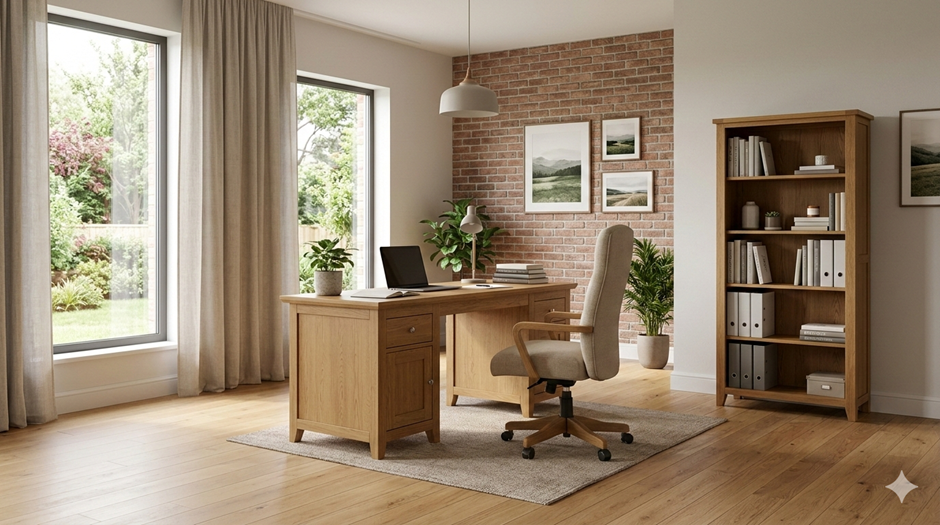
Leave enough space for the chair to slide out comfortably. Keep the path to the shelf clear so that pulling out books does not feel like a small workout. When the layout allows smooth movement, studying feels less distracting.
Think about those evenings when someone is revising notes, someone else comes looking for a book, and the chair needs to move without hitting anything. That little bit of breathing space makes a big difference in daily use.
Integrating the Book Shelf with the Study Table Design
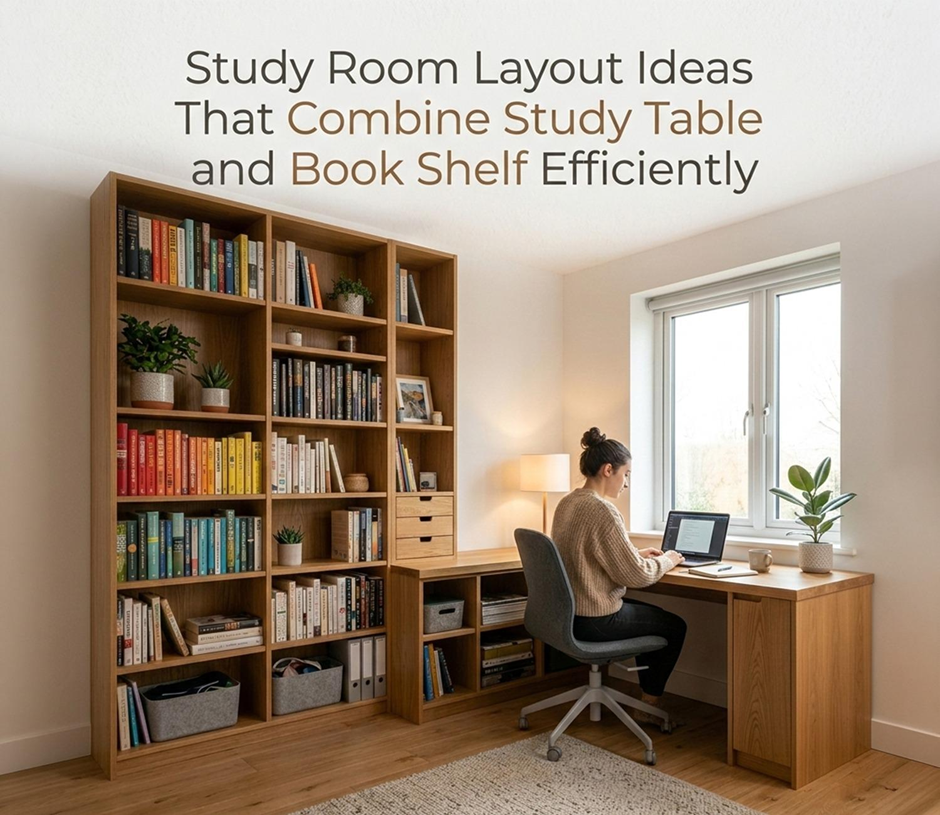
Now comes the most useful layout idea. Instead of treating the shelf and the table like two separate pieces sitting far away from each other, it works much better when they function together.
One simple way is placing the book shelf right beside the table. This makes grabbing books extremely easy. You sit down, stretch your arm slightly, and the book is already there. No getting up again and again.
Another arrangement that works well is placing a compact shelf above the table. This keeps the tabletop free while still keeping all the important books nearby. Notebooks, reference books, stationery boxes, all of them can stay organized without crowding the table.
In many homes today, people also like combining the two completely. A table with built-in shelving on one side keeps everything in one place. It saves floor space and also keeps the room looking neat.
If you look at some study furniture collections from Wooden Street, you will notice how cleverly shelves are integrated with desks. The idea is simple. Keep the workspace clear while still keeping storage close. And honestly, once you get used to this kind of setup, going back to a scattered layout feels inconvenient.
Maximizing Vertical Space for Better Storage
You know what helps the most in small study rooms? Using the walls properly.
Floor space in most homes is limited. Especially when the study area is inside a bedroom or a shared room. But walls often remain empty or underused. Vertical book shelf designs solve this problem very nicely.
Tall shelves that go upward instead of outward can hold-up a large number of books without occupying too much floor space at the same time. And the best part?? the study table can also be placed across comfortably right below or beside these shelves.
For example, the lower-area section of the shelf can store-up everyday textbooks and notebooks. The upper shelves can hold-up reference books, extra files, or even a few decorative items like small plants or photo frames.
This arrangement also keeps the study table from getting cluttered.
Because let us be honest. When there is no proper place to keep books, they slowly start forming little towers on the table. One book becomes three, three become six, and suddenly the table disappears under a pile. Vertical shelves quietly solve that problem. They organize things without taking over the room.
Enhancing the Study Space with Lighting and Organization
A well placed table with a nearby shelf is great, but if the lighting is poor, then your entire setup is really gonna feel uncomfortable. Eyes get tired faster, and concentration starts slipping.
The best option is placing the study table near natural light if possible. A window nearby makes the space feel open and pleasant during the day.
Organization also plays a quiet but important role here. Small things like pen holders, file organizers, and shelf dividers help maintain order. When every item has its place, the table remains clean and the shelf stays manageable.
Many study setups available at Wooden Street follow this simple idea. Combine-up proper storage with comfortable seating and good lighting so that the entire study area can actually support your focus instead of creating distractions all way around.
Because in the end, a study room should make work feel easier, not heavier.
Conclusion: Creating an Efficient and Well Structured Study Area
A well designed study space does not always require a big room or expensive furniture. What really matters is how thoughtfully things are arranged.
When the book shelf and the study table and chair are placed rightly together along, the room starts feeling more organized. This way the books stay within reach, the table remains clear for actual studying, and movement around the space becomes really very easier.
So using vertical shelves, planning enough walking space, and keeping lighting in mind are those tiny small decisions, which can really change how the entire room functions.
And the best part is that these ideas work in almost any type and size of home. Whether the study corner is inside a bedroom, a separate study room, or even a quiet corner of the living area.
