

Introduction
Common issues with mobile phone batteries—such as rapid power drain, slow charging, or sudden fluctuations in charge levels—are often not indicative of complete failure; rather, they may stem from anomalies in fuel gauge calibration, cell aging, or system management conflicts. The performance of lithium-ion batteries gradually degrades when subjected to prolonged exposure to high temperatures, deep discharge, or irregular charging patterns. By utilizing a battery tester, current meter leads, and anti-static tools, one can accurately assess the battery’s condition and perform necessary maintenance or optimization, thereby avoiding unnecessary replacement costs and enhancing device stability.
Understanding Phone Battery Health and Common Errors
Phone battery health in turn refers to the battery’s ability to maintain and deliver rates relative to its specific capacity. When a phone reports an unexpected drop in percentage or an unexpected shutdown, it usually indicates calibration errors or depleted lithium cells These problems are largely linked to lithium battery life limitations, with capacity obviously decreasing over the years as the chemicals age.
Common errors include voltage instability, overheating during charging, and erroneous percentage readings. In many repairable vehicles, technicians also observe inconsistent power delivery due to weak internal cells or broken battery management systems Understanding these signs is important before undertaking any repair or calibration process, as even incorrect handling can make the problem worse instead of worse
Necessary equipment and safety installation for battery calibration and testing
Before starting any repair or diagnostic work, it is important to practice thoroughly to ensure every safety and accuracy. Expert setup typically consists of a battery tester to measure voltage and potential, an energy bank looking at cable for controlled discharge testing, and an insulation mat to prevent static damage to sensitive components.
In addition to equipment, protective measures are equally important. Technicians should consistently paint on an easily accessible dry surface and avoid metal contact with exposed battery terminals. Using ESD-safe tweezers and plastic pudgers can save you short circuits. Gentle heating between 80°C and one hundred°C using a hot air source is recommended to soften the adhesive without damaging internal components when the equipment is installed Flow can be used in the plug-restoration areas to make certain light and firm electrical contact when needed.
Step-by-Step Battery Disassembly and Inspection Procedure
The first step in battery repair is careful disassembly of the equipment. The telephone power must be completely turned off from the beginning. Using a heat gun set in the range of eighty–90°C, the practitioner controlled hot air at the edges of the retracted panel for 1–2 min to melt the adhesive. A drying tool and curved tweezers can then be used to gently pass the coating below the surface without cracking the glass or causing destructive internal wiring.
Once the internal connectors are opened, they should be checked on the insulation mat to prevent static discharge. Carefully remove the battery connector with plastic tweezers or a spudger tool. At this stage, technicians will check for swelling, corrosion, or loose connections. If small connection losses are found, a small amount of current can be applied before the contact points are reset or cleaned, which likewise ensures a strong electrode flood at some level of the box .
Use Battery Tester and Power Bank Test Cable for Diagnosis
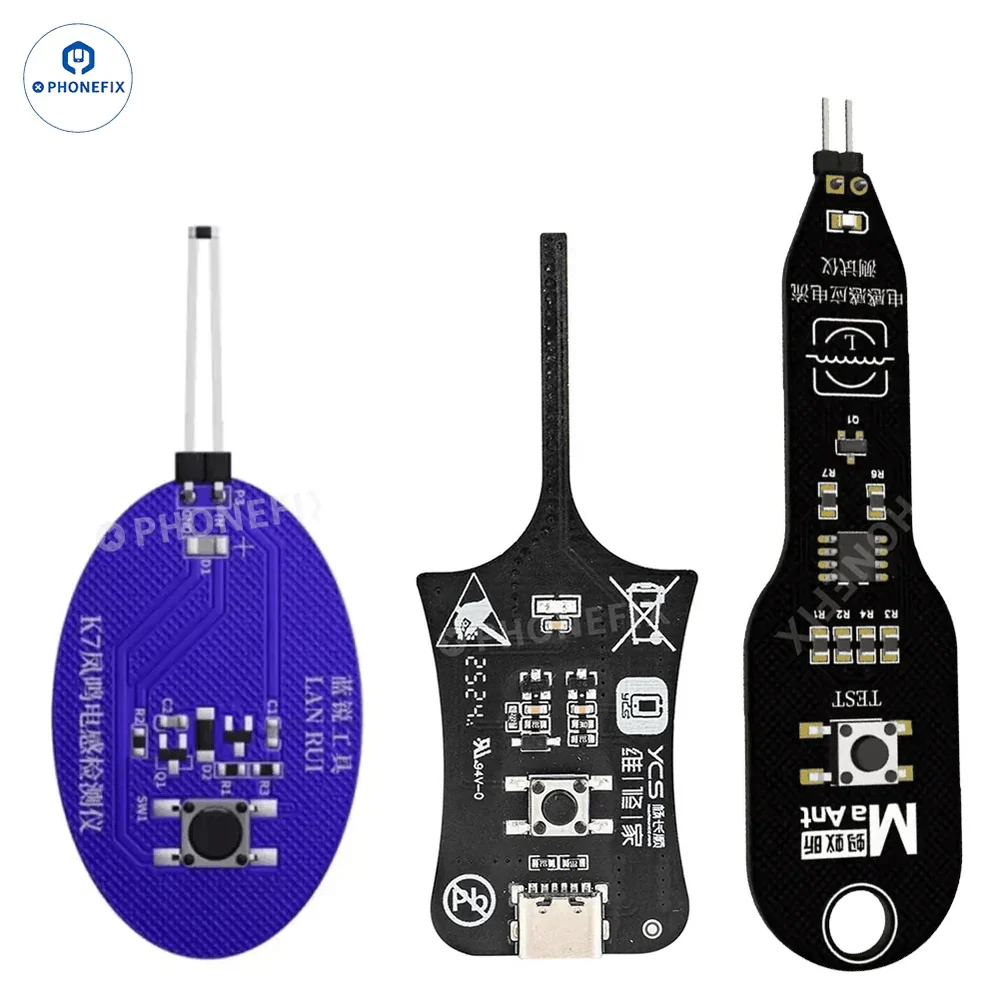
A battery tester is an important tool for assessing the actual condition of a smartphone battery. It measures voltage balance, internal resistance, and discharge behavior under controlled conditions. Observe the cable by connecting the battery through the power bank, technicians can simulate real usage scenarios and observe how the battery performs under load, supporting the identification of weak or failing cells.
During diagnosis, the battery is monitored for voltage drop and nonspecific heating. If the readings vary rapidly, it often indicates internal degradation or imbalance. This step is critical for proper charge and discharge testing because it allows technicians to determine whether the battery needs to be recalibrated or replaced. Meticulous efforts ensure that futile element exchange is prevented and treatment performance is advanced.
calibration, battery activation and charging/discharging test procedures
Measuring the battery allows the smartphone to effectively check the actual charge level of the battery. To begin, the device is fully charged to 100% of the fixed charger usage, then connected for 30–40 minutes to balance the internal cells, after which the phone is normally used until it is fully charged and turned off, allowing the device to reset its power reading.
In some cases, it may be required to activate the battery by connecting a new or deeply discharged battery. It incorporates a controlled charging process using a battery tester to ensure that the battery reaches a strong voltage phase. In this method, technicians examine the overall performance patterns to confirm normal production. Proper calibration improves accuracy, restores percentage readings, and promotes greater flow control throughout the instrument.
Reassembly, final checks and tips for long-term battery maintenance
Once the test and calibration are complete, the device is carefully reassembled. The battery connector is securely reattached, and the cables inside are checked for proper alignment. The housing is resealed with a suitable adhesive and gentle tension is applied to ensure uniform bonding. It is important to ensure that no debris or equipment is left inside before completely sealing the device.
For long-term overall performance, customers must follow proper battery maintenance practices, including preventing overheating, not overcharging, and using certified charging materials Regular tracking allows for extending the overall performance of the battery and supports solid machine operation. Additionally, proper behavior reduces strain on the battery, helping it maintain better performance over time.
Conclusion:
Mobile phone battery maintenance and repair rely on specialized tools and a systematic diagnostic process. Through the combined use of battery testers, power test cables, and anti-static heat-resistant mats, technicians can accurately assess the battery’s health status and perform inspections and optimizations without damaging surrounding components. Adherence to standardized procedures and low-level calibration techniques effectively enhances battery life and charging stability, addressing issues such as cell aging or metering anomalies, thereby extending the device’s overall lifespan and improving its power management performance.
