

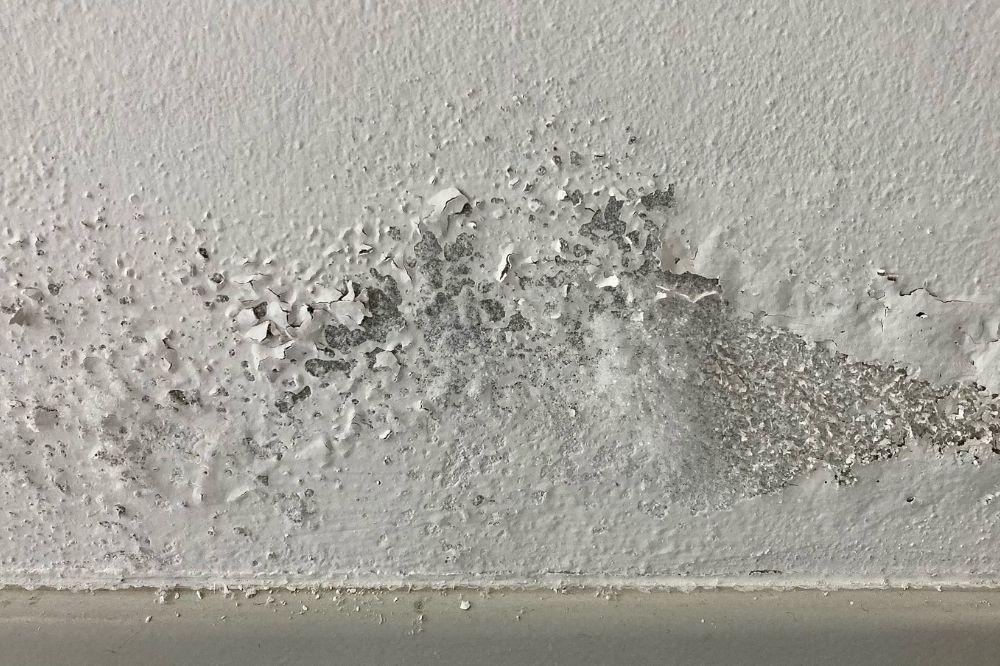
You pull off a sheet of drywall, and there it is: dark, fuzzy growth across the studs. The urge is to rip it out and keep going.
Don’t. Stop work in that area first. Cutting through moldy drywall without containment can send spores into the rest of the house.
And if the patch is bigger than about 10 square feet, the EPA says it’s generally past a do-it-yourself job. Here’s what to do instead.
Why “Just Cut It Out” Backfires
Moldy drywall isn’t ordinary demo debris. The EPA lists breaking moldy wallboard, stripping wallpaper, and running fans among the actions that put mold spores in the air.
Once airborne, spores travel. They ride on dust, on your clothes and through any return vent left open nearby.
That’s how a problem behind one wall ends up in the next room. The demo saw becomes the delivery system.
The 10-Square-Foot Line
The EPA gives homeowners a simple rule. If the moldy area is less than about 10 square feet, roughly a 3-by-3-foot patch, you can usually handle it yourself.
Past that, the agency recommends hiring a contractor with mold experience who follows EPA remediation guidance.
Keep in mind that the cut line only shows what you’ve exposed so far. Growth on one stud can continue along the bottom plate or into the next bay.
For small, safe cleanups, the EPA’s homeowner guide to mold and moisture covers protective gear and cleaning steps in detail.
Stop, Then Do These Five Things
Before anyone picks the saw back up, work through this list.
- Close off the room. Shut the doors and pause demo in that area.
- Shut down the HVAC if it may be affected. The EPA warns that a contaminated system can spread mold through the building.
- Find the water source. Mold needs moisture, so a leaking drain, supply line or window has to be fixed first.
- Don’t paint, prime or caulk over it. The EPA notes that paint over moldy surfaces is likely to peel.
- Skip the test kit. When growth is visible, the EPA says sampling is usually unnecessary. You already know it’s there.
What Professional Mold Remediation Looks Like
A professional job starts with containment, not demolition. The EPA describes sealing the area with fire-retardant polyethylene sheeting, one layer for limited jobs and two for full containment.
Crews also keep the work area under negative pressure, often with a fan exhausting outdoors. That stops contaminated air from drifting into clean rooms.
Porous materials are usually not worth saving. The EPA notes that items like ceiling tiles and carpet may have to be thrown away once moldy.
Drywall is porous too, so expect the affected sections to be cut out and replaced, not cleaned.
The industry benchmark is ANSI/IICRC S520, the professional mold remediation standard now in its 2024 fourth edition.
Before you hire anyone for mold remediation, ask three questions:
- Does your crew follow the IICRC S520 standard?
- How will you contain the area, and will it be under negative pressure?
- Who finds and fixes the moisture source, you or my contractor?
Clear answers mean you’re dealing with a crew that contains first and cuts second.
Older Denver Home? Check for Asbestos and Lead Too
Mold isn’t the only thing hiding in older walls. A pause for mold is a good moment to check for two other hazards.
Asbestos. The EPA lists textured paint and patching compounds on walls and ceilings among the places asbestos can turn up. Vinyl floor tiles and their adhesives are on the list too.
In Colorado, the state health department (CDPHE) requires an inspection by a certified asbestos building inspector before renovation or demolition. The other option is treating the materials as asbestos-containing.
Lead paint. Built before 1978? Then Colorado requires renovation pros to give owners the EPA’s Renovate Right pamphlet before disturbing 2 square feet or more of paint.
A Quick Note on Insurance
If the mold traces back to a sudden leak, call your insurer before demo continues. Triple-I advises keeping damaged materials until the adjuster has seen them.
Coverage for mold itself is often limited. The NAIC notes that many homeowners policies exclude mold damage, so ask how your policy treats the leak behind it.
The Bottom Line
Finding mold mid-remodel is frustrating, but it’s a pause, not a disaster. Stop work in that area, fix the moisture, and measure the patch against the EPA’s 10-square-foot line.
For anything bigger, bring in a crew that contains first and cuts second. Your remodel will finish cleaner, and so will the air in the rest of the house.
