

Modern lifestyles often involve long working hours, demanding projects and constant access to information. Whether someone is studying, working remotely, managing a business or balancing several responsibilities, maintaining concentration throughout the day can be a challenge. As a result, consumers are increasingly exploring products designed around focus, alertness and everyday cognitive performance.
One emerging category is functional oral pouches. These compact products are available in different formulations, including options containing caffeine and ingredients commonly marketed for cognitive support. They offer an alternative format to traditional supplements and energy drinks, although their ingredients and intended effects vary considerably.
Understanding what these products contain, how they differ from conventional energy products and what to look for on the label can help consumers make more informed decisions.
Quick Answer
Focus pouches are compact oral products formulated with ingredients intended to support alertness or cognitive performance. Depending on the formulation, they may contain caffeine, amino acids, botanical ingredients or other compounds commonly used in nootropic supplements.
Not every product marketed for focus contains the same ingredients, and the name alone does not establish its effectiveness. Consumers should compare individual ingredient amounts, caffeine content, product instructions and available evidence before choosing a product.
Key Facts
- Focus-oriented pouches are a category of functional oral products, not a single standardised formula.
- Some products contain caffeine, while others are formulated without it.
- Ingredients such as L-theanine, Alpha-GPC and L-tyrosine appear in some focus-oriented formulations.
- A longer ingredient list does not automatically mean a product is more effective.
- The amount of each ingredient matters more than general marketing descriptions.
- Research on an individual ingredient does not automatically demonstrate the effectiveness of a finished pouch product.
What Are Focus Pouches?
Focus pouches are small, pre-portioned sachets designed to be placed between the gum and upper lip. They provide an alternative format for consuming selected ingredients without preparing a drink or swallowing a conventional capsule.
The category includes different formulations. Some products focus mainly on caffeine, while others combine caffeine with ingredients commonly found in nootropic supplements. There are also products marketed around focus that do not contain caffeine.
The term nootropic is often used to describe substances that are marketed or studied in connection with aspects of cognitive function, such as attention, memory or mental performance. However, it is not a guarantee that a product will improve concentration. The evidence, ingredient amounts and quality of the finished formulation all matter.
The pouch format is one of the category’s defining features. Each serving is pre-portioned, portable and designed for use without a cup, bottle or preparation process. This may appeal to people who prefer compact products that fit into a busy routine.
However, convenience should not be confused with effectiveness. A pouch may offer a practical delivery format, but the ingredients still determine what the product contains and what effects might reasonably be expected.
How Do Focus Products Differ From Energy Products?
Focus products and energy products are often discussed together, but they do not necessarily have the same purpose.
Energy products are generally associated with alertness and reducing feelings of tiredness. Caffeine is one of the most familiar ingredients in this category. It is widely consumed in coffee, tea and energy drinks.
Focus-oriented products may also contain caffeine, but their formulas can include additional ingredients selected for their association with cognitive function. This is why two products with similar caffeine amounts may have quite different ingredient profiles.
| Feature | Energy Products | Focus-Oriented Products |
| Main positioning | Alertness and energy | Focus, attention and cognitive support |
| Common ingredients | Caffeine | Caffeine, L-theanine, Alpha-GPC and other ingredients |
| Product formats | Drinks, powders, capsules and pouches | Capsules, tablets and oral pouches |
| Caffeine content | Often present | May be present or absent |
| Formula variation | Depends on the product | Depends on the product |
| Key comparison point | Caffeine amount and serving size | Full ingredient list and individual amounts |
The distinction is not absolute. Some products combine energy and focus ingredients, while others concentrate on one particular purpose.
For example, a caffeine-only pouch may be positioned as an energy product, whereas a formula containing caffeine and additional nootropic ingredients may be marketed toward people interested in focus. Neither label guarantees a specific outcome.
Consumers should therefore compare the actual formulation instead of relying exclusively on product names.
Common Ingredients in Focus Formulas
The ingredients used in focus-oriented products vary between manufacturers. Some formulas contain only a small number of components, while others combine several active ingredients.
The following are examples of ingredients that consumers may encounter when comparing functional pouches and traditional supplements.
Caffeine
Caffeine is a well-known stimulant that can temporarily increase alertness and reduce the perception of tiredness. It is found in coffee, tea, energy drinks and various supplements.
The amount per serving is important. Consumers who already drink coffee or other caffeinated beverages should consider their total daily intake rather than evaluating a pouch in isolation.
Excessive caffeine consumption can contribute to unwanted effects, including restlessness, anxiety, sleep disruption and palpitations. Individual sensitivity varies.
L-theanine
L-theanine is an amino acid naturally found in tea. It is frequently included in supplement formulas, sometimes alongside caffeine.
Research has examined L-theanine and caffeine in relation to attention and aspects of cognitive performance. However, findings from studies using particular doses or combinations should not be treated as proof that every product containing these ingredients produces the same effects.
Alpha-GPC
Alpha-GPC is a choline-containing compound used in some supplements marketed for cognitive support. It is associated with the production of acetylcholine, a neurotransmitter involved in processes such as memory and learning.
Its presence on an ingredient list does not automatically demonstrate that a particular pouch improves memory or concentration. The amount, formulation and available evidence should all be considered.
L-tyrosine
L-tyrosine is an amino acid involved in the production of several neurotransmitters, including dopamine and norepinephrine. It appears in some products marketed for demanding situations or mental performance.
Research into L-tyrosine has examined its potential relevance under certain stress-related conditions. This does not mean that every product containing it will improve everyday productivity.
Vitamins B6 and B12
B vitamins are involved in normal metabolic processes and nervous system function. They are included in many supplement formulations.
Consumers should distinguish between supporting normal physiological functions and claiming that additional vitamins will directly improve focus in someone who already has adequate intake.
Ultimately, ingredient transparency is essential. A product that lists the names and individual amounts of its active ingredients is easier to evaluate than one that relies on a proprietary blend without disclosing the quantities.
Focus Pouches vs Traditional Supplements
Traditional supplements are commonly available as capsules, tablets, powders and liquids. Functional pouches introduce another format, designed to be used orally without swallowing a conventional capsule or preparing a drink.
The differences are mainly practical, although the formulation also matters.
| Consideration | Traditional Supplements | Functional Pouches |
| Format | Capsules, tablets, powders or liquids | Small pre-portioned sachets |
| Preparation | May require water or mixing | Generally ready to use |
| Portability | Depends on packaging | Usually compact |
| Serving information | Often shown per capsule or scoop | Usually shown per pouch |
| Ingredient range | Varies widely | Varies widely |
| Evidence | Depends on individual ingredients and product | Depends on individual ingredients and product |
One important distinction concerns how ingredients are delivered. A pouch is placed inside the mouth, whereas a capsule is generally swallowed. However, the presence of a different delivery format does not automatically prove faster absorption, greater bioavailability or better results.
Such claims require evidence relating to the specific ingredient, formulation and finished product.
For consumers, the most useful comparison is often practical: how easy the product is to use, whether the ingredient amounts are clearly disclosed, and whether the format fits their preferences.
What to Consider When Comparing Focus Products
The growing number of products marketed for concentration and mental performance makes it important to evaluate more than packaging and promotional claims.
Several checks can make the comparison process more straightforward.
1. Read the complete ingredient list
Check which ingredients are included and whether the product contains caffeine. Do not assume that every product labelled as a focus formula has the same composition.
2. Compare individual ingredient amounts
A product may advertise a large total blend, but that figure does not tell consumers how much of each ingredient is included. Look for individual amounts and pay attention to the units used.
Milligrams (mg) and micrograms (mcg) are not interchangeable. This is particularly important when comparing ingredients present in very different quantities.
3. Check the caffeine content
If a product contains caffeine, identify the amount per pouch. Include other sources of caffeine in the daily total, such as coffee, tea, energy drinks and supplements.
4. Distinguish ingredient research from product research
An ingredient may have been studied in a particular context, but that does not establish that a finished pouch produces the same result. The dose, combination of ingredients and delivery format may differ.
5. Look for transparent product information
Clear labels should identify the ingredients and provide relevant serving information. Be cautious when a product makes broad claims without explaining its formulation.
6. Consider personal circumstances
Caffeine and other active ingredients may not be suitable for everyone. People who are pregnant or breastfeeding, take medication, have an existing health condition or are sensitive to stimulants should seek advice from a qualified healthcare professional before using products containing active ingredients.
7. Compare the actual product, not just the brand
Different product lines from the same manufacturer can have different purposes and formulations. Check the specific variant and its current label before making a decision.
These principles are useful whether someone is comparing capsules, drinks, nootropic supplements or functional oral products.
The Growing Market for Functional Pouches
The wider pouch market has expanded beyond traditional nicotine products. Consumers can now encounter products positioned around caffeine, flavour and other functional ingredients.
This development reflects a broader interest in portable formats and products that fit into different daily routines. Instead of relying exclusively on drinks or conventional supplements, some consumers are exploring compact alternatives that can be carried easily.
Functional pouches also create opportunities for brands to differentiate themselves through ingredient combinations, flavours, serving sizes and product positioning.
However, a growing market also makes comparison more important. Similar packaging can contain very different formulations, and terms such as focus, energy and cognitive support are not standardised descriptions of a guaranteed effect.
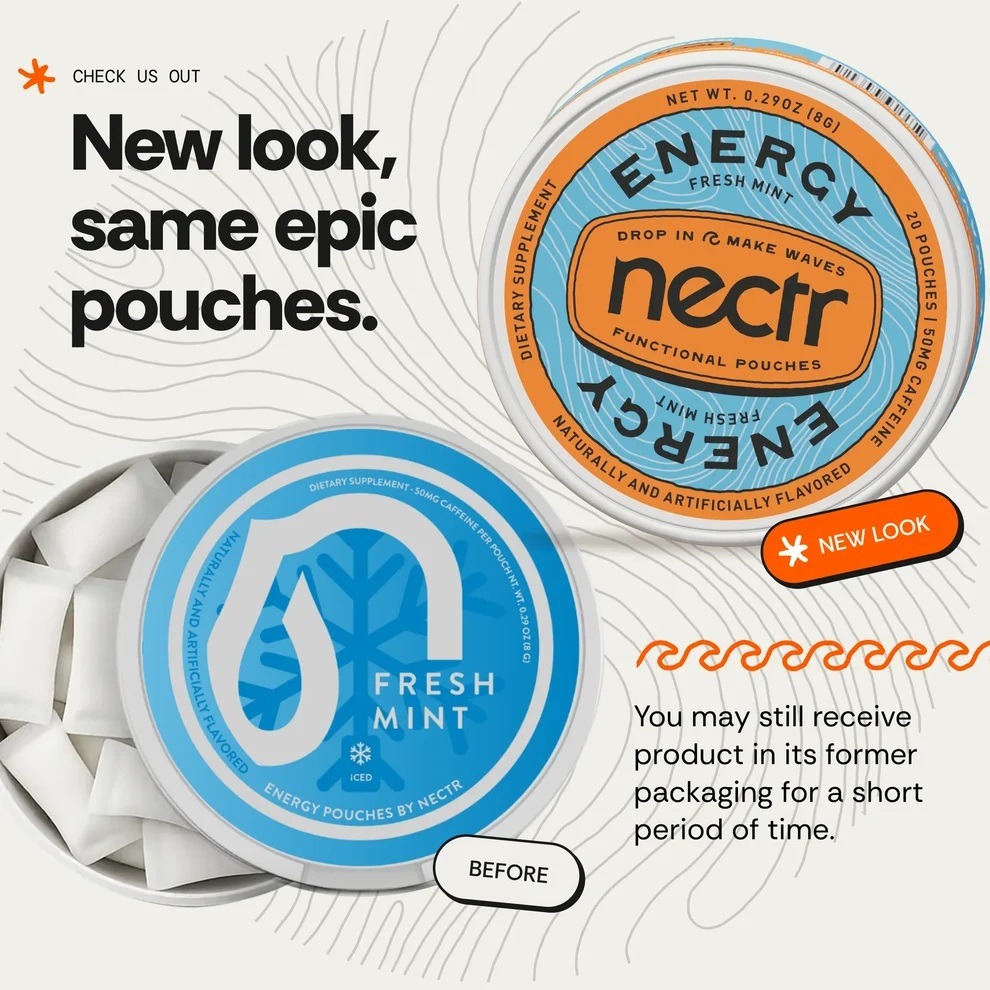
Brands operating in this category include Nectr, which offers products positioned around energy and focus. Its focus range provides an example of how manufacturers combine caffeine with additional ingredients in a pouch format.
The current Nectr Focus+ product information lists 50 mg of caffeine per pouch, alongside L-theanine, Alpha-GPC, L-tyrosine, Huperzine A and vitamins B6 and B12. These are the manufacturer’s published ingredient amounts, not proof of a particular improvement in concentration or memory. Consumers should always check the current product information when comparing formulations.
For a closer look at the category, the guide to focus pouches https://nectr.energy/blogs/life-hacks/focus-pouches-guide-best-picks explains how to compare formulas, caffeine content, ingredients and product information.
The wider selection of Nectr focus pouches also illustrates how products within one category can differ in flavour and formulation. Comparing the details of each option is more useful than assuming that every pouch marketed for focus works in the same way.
As the market develops, transparency and responsible product communication will remain important. Consumers should be able to understand what a product contains, how it is intended to be used and what its claims are actually based on.
FAQ: Focus Pouches and Functional Products
1. What are focus pouches used for?
Focus pouches are oral products marketed around alertness or cognitive support. Depending on the formula, they may contain caffeine and other ingredients commonly used in nootropic supplements. Their actual composition and potential effects vary by product.
2. Do focus pouches always contain caffeine?
No. Some focus-oriented products contain caffeine, while others are formulated without it. Consumers should check the ingredient list and the amount per serving rather than assuming that the word focus indicates a particular caffeine level.
3. Are focus pouches the same as nootropic supplements?
Not exactly. Nootropic supplements are a broader category that includes capsules, tablets, powders and other formats. Focus pouches are one way of presenting selected ingredients in a small oral sachet. The ingredients and evidence need to be evaluated individually.
4. Are focus pouches more effective than energy drinks?
There is no universal answer. Products can contain different ingredients and doses, and their effects depend on the formulation and the individual. A pouch format does not automatically make a product more effective than an energy drink.
5. What should consumers check before buying focus products?
The most important factors are the complete ingredient list, individual ingredient amounts, caffeine content, manufacturer information and product instructions. Consumers should also consider personal sensitivity and avoid relying on unsupported claims about concentration or productivity.
Final Thoughts
Focus-oriented products are becoming a more visible part of the functional supplement market. Pouches offer a compact format, while different formulations allow manufacturers to combine caffeine and other ingredients in various ways.
However, the category is not defined by one standard formula. Products can differ substantially in their ingredients, serving sizes and intended purposes. A focus label alone does not demonstrate that a product will improve concentration or cognitive performance.
The best starting point for consumers is a transparent comparison of ingredients, amounts and available evidence. Understanding what is inside a product is more valuable than relying on broad marketing promises, particularly in a market where similar-looking products can have very different formulations.
