

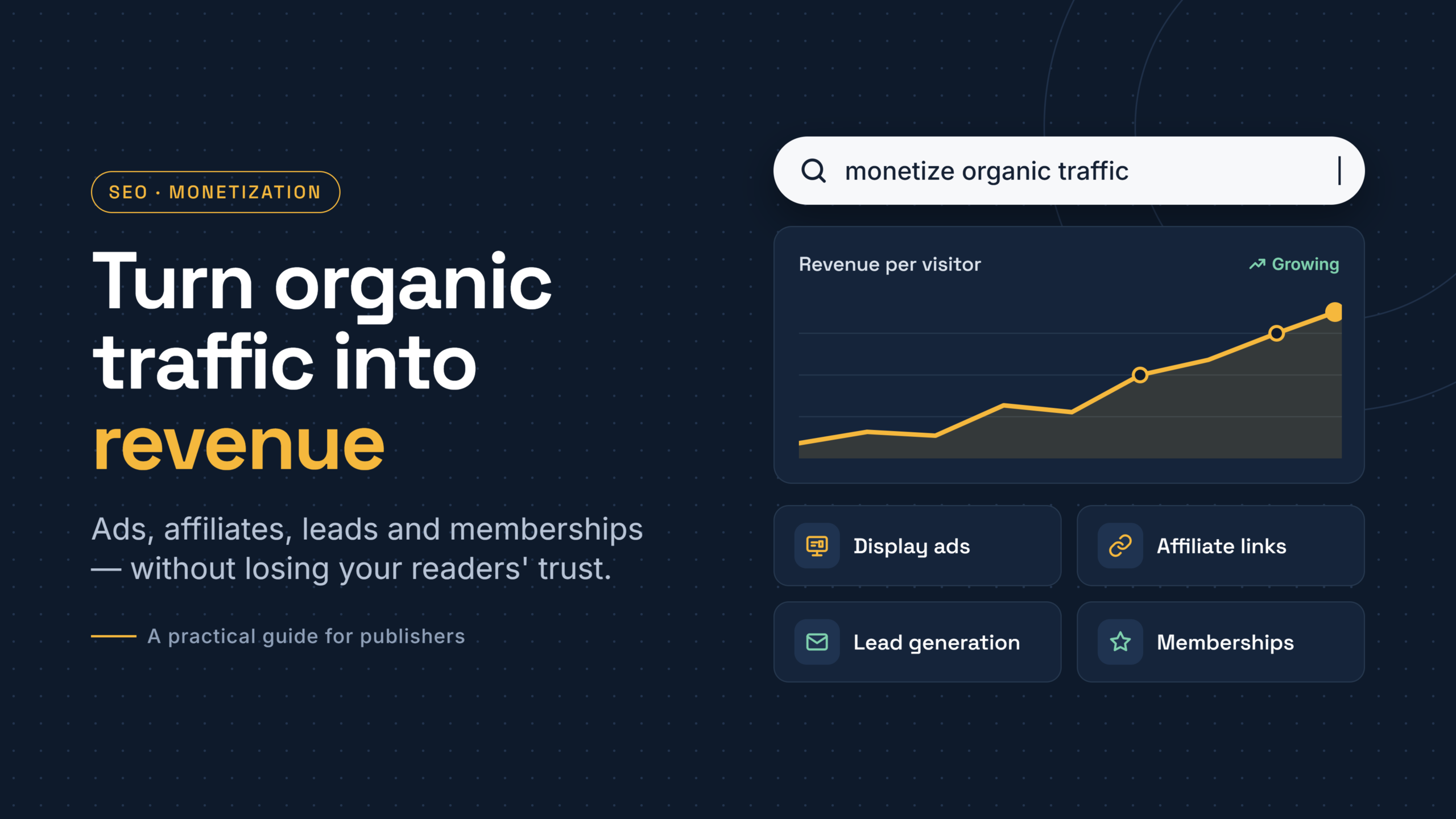
Search visitors can bring steady attention to a website, but traffic alone does not pay hosting bills or fund new reporting. The useful question is not just how to attract readers, but how to serve them well enough that the site earns revenue without undermining their trust. For publishers exploring cómo monetizar el tráfico orgánico de un sitio web, the first step is to understand what visitors came to do and which business model fits that purpose.
Start with the value behind the visit
Organic traffic comes from unpaid search results. A visitor searching for a product comparison may be close to making a purchase; someone looking up a definition may simply need a quick explanation. Those readers have different needs, so counting visits without examining intent can lead to poor monetization choices.
Use analytics and search data to identify the pages that attract visitors, the queries they use, how long they stay, and whether they take a meaningful next step. A page with fewer visits but a clear commercial audience may be more valuable than a high-traffic article with little connection to a product or service. Track outcomes such as newsletter subscriptions, qualified inquiries, purchases, or return visits—not just page views.
Choose a revenue model that fits the audience
Advertising is a straightforward option for sites with consistent readership. Display ads can generate income as visitors view or click them, but results depend on traffic volume, audience location, topic, and ad placement. Too many ads can slow pages and make articles harder to read, which may hurt both user experience and search performance. Test placements and monitor revenue alongside engagement and page speed.
Affiliate marketing can work when readers are researching products or services. A publisher earns a commission when a reader follows a tracked link and completes a qualifying action. Recommendations should be relevant, current, and supported by clear editorial reasoning. Disclose commercial relationships and avoid presenting a paid placement as an independent assessment. Reader trust is an asset that can take much longer to rebuild than a commission takes to earn.
Some businesses can use search traffic to generate leads for their own services. A useful guide can direct a visitor to a consultation request, quote form, or product demonstration. The offer should be a logical continuation of the article, not a disruptive sales pitch. Make the next step easy to understand, and ask only for information needed to respond.
Subscriptions, memberships, and digital products can suit sites with specialized expertise or a loyal community. A free article might introduce a subject, while a paid course, downloadable resource, or member discussion offers deeper instruction. Before investing in a large product, test demand with a small workshop or a short resource and gather feedback from actual readers.
Build the content and technical foundation
Monetization depends on more than the revenue mechanism. Pages need to load reliably on mobile devices, answer the search query clearly, and make navigation simple. Update older articles when facts, prices, or processes change. Add relevant internal pathways between related guides and commercial pages so readers can continue their research without having to restart their search.
For a WordPress site, technical work may include improving performance, maintaining plugins, setting up analytics, or creating landing pages. A clear freelance WordPress developer project brief checklist can help a site owner define the task before hiring: describe the expected outcome, current setup, required features, deadlines, access arrangements, and how completion will be tested. Osdire’s WordPress developer job description guide offers role details and versions for different levels of experience, which can help clarify what kind of support a project needs.
Evaluate partnerships carefully
Publishers may also consider sponsored content or paid placements as part of a broader revenue mix. A platform such as iCopify can be one place to explore content and publishing opportunities, but any arrangement should be assessed against the site’s audience and editorial standards. Review what is being offered, who is responsible for writing and fact-checking, whether links or placements must be disclosed, and how the content will be labeled. Revenue should not depend on misleading readers or publishing material that does not belong on the site.
Set basic commercial rules before accepting work. Decide which topics are appropriate, what claims require evidence, whether links will be marked as sponsored, and who has final editorial approval. Keep records of agreements and payments, and compare the time spent managing a placement with the income it generates. A headline fee can look attractive until revisions, administration, and reputational risk are considered.
Measure performance and adjust
Review results over a sensible period rather than reacting to a single week. Compare revenue per visitor, conversion rates, page engagement, and returning readership across different content types. If a change increases short-term income but sharply reduces readership or trust, it may not be sustainable. Test one adjustment at a time—such as a different call to action or ad position—so the results are easier to interpret.
Organic search can be a durable source of business opportunity, but it is not guaranteed income. Search rankings shift, audiences change, and monetization methods perform differently across topics. A thoughtful mix of useful content, appropriate offers, transparent partnerships, and steady measurement gives publishers a stronger basis for earning from the attention they have built.
