

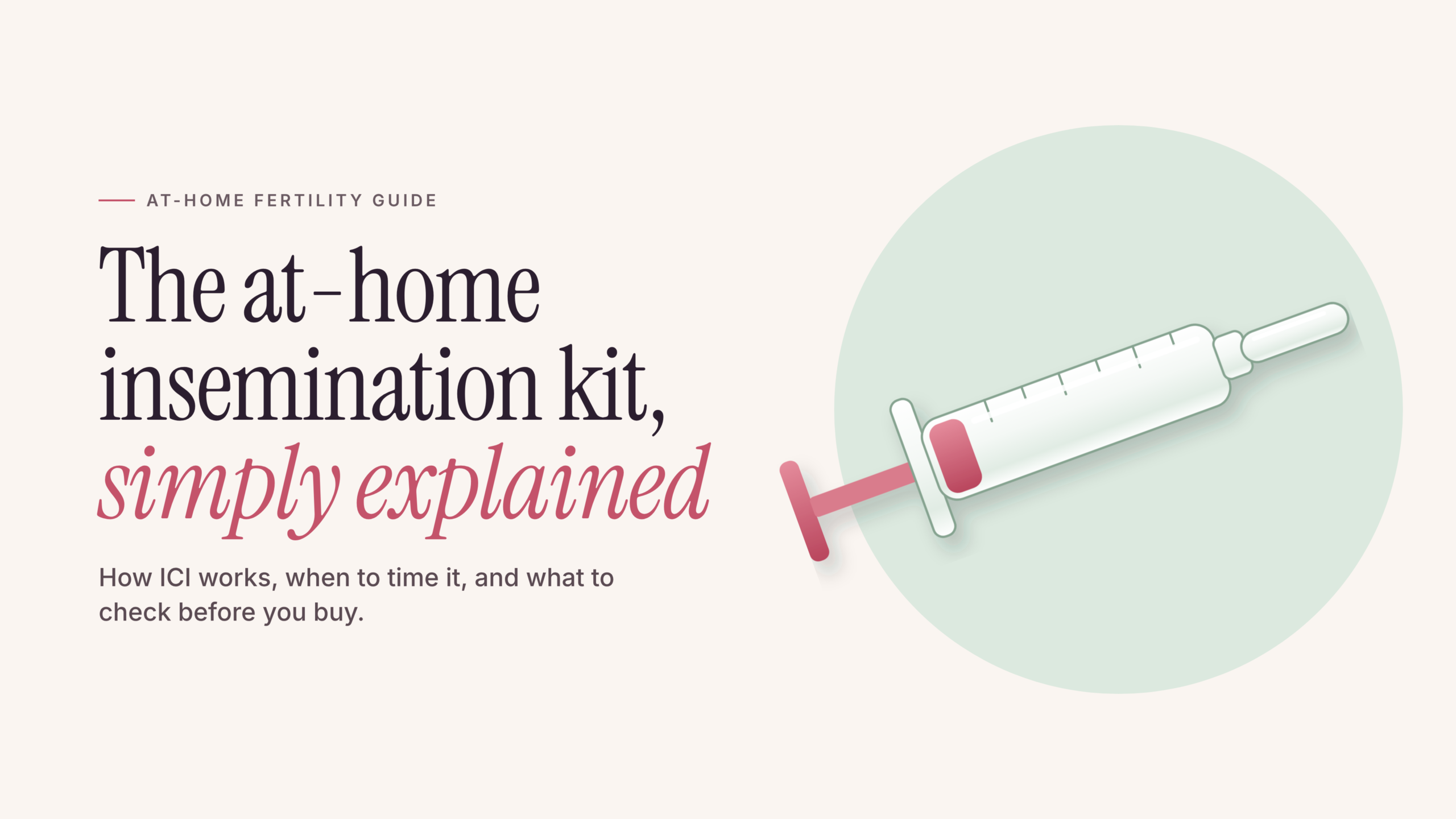
Navigating fertility treatments often feels overwhelming when clinical consultations, hormone panels, and repeat outpatient appointments begin stacking up on the calendar. For couples dealing with mild male-factor challenges, vaginismus, schedule mismatches, or solo parents utilizing donor sperm, Intracervical Insemination (ICI) bridges the gap between natural conception and invasive clinical procedures.
Unlike standard oral medication syringes found in local pharmacies—which feature sharp plastic edges, wide tips, and rubber plungers that trap significant sample volume—a dedicated medical-grade Insemination kit is contoured specifically for comfortable vaginal insertion and targeted cervical placement. Engineered to minimize dead-space fluid loss, specialized applicators ensure that motile cells are deposited directly near the external cervical os without mechanical turbulence or chemical irritation.
How Intracervical Insemination (ICI) Works Biologically
The vaginal canal naturally maintains an acidic pH between 3.8 and 4.5 to guard against bacterial infections. However, that acidic baseline is hostile to sperm cells unless buffered by alkaline seminal fluid and fertile cervical mucus. During peak ovulation, rising estrogen levels transform cervical mucus into a clear, stretchy, alkaline medium with a pH near 7.0 to 8.5, shielding motile cells and guiding them upward into the uterus.
By placing the sample right at the base of the cervix rather than allowing it to pool near the lower vaginal opening, ICI shortens the physical distance cells must swim while reducing exposure to acidic vaginal secretions.
4 Critical Design Features to Verify Before Buying
· Zero-Waste Plunger Geometry: Extended plunger tips push the entire specimen through the barrel tip, preventing precious 0.2 mL to 0.5 mL sample losses inside the nozzle.
· Rounded Comfort-Tip Barrels: Smooth, seamless medical-grade silicone or BPA-free polymer tips prevent micro-abrasions to delicate mucosal tissue.
· Sperm-Friendly Material Testing: Verified non-spermicidal construction free from natural rubber latex, phthalates, and toxic industrial lubricants.
· Anatomical Collection Cups: Wide-mouthed, shallow specimen containers with slanted bases allow full sample liquefaction over 15 to 20 minutes and effortless syringe aspiration.
Pinpointing the Fertile Window with LH Surge Tracking
Even the best applicator cannot overcome mistimed ovulation. Because a released ovum remains viable for only 12 to 24 hours inside the fallopian tube, synchronizing ICI attempts with Luteinizing Hormone (LH) urine test strips and Basal Body Temperature (BBT) charts is essential. Most fertility educators recommend performing the first insemination the afternoon a positive LH surge appears, followed by a second attempt 12 to 24 hours later as ovulation completes.
Comparing applicator designs, reusable vs. single-use sterile components, and cycle-tracking resources at makeamom.com helps prospective parents choose hardware suited to their specific anatomy and sample viscosity. Having clear, clinician-reviewed instructions at home eliminates guesswork during high-stress ovulation windows and turns conception into a calm, private experience.
Post-Insemination Positioning and Practical Care
Once the plunger is depressed slowly and steadily over five to ten seconds, resting flat on your back with hips slightly elevated on a pillow for 15 to 30 minutes allows gravity and natural cervical uptake to work together. Avoid using standard store-bought personal lubricants during the procedure, as common glycerin and paraben preservatives rapidly immobilize sperm tails; if external lubrication is necessary, stick strictly to isotonic, fertility-certified gels balanced to match natural ovulatory pH.
