

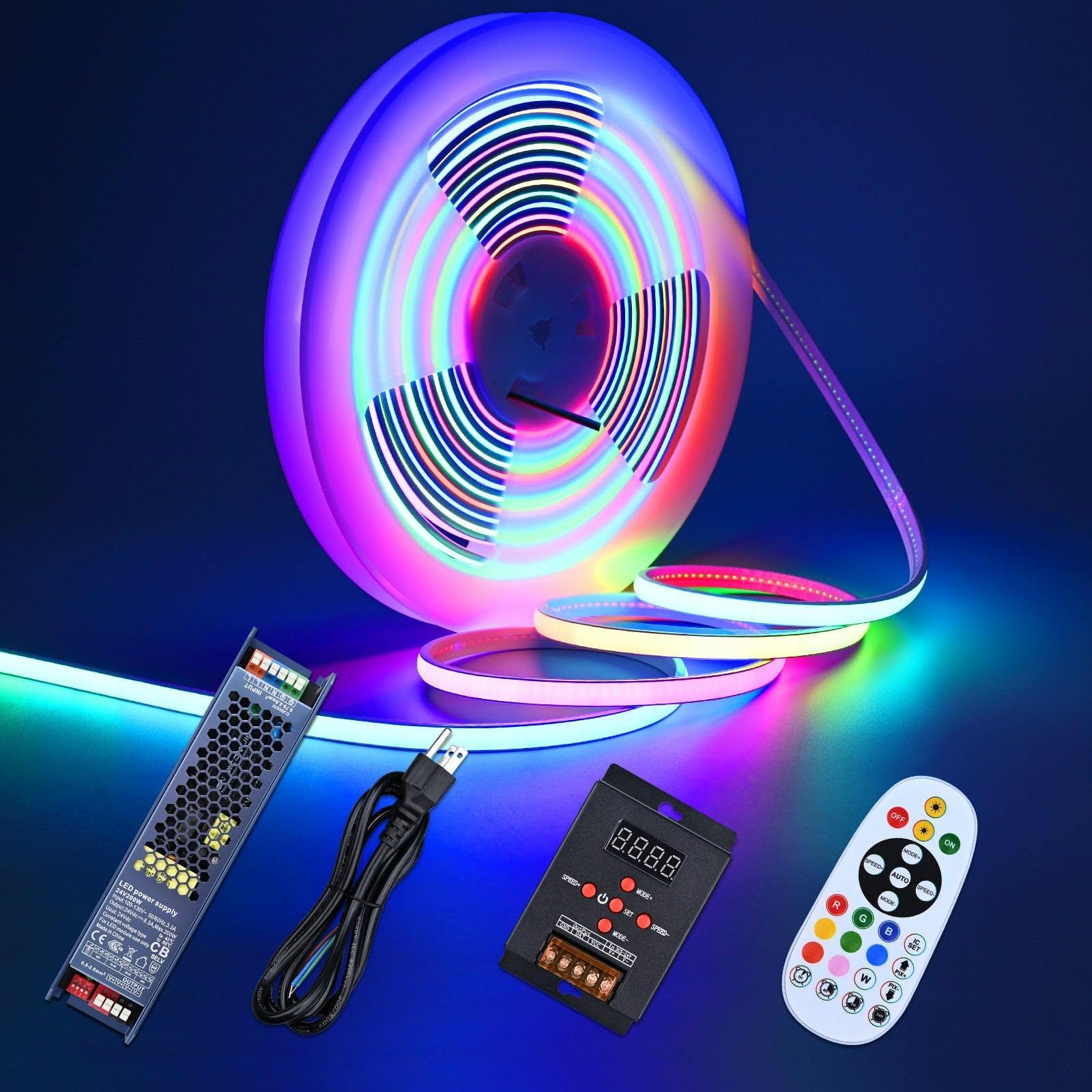
Understanding the Growing Demand for LED Strip Lighting
Lighting plays an important role in shaping the appearance, functionality, and atmosphere of modern spaces. From residential interiors to commercial environments, LED strip lights have become a popular choice because of their flexibility, energy efficiency, and versatile design possibilities. Unlike traditional lighting fixtures, LED strips can be installed in narrow spaces, around corners, and along architectural features, making them suitable for both decorative and practical applications. Advances in LED technology have also introduced more color options, improved brightness, and better lighting consistency for different requirements.
What Makes COB LED Strip Lights Different?
COB, or Chip on Board, technology represents an important development in LED lighting. Instead of displaying clearly separated light points, COB strips use closely arranged LED chips to produce a continuous and uniform illumination effect. This design helps reduce visible dark spots and creates a smooth lighting appearance, particularly in installations where the strip itself remains exposed. For projects requiring consistent brightness and a clean visual finish, a COB LED strip lights manufacturer can provide different configurations designed around installation conditions, brightness levels, and lighting preferences.
Key Features and Benefits of COB LED Technology
One of the main advantages of COB LED strip lights is their ability to deliver consistent illumination across the entire strip. This characteristic makes them suitable for applications such as kitchen cabinets, display shelves, ceilings, staircases, and decorative wall installations. Their flexible construction allows them to follow curved surfaces and fit into compact spaces where conventional lighting fixtures may not work effectively. Depending on the model, additional features can include different color temperatures, adhesive backing, dimming compatibility, and various protection ratings for indoor or outdoor environments.
Exploring RGB LED Strip Lights and Their Versatility
RGB LED strip lights provide a different lighting experience by combining red, green, and blue light to create a wide range of colors. These strips are commonly used when lighting needs to change according to an occasion, interior design, or personal preference. They can add visual interest to gaming rooms, entertainment areas, restaurants, retail displays, and event spaces. A reliable RGB LED strip lights supplier offers products with suitable controllers, power requirements, and lighting configurations, allowing users to select options that match the intended application and desired lighting effects.
Understanding RGBW Technology and Color Options
RGBW technology takes conventional RGB lighting further by incorporating a separate white LED channel. This additional channel provides more practical white illumination alongside the colorful lighting effects generated by RGB LEDs. For example, 5050 RGBW LED Strip Colors: RGB + Warm White combine multiple color possibilities with a warmer white option that can create a more comfortable atmosphere. This feature is useful in spaces where decorative lighting and everyday illumination are both important. It also gives designers greater flexibility when creating different lighting moods without relying entirely on mixed RGB colors to produce white light.
Applications Across Residential and Commercial Spaces
LED strip lighting has become increasingly common in modern residential interiors because of its ability to enhance architectural details without occupying significant space. In kitchens, strips installed beneath cabinets can improve visibility across countertops while adding a subtle decorative effect. In bedrooms and living rooms, indirect lighting behind furniture, ceilings, and television units can create a relaxed environment. Commercial applications include product displays, hotel interiors, restaurants, offices, and retail counters. The selection of COB, RGB, or RGBW technology generally depends on whether the primary requirement is uniform illumination, colorful effects, or a combination of both.
Factors to Consider Before Choosing LED Strip Lights
Selecting an appropriate LED strip requires more than comparing brightness or purchasing price. Buyers should consider voltage, wattage, LED density, color temperature, and the total installation length before making a decision. Power supply compatibility is particularly important because an unsuitable driver can affect performance and reduce product lifespan. Installation conditions also matter, especially in areas exposed to moisture, dust, or temperature variations. For such environments, checking the product’s IP rating can help determine whether its protection level is appropriate. Dimming requirements, controller compatibility, adhesive quality, and heat management should also receive attention.
Why Product Quality and Manufacturing Standards Matter
The performance of LED strip lights depends on several factors, including component quality, circuit design, heat dissipation, and production consistency. Poor-quality components may lead to uneven brightness, inconsistent colors, or premature product failure. Manufacturing standards therefore play an important role in determining how reliably a lighting product performs over time. Buyers comparing different options should examine technical specifications, available testing information, product samples, and warranty conditions. Understanding these details can help businesses, contractors, and lighting professionals make informed purchasing decisions while reducing potential maintenance issues after installation.
Choosing the Right Lighting Solution for Different Requirements
COB, RGB, and RGBW LED strips serve different purposes, so selecting the right technology begins with understanding the intended result. COB lighting is generally suitable for projects that require smooth and continuous illumination, whereas RGB strips are useful for decorative color-changing effects. RGBW models offer additional flexibility by combining colorful lighting with a dedicated white channel. A COB LED strip lights manufacturer can help buyers understand available product specifications, while an experienced RGB LED strip lights supplier can provide suitable options for projects requiring multiple colors and control features. Comparing these technologies makes it easier to match lighting performance with design expectations.
Conclusion
LED strip lighting continues to influence modern lighting design by offering flexible installation, multiple color choices, and practical illumination options. COB technology is particularly valuable for creating smooth lighting effects, while RGB and RGBW solutions provide greater creative freedom for residential and commercial environments. Careful attention to product specifications, electrical compatibility, installation conditions, and manufacturing quality can make a significant difference in long-term performance. For those exploring different LED lighting solutions and product specifications, dekingled.com provides a platform to learn more about available lighting options and technologies. Choosing products according to actual project requirements can support reliable installations, better visual results, and more efficient lighting designs.
