

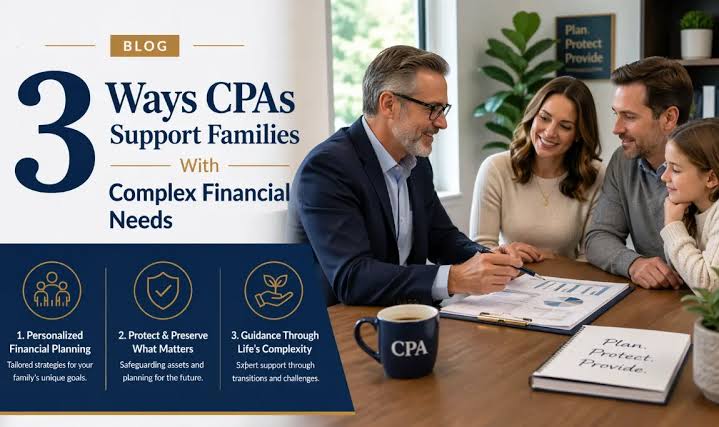
You may already be juggling more than you expected. A parent needs help at home. Medical bills are starting to stack up. Someone in the family has stopped working full time to handle caregiving. At the same time, the monthly basics still need to be paid, and the future still needs a plan, including strategic business planning services in Hanover, MD. That kind of pressure wears on people fast.
Long term financial security usually starts to feel less like a big retirement idea and more like a day to day survival issue. You are trying to protect savings, avoid tax mistakes, and make sure one health event does not pull the whole family off course. A Certified Public Accountant can help by organizing the numbers, spotting risks early, and building a plan that works now and later.
A CPA helps families prepare for long term care costs before savings disappear
Long term care is one of the clearest threats to family wealth because the costs can rise quickly and unevenly. One person may need a few hours of home care each week. Another may need assisted living, memory care, or a nursing facility. The National Institute on Aging explains that many families end up paying for some of this care out of pocket, and those bills can last far longer than expected. Reviewing ways to pay for long term care is often the first reality check families need.
The hard part is that families rarely face just one cost. There may be prescription expenses, transportation, home modifications, legal paperwork, and lost income from a spouse or adult child who cuts back at work. You might think the retirement accounts look strong enough, then one year of care changes the picture completely.
A CPA helps by mapping out income sources, required spending, tax exposure, and the order in which assets should be used. That may include Social Security, pensions, retirement account withdrawals, investment income, and any insurance benefits. The goal is not just to pay the next bill. The goal is to avoid draining the wrong accounts at the wrong time and creating tax damage that makes the problem worse.
A CPA reduces tax mistakes that can quietly weaken family financial stability
Families under stress often make financial decisions in a rush. They sell investments without considering capital gains. They withdraw too much from retirement accounts in one year. They miss deductions tied to medical expenses or caregiving costs. None of that feels dramatic in the moment, but the damage adds up.
This is where family financial planning with a CPA becomes practical, not fancy. A CPA can estimate the tax effect of different choices before you make them. If a parent needs care and an adult child is helping financially, the details matter. Who is claiming whom. Which expenses count. Whether the home should be sold now or later. Whether charitable giving, Roth conversions, or trust distributions still make sense under the new reality.
The Consumer Financial Protection Bureau offers useful guidance on financial security as you age, and that guidance becomes much more useful when someone can apply it to your actual tax return, cash flow, and household structure. General advice is a starting point. A CPA turns it into decisions.
A CPA creates structure when caregiving changes the whole household economy
Caregiving often shifts the financial burden across the whole family. One sibling pays more. Another handles paperwork. A spouse becomes both caregiver and bill manager overnight. Resentment can build when no one is fully sure what is being spent, who is contributing, or how long the arrangement can last.
The National Institute on Aging addresses many of the emotional and practical strains in these caregiving questions and answers. Those strains usually have a financial layer underneath them. When there is no structure, money conversations get personal fast.
A CPA can help families build a shared system. That may include a caregiving budget, spending categories, reimbursement tracking, estimated tax planning, and records for future estate or benefit issues. This kind of planning supports long term financial planning for families because it replaces guesswork with documentation. It also helps family members see what the care actually costs, which makes future decisions clearer and less emotional.
Professional CPA support offers clearer protection than do it yourself financial management
Some families can manage basic budgeting on their own. The risk shows up when the situation gets layered. A single mistake may trigger taxes, missed benefits, or uneven withdrawals that are hard to fix later. A CPA does not remove the emotional weight, but a CPA often removes the blind spots.
| Area | Do It Yourself | With a CPA |
| Long term care budgeting | Often based on rough estimates and current bills only | Built around projected care costs, income sources, and tax impact |
| Retirement withdrawals | Higher chance of taking funds from the wrong account at the wrong time | Coordinated withdrawal strategy to manage taxes and preserve assets |
| Caregiving expense tracking | Receipts and reimbursements may be incomplete or inconsistent | Clear records that support deductions, family agreements, and reporting |
| Family communication | Money talks often happen during a crisis | Shared numbers and written plans reduce confusion and conflict |
Three steps you can take now to protect long term financial security
Gather every recurring cost in one place. Include housing, insurance, medications, paid care, transportation, and any support family members are already providing. Most people underestimate the total because the spending is spread across several accounts and several people.
List every income source and account by owner and tax type. Separate checking, savings, brokerage accounts, retirement plans, pensions, and benefits. This is where a CPA for long term financial security becomes useful fast, because the order of withdrawals can change your tax bill and your remaining savings.
Set one planning meeting before the next crisis hits. Bring the numbers, the caregiving reality, and the near term decisions that feel urgent. A general idea is not enough when care needs are growing. A certified public accountant can help you turn scattered information into a working plan.
You do not need to have every answer before you ask for help. Families usually reach this point because life changed faster than the financial plan did. Getting the numbers organized, the taxes reviewed, and the care costs projected can give you room to breathe again. If you are trying to protect your family’s future, working with a Certified Public Accountant is a steady next step.
