

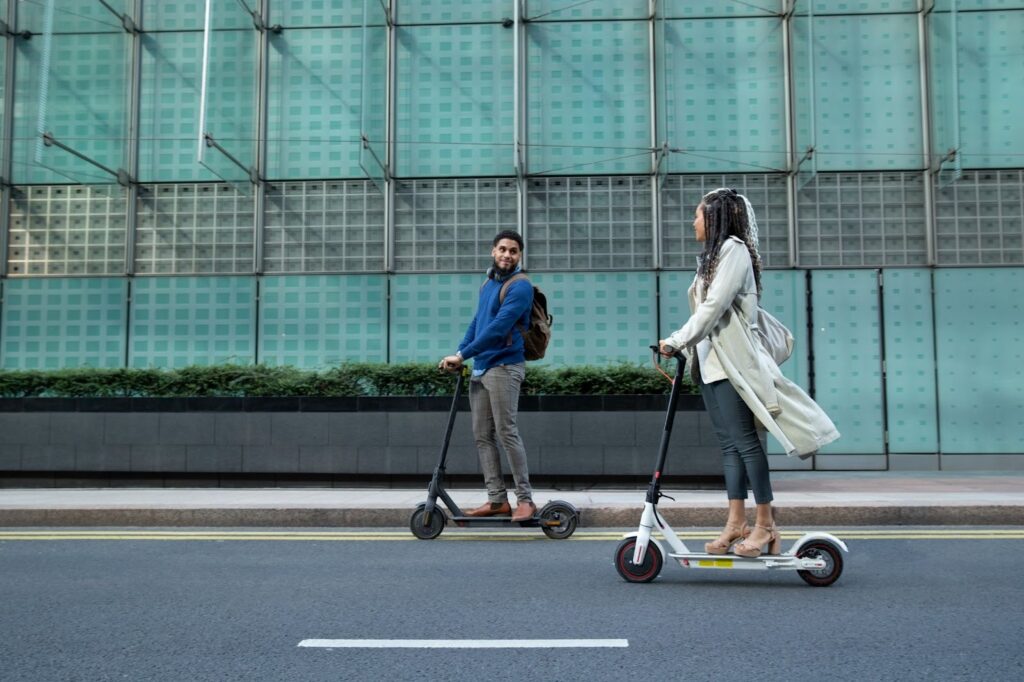
City travel is changing fast. Traffic is heavier, fuel costs are rising, and public transport doesn’t always fit your schedule. That’s where motor innovation steps in. From smarter electric motors to lighter, more powerful designs, new technology is making urban commuting easier, faster, and more reliable.
Whether you’re riding an e-bike, e-scooter, or compact electric vehicle, modern motors are built to save time and cut stress. They deliver smoother rides, better battery use, and stronger performance in busy streets. In this blog, we’ll explore how motor innovation is reshaping daily travel and helping city commuters move smarter every day.
Motor Innovation Accelerating Sustainable Urban Mobility in Dense Cities
Cities don’t need more vehicles clogging streets, they need intelligent systems. Motor innovation goes way beyond raw speed; it’s architecting an ecosystem where every trip plugs into bike lanes, parking spots, charging hubs, enforcement, and data analytics.
Urban Commuting Technology Shifting From “Vehicle-First” to “System-First”
Old-school thinking treated scooters and bikes like standalone playthings. Today, even Street rides are seen as part of a connected mobility ecosystem rather than isolated machines. Street rides continue to showcase modern street scooters built for real-world commuting; it’s clear that sustainable urban mobility now depends on integrated infrastructure.
Vehicles communicate with apps, apps relay trip patterns to city officials, and those insights reshape lane layouts and parking corrals. Motor innovation has evolved into something software-driven, real-time adjustments, sensor arrays, and seamless connectivity, just as much as mechanical muscle.
Electric Motors for Transportation Reducing Time, Cost, and Emissions Per Trip
Let’s get granular. For typical 2–8 mile urban hops, electric motors for transportation crush cars on time, no circling blocks hunting for parking, and cost, with charges measured in pennies versus dollars per tank. They demolish public transit on convenience: zero waiting, zero transfers. Emissions? Absolutely nothing from the tailpipe, and even factoring in grid energy and lifecycle upkeep, the carbon math is minuscule. That’s exactly why riders are abandoning four-wheel dependence for two-wheeled freedom.
Electric Motors for Transportation, Design Breakthroughs That Changed Real Commuting
Ecosystem logic sets the stage, but your day-to-day experience hinges on four motor innovation choices that separate aggravating rides from game-changing ones.
Hub Motors vs Mid-Drive Motors, Commute-Specific Trade-Offs
Real talk: hub motors excel at simplicity, sealed construction, and minimal upkeep, ideal for flat geography, rainy climates, and areas with aggressive theft. Mid-drive motors crush hills and heavy traffic with torque advantages at crawling speeds. Your decision should mirror your actual route, not flashy brochure numbers. Daily climbs? Mid-drive spares your legs. Cruising flat bike lanes in drizzle? Hub keeps rolling without drama.
Torque Sensing vs Cadence Sensing, Ride Feel, Safety, and Battery Range Impact
Nailing motor placement solves one challenge; how the motor reacts to your pedaling determines safety and efficiency every single stoplight. Torque sensors gauge your push intensity and deliver matched power, consistent acceleration that keeps you balanced crossing intersections. Cadence sensors merely tally pedal spins, which can cause abrupt jolts. Mixed traffic and confident riders? Torque is your friend. Flat routes and newcomers? Cadence does the job at lower price points.
Axial-Flux Motors and High-Torque Compact Drives Entering Micro-Mobility
Conventional motor blueprints are yielding ground to a fresh wave of compact, high-torque builds that squeeze more punch into lighter, city-optimized packages. Axial-flux motors boost acceleration while sipping less energy, critical for cargo bikes and performance scooters threading crowded avenues. They’re landing in premium tiers first, but manufacturing scale will drive mainstream adoption by 2027.
Thermal Management + Derating Logic Improving Reliability in Heat and Traffic
Higher power density introduces a hidden hazard: motors that overheat and throttle precisely when you need them, attacking that final incline or darting through a busy crossing. Contemporary controllers watch temperature constantly and dial back output before damage strikes. Look for IP ratings (IP54 floor minimum), airflow channels, and transparent continuous versus peak power figures. Ignore marketing wattage, demand specifics on sustained thermal ceilings.
Smart Control Systems Turning Motors Into Safer Urban Commuting Technology
Even cutting-edge motor hardware plateaus without intelligent control software converting rider intent into smooth, predictable, theft-hardened power output.
Field-Oriented Control (FOC) Delivering Smoother Launches and Quieter Rides
What you’ll notice: reduced jerkiness, superior traction, less noise, especially in tight neighborhoods where sound matters. FOC algorithms orchestrate motor phases dynamically, making takeoffs feel organic instead of mechanical. That’s why newer scooters don’t jolt forward or emit harsh whines. The smoothness isn’t superficial; it improves safety in bike lanes where sudden surges can spook pedestrians.
Traction Control, Wheel-Slip Detection, and Regen Tuning for Rain-Slick Streets
Smooth starts mean little if your wheel spins wildly on slick pavement, contemporary controllers now sense and manage grip instantaneously. Speed differentials and current analysis catch slippage, then cut torque immediately. Regenerative braking gets calibrated for stability: aggressive enough to recover energy, gentle enough to dodge skids. After storms or in winter, this logic prevents wipeouts older designs couldn’t avoid.
Electric Scooters and Bikes Optimized for City Constraints (Range, Storage, Charging)
Controllers unlock potential, but actual range, storage convenience, and charging realities hinge on total vehicle engineering around urban limitations.
Battery-Motor Co-Design Improving Usable Range (Not Marketing Range)
Ads claim 40 miles; you experience 22. What happened? Rider weight, tire inflation, headwinds, cruising speed, and constant start-stop cycles all devour watts. Intelligent designs optimize electric scooters and bikes for “watt-hours per mile” instead of headline bragging rights. Grasping realistic range is foundational; eliminating the nightmare of hauling 50-pound machines up apartment stairs nightly is step two. That’s why swappable battery modules and workplace charging infrastructure are becoming serious differentiators, not gimmicks.
Next-Wave Motor Innovation Reshaping Urban Commuting (Trends Competitors Missed)
Today’s checklist empowers confident 2026 commuting, but four emerging motor and energy innovations are positioned to redefine “practical urban transit” before decade’s close. Analysts project the global e-bike market reaching $119.72 billion by 2030, signaling motor innovation and battery leaps won’t decelerate anytime soon.
Solid-State Batteries + Fast-Charge Protocols Changing “Range Anxiety” Dynamics
Quicker, safer charging converts range worries into simple convenience; bidirectional flow transforms your commuter into a grid resource generating passive income. Solid-state cells promise abbreviated charge cycles, extended lifespan, and apartment-safe storage. Anticipate pilot rollouts in premium cargo bikes by late 2026, mainstream penetration following by 2028.
Final Thoughts on Motor-Driven Urban Commuting
Motor innovation isn’t merely accelerating commutes, it’s unlocking possibilities. Breakthroughs in torque sensing, thermal oversight, anti-theft controllers, and compact axial-flux architectures mean electric scooters and bikes now dissolve genuine barriers: hills, rain, theft, range limits. Cities are responding with dedicated lanes, charging networks, and refined regulations.
Winners are riders who grasp which specifications translate to tangible performance, safety, and durability. Your commute doesn’t have to be a daily compromise anymore. With the proper motor, controller, and configuration, it becomes the highlight of your day, silent, efficient, genuinely freeing.
Common Questions About Motor-Driven Commuting
Do torque sensors improve safety in stop-and-go city traffic compared with cadence sensors?
Absolutely. Torque sensors provide predictable, proportional power reducing jerky launches at crossings. Cadence sensors can spike unpredictably, particularly in mixed traffic where smooth acceleration matters for stability and surrounding confidence.
Which motor type is better for steep urban hills: hub motor or mid-drive?
Mid-drive dominates on hills. They leverage your bike’s gearing to amplify torque efficiently at low speeds, managing heat and battery consumption smartly. Hub motors labor on sustained climbs and frequently overheat in mountainous cities.
Are higher-watt motors always faster, or do controller limits matter more?
Controller limits weigh heavier. Peak wattage often amounts to marketing theater. Continuous power specs and thermal derating determine genuine speed and dependability. A well-engineered 500W setup regularly outpaces an overheating 750W motor on extended commutes.
