

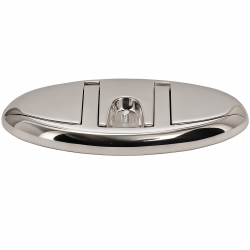
Safe mooring is an important part of responsible boat handling. Whether a vessel is secured at a marina, dock, or temporary mooring point, reliable fittings are needed to hold mooring lines securely. Deck Cleats are among the most common and practical marine fittings, providing convenient attachment points for ropes while helping boat owners manage lines efficiently.
What Are Deck Cleats?
Deck cleats are fittings mounted to a boat’s deck and designed to secure ropes and mooring lines. Their familiar shape allows a line to be wrapped around the cleat in a secure manner while still making it relatively easy to release when required.
Cleats are available in different sizes, shapes, and materials to suit various types of vessels. Smaller boats may use compact cleats, while larger vessels require stronger fittings designed to handle greater loads.
The Role of Deck Cleats
When a boat is tied to a dock, mooring lines can experience forces caused by wind, waves, currents, and vessel movement. Deck cleats provide secure points for these lines and help distribute the forces through the boat’s structure.
They are also useful for organizing lines on deck. Strategically positioned cleats can make it easier to manage bow lines, stern lines, spring lines, and other mooring arrangements.
Materials Used in Deck Cleats
Marine deck cleats are manufactured from a range of durable materials. Stainless steel is a popular choice because of its strength and resistance to corrosion. Other marine-grade metals and suitable synthetic materials may also be used depending on the design and application.
Material selection is particularly important for boats operating in saltwater. A corrosion-resistant fitting can maintain its appearance and structural performance when exposed to moisture and marine conditions.
Different Types of Deck Cleats
There are several cleat designs available. Traditional fixed cleats provide a permanent attachment point and are commonly found on many boats. Folding cleats can reduce obstruction when they are not being used, making them useful in areas where deck space is limited.
Pull-up or retractable cleats can also provide a low-profile solution. The best design depends on the boat’s layout, available mounting space, and intended use.
Proper Installation
Correct installation is essential for reliable cleat performance. Cleats should be mounted in structurally suitable locations, with appropriate fasteners and backing arrangements.
The expected loads should be considered before installation. A cleat may look strong but still perform poorly if it is attached to an unsuitable section of the deck. Manufacturer installation instructions should always be followed, and professional assistance can be valuable for more demanding installations.
Maintenance and Inspection
Regular inspection helps keep deck cleats in good condition. Owners should check fittings for corrosion, cracks, loose hardware, or signs of movement. Fasteners should be inspected periodically, especially when cleats are exposed to frequent heavy loads.
The condition of mooring lines should also be checked. Worn or damaged ropes can compromise the effectiveness of the overall mooring system, even when the deck fittings are in good condition.
Choosing the Right Deck Cleats
When selecting Deck Cleats, boat owners should consider the vessel’s size, expected mooring loads, installation location, material, and available deck space. The cleat should be appropriately sized for its intended purpose and compatible with the boat’s construction.
A well-designed cleat can provide both practical functionality and a clean appearance, making it an important part of the boat’s deck hardware.
Conclusion
Deck Cleats are essential marine fittings that provide secure and convenient attachment points for mooring lines. With durable materials, suitable designs, proper installation, and regular maintenance, they can provide reliable service in demanding marine environments. Choosing the right cleats for a vessel helps support effective line management and secure mooring during everyday boating activities.
