

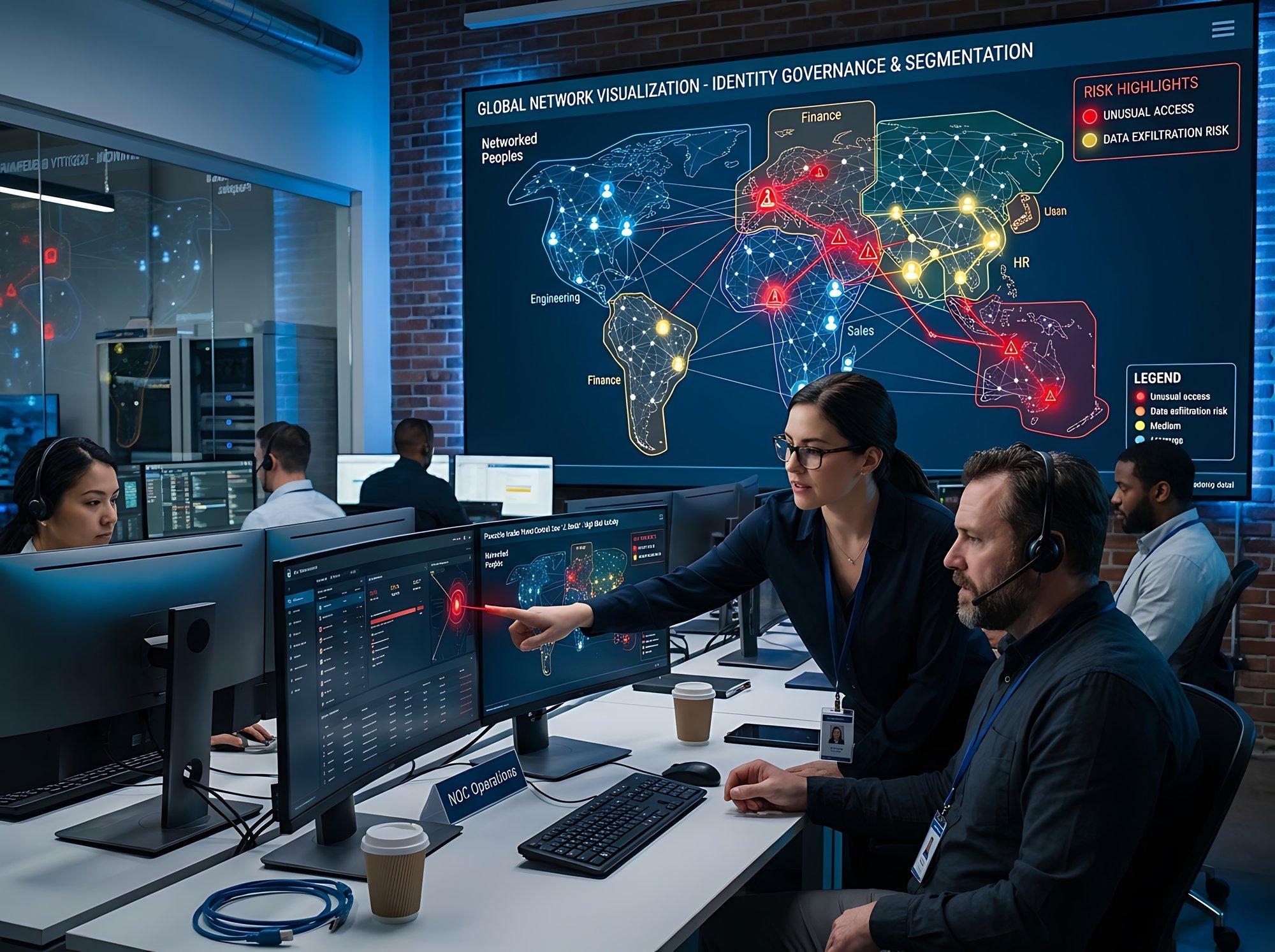
Cyber threats rarely remain confined to one country, industry, or technology. Ransomware, cloud breaches, identity attacks, supply chain compromises, and social engineering continue to evolve as organizations become increasingly connected. This makes an international conference cyber security a valuable platform for examining emerging risks, sharing practical knowledge, and exploring effective approaches to digital protection.
Such events bring together cybersecurity leaders, technology experts, government representatives, and business professionals to discuss changing attack methods, security technologies, resilience strategies, and collaborative solutions that can help organizations prepare for a rapidly changing threat landscape.
Why Emerging Threats Require Global Discussion
Cybersecurity has become interconnected with digital transformation. Organizations increasingly depend on cloud platforms, mobile applications, connected devices, remote access, third-party providers, and digital identities. As these technologies expand, attackers gain more opportunities to exploit weak controls or human error.
International conferences bring together professionals who encounter these challenges from different perspectives. Security leaders can compare experiences, researchers can discuss developing attack methods, technology providers can demonstrate protective capabilities, and public sector representatives can explain security priorities. This exchange helps participants understand that emerging threats often require coordinated responses.
Tracking the Changing Threat Landscape
One important role of cybersecurity conferences is identifying patterns before they become widespread operational problems. Sessions focused on cybersecurity forecasting can examine how attack techniques, criminal strategies, and technology risks are developing.
Sessions may cover ransomware, identity compromise, phishing, data breaches, cyber warfare, and attacks against critical infrastructure. Shared observations can reveal common weaknesses and show where security policies need to evolve.
This type of knowledge exchange is especially useful because threat environments change continuously. Security teams need to evaluate not only what has already happened, but also how new technologies and business models could create different attack surfaces.
Addressing Cloud Security Challenges
Cloud adoption has changed how organizations store information, deliver applications, and manage infrastructure. It has also introduced security considerations involving access permissions, identity management, configuration, data protection, monitoring, and third party integrations.
A cloud security summit can provide focused discussions around these issues, helping security professionals understand how cloud environments should be governed as infrastructure becomes increasingly distributed. Sessions can explore practical approaches to protecting workloads, managing access, reducing configuration risks, and maintaining visibility across complex environments.
Exploring Zero Trust and Modern Security Models
Traditional security approaches often relied heavily on network boundaries. Modern environments are more distributed, with employees, applications, devices, partners, and customers accessing resources from different locations.
Zero Trust discussions address this shift by focusing on continuous verification, least privilege, identity, device security, and controlled access. Conferences provide an environment for security leaders to examine how these principles can be adapted to real organizational requirements.
Professionals can discuss architecture, governance, implementation challenges, and measurable security objectives, connecting security concepts with operational realities.
Understanding IoT and Mobile Security Risks
Connected devices have expanded across industries such as healthcare, manufacturing, logistics, aviation, retail, and telecommunications. Every connected endpoint can introduce additional security considerations, particularly when devices have limited security controls or remain connected for long periods.
Mobile technology creates another significant area of attention. Smartphones and mobile applications can contain sensitive information and provide access to business systems. Conferences that examine mobile security and IoT cybersecurity allow specialists to discuss authentication, application protection, device management, monitoring, and incident response.
Strengthening Digital Forensics and Incident Response
Preventing every cyber incident is difficult, making response and recovery essential parts of cybersecurity planning. Digital forensics helps organizations investigate suspicious activity, understand how an incident occurred, preserve evidence, and identify affected systems.
Conference sessions focused on digital forensics can connect technical investigation with broader incident response processes. Professionals can discuss evidence handling, investigation workflows, organizational coordination, and lessons learned after security incidents.
Sharing these experiences can improve response plans and collaboration between technical teams, legal professionals, compliance functions, and leadership.
Connecting Cybersecurity With Enterprise Protection
Cybersecurity is not limited to the IT department. A major incident can affect operations, finances, customer trust, regulatory obligations, and business continuity. This is why enterprise protection requires communication between security teams and wider organizational leadership.
Conferences create opportunities to discuss how cybersecurity priorities align with business objectives. C-suite executives, CISOs, risk leaders, compliance professionals, and technology specialists can examine security from different organizational perspectives.
Such conversations can support clearer risk ownership and informed decisions about security investments, training, monitoring, and resilience. They also reinforce that cybersecurity maturity depends on people and processes as much as technology.
Building Cross-Border Cybersecurity Collaboration
Cybercrime frequently crosses borders, while digital services and supply chains connect organizations across multiple jurisdictions. International collaboration can therefore improve awareness of shared threats and encourage knowledge exchange between security communities.
Participants can learn about regional concerns, compare approaches, identify common challenges, and develop professional relationships that continue beyond the event.
This collaborative environment can be particularly valuable for regions experiencing rapid digital growth. Local security priorities can be discussed alongside international perspectives, helping participants consider both regional realities and broader cybersecurity developments.
Turning Conference Insights Into Action
Organizations can translate discussions into practical actions by reviewing access controls, updating incident response plans, evaluating third party risks, improving employee awareness, strengthening cloud governance, and reassessing security priorities.
Participants can document useful ideas, share insights with internal teams, and identify technologies or practices for further evaluation. Networking can support continued knowledge sharing, while demonstrations can help security leaders understand available approaches.
A conference therefore becomes more than a series of presentations when its insights influence policies, processes, preparedness, and organizational resilience. Shared awareness can improve preparedness before organizations face unfamiliar or rapidly changing cyber threats.
Conclusion
Emerging cyber threats demand continuous learning because technologies, attack methods, and organizational risks keep changing. International conferences create a valuable space for security professionals, government representatives, technology experts, and business leaders to exchange knowledge on forecasting, cloud environments, Zero Trust, IoT, mobile security, digital forensics, and enterprise protection. An international conference cyber security can therefore support stronger awareness, collaboration, and practical preparation for an evolving digital threat landscape.
As cybersecurity challenges continue evolving, industry collaboration is essential for building stronger digital resilience. CyFrica Summit brings cybersecurity professionals, government representatives, CISOs, technology experts, and solution providers together to discuss emerging digital threats. Their conference, exhibition, CISO Lounge, awards, and networking opportunities encourage knowledge sharing across cybersecurity, cloud security, Zero Trust, digital forensics, mobile security, and enterprise protection, while fostering valuable connections across Nigeria and Africa.
