

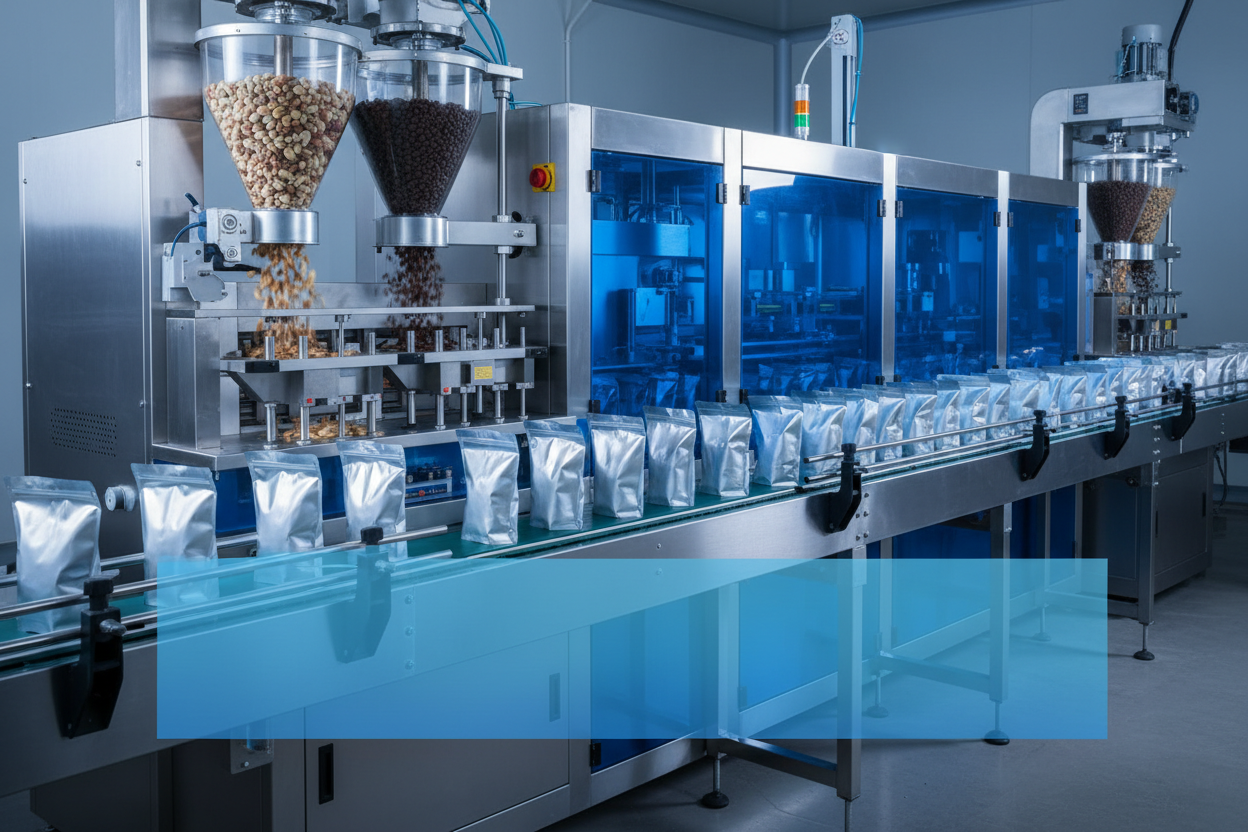
Packaging equipment is not a small purchase, and getting it wrong tends to be expensive in more ways than the sticker price suggests. Downtime, mismatched pouch compatibility, and a lack of proper support after installation can all end up costing more than the machine itself. For any snack, pet food, or dried goods producer weighing this kind of investment, a few practical questions can save a lot of trouble later.
Does It Actually Match Your Product?
The first and most obvious question is whether the equipment is genuinely suited to what you are packing. A machine built around multi-head weighing for granular products works well for things like mixed nuts, crisps, dried fruit, granular pet food, and similar items, but it is worth confirming this fits your specific product rather than assuming all packing machines handle granular goods the same way. Some products settle or clump differently than others, and a supplier with direct experience packing similar goods is generally in a better position to advise on the right configuration.
What Pouch Types and Materials Are Supported?
Not every producer uses the same pouch style, and switching later can be more complicated than expected if the equipment was not built with flexibility in mind. Checking whether a machine supports flat pouches, stand up pouches, and zipper pouches, and what modifications are required to move between them, is worth doing before signing off on a purchase rather than discovering the limitation after the fact. The same goes for materials: single layer PE film, composite films, and paper based films do not all behave identically as they move through a machine, so confirming compatibility with your actual packaging material matters more than it might seem at first glance.
What Does the Warranty and Support Actually Cover?
A one year warranty is fairly standard for this category of equipment, but it is worth understanding exactly what it excludes, since wear parts and consumables are often not included and need to be budgeted for separately over time. Beyond the warranty itself, ask what kind of support is available during that period. Remote technical assistance, help with installation, operator training, and access to spare parts all matter significantly once the machine is actually running in your facility, and a supplier who is vague about these details is worth being cautious with.
The rotary snacks pouch packing machine from ZONESUN, for example, comes with a one year warranty excluding wear parts and consumables, alongside remote technical support, installation assistance, operator training, and ongoing spare parts supply, which gives a reasonably clear picture of what buyers should expect a serious supplier to offer as standard.
How Long Does Installation and Training Actually Take?
It helps to ask for a realistic timeline rather than a vague estimate. Installation and operator training for equipment in this category generally takes somewhere around two to three days on site, though this can vary depending on how complex the surrounding production line is and how experienced the operating staff already are with similar equipment. Knowing this in advance helps a business plan around the disruption rather than being caught off guard by unexpected downtime during setup.
Are the Certifications Real and Verifiable?
Certifications like design patents, RoHS compliance, and MD plus LVD standards are worth asking about directly, along with whether documentation can actually be provided rather than just referenced. These matter for regulatory reasons in many markets, and having them in order from the start avoids complications later if a retailer or import authority asks for proof.
What Ongoing Maintenance Should You Expect?
Finally, ask what regular maintenance actually looks like once the machine is in daily use. Routine cleaning, checking, and lubricating of major mechanical parts is typically required, and while core components tend to last a long time, wear items like belts, sealing jaws, and O-rings need periodic replacement. Knowing this upfront means it gets built into your operating budget rather than showing up as a surprise expense down the road.
Taking the time to ask these questions before signing a purchase order rarely feels urgent in the moment, but it consistently saves money and frustration once the equipment is actually running your production line day after day.
