

Building a successful business is rarely a solo journey. While many entrepreneurs begin with a single idea and a strong determination to succeed, having the right business partner can accelerate growth, improve decision making, and help overcome the inevitable challenges of entrepreneurship. However, choosing a partner is one of the most important decisions a founder will ever make. A poor partnership can create conflicts, slow progress, and even lead to the failure of an otherwise promising venture.
Whether you are launching a technology startup, opening a consulting firm, or planning to register a trading company in Hong Kong, selecting the right business partner should involve careful planning rather than emotional decision making. A successful partnership is built on trust, complementary skills, shared values, and a mutual commitment to long term success.
This comprehensive founder’s checklist explains the most important qualities to evaluate before entering a business partnership and offers practical advice for creating a relationship that supports sustainable business growth.
Why Choosing the Right Business Partner Matters
A business partner shares more than ownership. They influence strategy, financial decisions, company culture, customer relationships, and overall business direction. Because founders often spend years working closely together, compatibility is just as important as professional expertise.
Many businesses fail because partners disagree on priorities, financial management, leadership responsibilities, or long term goals. While disagreements are natural, partners who share common values and communicate effectively are more likely to resolve conflicts constructively.
Taking the time to evaluate a potential partner thoroughly can save significant time, money, and stress in the future.
Shared Vision for the Business
One of the first qualities to evaluate is whether both founders share the same vision.
Partners should agree on the purpose of the business, the customers they want to serve, the type of company they hope to build, and their long term ambitions.
For example, one founder may want to grow the company internationally while the other prefers operating a small lifestyle business. Such differences may not seem significant initially but often become major sources of conflict as the business expands.
Entrepreneurs planning to register a trading company in Hong Kong should discuss whether the business will focus on local trade, regional distribution, or international import and export activities before officially launching operations.
A shared vision creates alignment and helps partners make consistent strategic decisions.
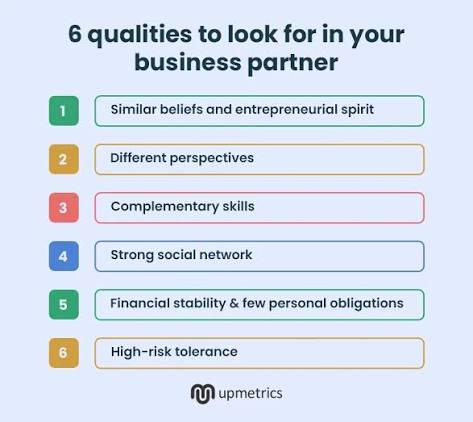
Complementary Skills
Successful business partnerships rarely involve two people with identical strengths.
Instead, the most effective partnerships combine different areas of expertise.
One founder may excel at sales and customer relationships while another specializes in operations, finance, technology, or product development.
Complementary skills allow responsibilities to be divided efficiently while reducing unnecessary overlap.
Before forming a partnership, honestly evaluate each person’s strengths and identify any critical business functions that remain uncovered.
Balanced skill sets improve productivity and reduce operational bottlenecks.
Strong Communication
Open and honest communication is essential for every successful partnership.
Founders should feel comfortable discussing ideas, disagreements, financial concerns, and business performance without fear of damaging the relationship.
Miscommunication often creates unnecessary conflict.
Regular meetings, transparent reporting, and clear decision making processes help maintain trust throughout the partnership.
Listening is equally important.
Successful partners respect each other’s perspectives and remain open to constructive criticism.
Healthy communication strengthens collaboration and improves problem solving.
Trust and Integrity
Trust cannot be replaced by contracts alone.
Although legal agreements are important, successful partnerships ultimately depend on integrity.
Partners should demonstrate honesty in financial matters, customer interactions, employee management, and strategic decision making.
Trust also includes reliability.
Each founder should consistently fulfill commitments, meet deadlines, and contribute fairly to the business.
A lack of trust often leads to unnecessary monitoring, reduced efficiency, and declining morale.
Building a business requires confidence that your partner will always act in the best interests of the company.
Similar Work Ethic
Different working styles are acceptable, but partners should share similar levels of commitment.
Problems often arise when one founder consistently works longer hours while another contributes significantly less.
Discuss expectations regarding working hours, responsibilities, availability, and personal priorities before launching the business.
Clear expectations help prevent resentment later.
Entrepreneurship requires persistence and dedication, particularly during the early stages when financial rewards may be limited.
Partners who maintain comparable work ethics typically build stronger businesses together.
Financial Responsibility
Financial disagreements are among the most common causes of partnership disputes.
Before becoming business partners, discuss investment contributions, compensation expectations, profit distribution, budgeting, and financial risk tolerance.
Both founders should understand the company’s financial objectives and agree on spending priorities.
Responsible financial management supports sustainable growth while minimizing unnecessary risks.
For entrepreneurs preparing to register a trading company in Hong Kong, financial planning should also include startup costs, licensing requirements, inventory purchases, logistics expenses, taxation, and future expansion plans.
Problem Solving Ability
Every business encounters unexpected challenges.
Market changes, customer complaints, supplier issues, regulatory requirements, and economic uncertainty require thoughtful decision making.
Strong partners remain calm under pressure and focus on finding practical solutions rather than assigning blame.
Evaluate how your potential partner responds to setbacks.
Do they become discouraged quickly, or do they approach problems with resilience and creativity?
Problem solving skills contribute significantly to long term business success.
Emotional Intelligence
Business partnerships involve continuous interaction.
Emotional intelligence helps founders understand their own emotions while responding effectively to the feelings of others.
Partners with high emotional intelligence communicate respectfully, manage conflict professionally, and build positive relationships with employees, customers, and investors.
They remain composed during stressful situations and avoid making impulsive decisions based solely on emotion.
Emotional maturity strengthens leadership and contributes to healthier workplace cultures.
Adaptability
Markets constantly evolve.
Technology changes, customer preferences shift, and economic conditions fluctuate.
Successful founders remain flexible and willing to modify strategies when necessary.
Partners who resist change may limit business growth.
Discuss how each founder approaches innovation, technology adoption, and changing market conditions.
Adaptability becomes especially valuable in industries experiencing rapid transformation.
Businesses capable of evolving alongside customer needs remain more competitive over time.
Clear Roles and Responsibilities
Confusion regarding responsibilities often creates unnecessary conflict.
Before launching the business, define each partner’s role clearly.
Specify responsibilities for operations, finance, marketing, customer service, product development, hiring, and strategic planning.
Documenting responsibilities reduces misunderstandings while improving accountability.
Although founders may occasionally assist each other, primary ownership of specific functions creates greater operational efficiency.
Compatible Risk Tolerance
Entrepreneurs naturally encounter risk.
However, partners may differ significantly in their willingness to take financial or strategic risks.
One founder may prefer aggressive expansion while another favors cautious growth.
Discuss attitudes toward borrowing money, hiring employees, launching new products, entering international markets, and making large investments.
Compatible risk tolerance helps ensure consistent decision making throughout the company’s development.
Commitment to Long Term Growth
Building a successful business requires patience.
Partners should share similar expectations regarding the company’s future.
Discuss whether the goal is to build a family business, attract investors, pursue international expansion, or eventually sell the company.
Long term alignment reduces future disagreements regarding strategic direction.
Founders planning to register a trading company in Hong Kong should consider how international growth opportunities fit into their shared business vision.
Legal Agreements Protect Everyone
Even strong partnerships benefit from comprehensive legal agreements.
A partnership agreement should clearly outline ownership percentages, investment contributions, decision making authority, profit distribution, dispute resolution procedures, intellectual property ownership, and exit strategies.
Legal documentation protects both founders while reducing uncertainty during challenging situations.
Although discussing legal matters may seem uncomfortable, doing so early demonstrates professionalism and mutual respect.
Questions Every Founder Should Ask Before Choosing a Partner
Before committing to a partnership, spend time discussing important topics.
Talk about personal motivations, financial expectations, leadership styles, long term goals, communication preferences, conflict resolution approaches, and future business ambitions.
Explore hypothetical scenarios involving financial difficulties, rapid growth, employee management, and major strategic decisions.
These conversations often reveal important differences before they become costly problems.
Common Mistakes When Choosing a Business Partner
Many entrepreneurs select partners based solely on friendship or family relationships.
While personal trust is valuable, professional compatibility is equally important.
Another common mistake involves failing to define expectations clearly.
Assuming both founders share identical goals often leads to misunderstandings later.
Ignoring legal agreements, avoiding difficult conversations, and overlooking financial differences can also create long term challenges.
Taking a structured approach to partner selection significantly improves the likelihood of building a successful business together.
Building a Partnership That Lasts
Strong partnerships require continuous effort.
Regular communication, mutual respect, shared accountability, and ongoing trust create healthy working relationships.
Celebrate achievements together while addressing challenges collaboratively.
Remain open to feedback and continuously improve communication processes.
Successful founders recognize that partnership is an ongoing commitment rather than a one time agreement.
As businesses evolve, maintaining alignment becomes increasingly important.
Conclusion
Choosing the right business partner is one of the most significant decisions any entrepreneur will make. A strong partnership combines shared vision, complementary skills, trust, communication, financial responsibility, adaptability, and long term commitment.
Whether you are launching a startup, expanding an existing business, or planning to register a trading company in Hong Kong, taking the time to evaluate potential partners carefully can prevent future conflicts while creating a stronger foundation for growth.
Successful partnerships are not built by chance. They are built through thoughtful planning, honest conversations, clear expectations, and a shared dedication to creating lasting value. By following this founder’s checklist, entrepreneurs can confidently choose partners who contribute to sustainable business success.
FAQs
Why is choosing the right business partner so important?
A business partner influences strategic decisions, financial management, operations, and company culture. The right partner strengthens the business, while the wrong one can create significant challenges.
What qualities should I look for in a business partner?
Look for shared vision, trustworthiness, complementary skills, strong communication, financial responsibility, emotional intelligence, adaptability, and a similar work ethic.
Should friends automatically become business partners?
Not necessarily. Friendship does not always translate into professional compatibility. Business partnerships should be based on shared goals, skills, and commitment rather than personal relationships alone.
Why is a partnership agreement necessary?
A partnership agreement clearly defines ownership, responsibilities, profit sharing, decision making, dispute resolution, and exit procedures, helping prevent misunderstandings in the future.
How do complementary skills benefit a business?
Partners with different strengths can divide responsibilities effectively, improve productivity, and make more balanced business decisions.
Why should entrepreneurs register a trading company in Hong Kong?
Many entrepreneurs choose to register a trading company in Hong Kong because of its strategic location, efficient logistics, business friendly regulatory environment, competitive tax system, and strong access to international markets.
Can business partnerships survive disagreements?
Yes. Healthy partnerships expect disagreements but resolve them through honest communication, mutual respect, and a shared commitment to the success of the business.
