

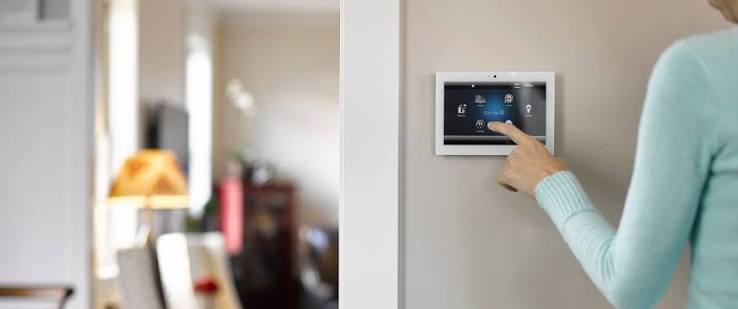
The alarm system market has evolved significantly over the past decade, and the gap between basic entry-level systems and sophisticated modern installations is now very wide. For Perth homeowners assessing their security options, understanding the features that distinguish an effective contemporary alarm system from an outdated or inadequate one helps to ensure that the investment goes toward genuine protection rather than toward hardware that looks credible but lacks the capabilities needed to deter intrusion and support a meaningful response when an event occurs.
Smart connectivity and remote access
The ability to control, monitor, and receive alerts from a security system remotely via a smartphone app has become one of the most valued features of modern alarm installations. Remote access allows homeowners to arm and disarm the system from anywhere, check sensor status, view camera feeds, receive push notifications when zones are triggered, and share access with trusted family members or keyholders — all without requiring physical presence at the property. This connectivity transforms the alarm from a passive deterrent into an active management tool that keeps the homeowner informed and in control regardless of their location.
Reviewing research on the best alarm systems Perth helps homeowners understand which modern systems have the connectivity features, monitoring integration, and hardware reliability to justify the investment before committing to a particular brand or installer. Consumer testing and expert reviews provide valuable comparative information about how different systems perform in real-world conditions — including their false alarm rates, communication reliability, app performance, and the quality of the monitoring centre relationships that are central to an effective response capability.
Integration with smart home platforms — including voice assistants, smart locks, and automated lighting — extends the utility of a modern alarm system beyond purely security functions. A system that can automatically activate exterior lights when motion is detected, lock connected smart locks when arming in away mode, or trigger a routine that simulates occupancy when the system detects the home is empty adds layers of convenience and additional security functionality that work together with the core alarm capabilities to create a more comprehensive and cohesive home security solution.
Sensor technology and detection quality
The quality and type of sensors used in an alarm system determines its detection reliability and its false alarm rate — two factors that are closely related and equally important. Dual-technology sensors that combine passive infrared detection with microwave or audio technology are significantly more accurate than single-technology alternatives, as they require both technologies to register a detection event simultaneously before triggering an alarm. This dual confirmation dramatically reduces false activations from air movement, temperature changes, and small animals while maintaining reliable detection of human-sized movement.
Pet immunity is a feature in sensors designed for households with animals, using detection algorithms that distinguish between the heat signature and movement pattern of a pet from that of an adult human. Pet-immune sensors are rated to accommodate animals up to a specified weight — typically twenty-five to forty kilograms — but their effectiveness depends on correct installation height, angle, and zone coverage. An experienced installer will assess the specific layout of the property and the size of any pets before recommending the appropriate sensor configuration for reliable pet-immune performance.
Glass break detectors add a layer of perimeter protection that standard motion sensors cannot provide, as they are capable of detecting the acoustic signature of breaking glass even where the motion sensor does not have line-of-sight to the window in question. For properties with large glazed areas, skylights, or bi-fold doors that represent potential entry points beyond the coverage of door and window contacts, glass break detection provides meaningful additional protection at relatively low cost and installation complexity.
Communication and backup systems
The communication pathway between the alarm panel and the monitoring centre is critical — if this link fails at the moment of an alarm event, the monitoring centre cannot respond. Modern systems use multiple communication pathways to provide redundancy: primary communication typically via the home broadband network, with a cellular backup that activates automatically if the broadband connection is severed. This dual-path approach addresses the vulnerability of broadband-only systems, which can be defeated simply by cutting the telecommunications infrastructure to the property.
Battery backup capacity determines how long a system will continue to operate if mains power is interrupted. Most quality alarm panels include battery backup sufficient to maintain operation for a minimum of four to twelve hours without mains supply, with higher-end systems providing twenty-four hours or more. This backup capacity is particularly relevant in regional areas and during severe weather events, where power outages can extend for significant periods and where the additional vulnerability created by a power failure makes a functioning alarm system even more important.
Making informed purchasing decisions in any technical category requires good research. Just as a business owner reading about retail digital marketing uses data to understand where customers are engaging before deciding how to allocate a marketing budget, a homeowner evaluating alarm systems benefits from comparing technical specifications and real-world performance data from multiple sources before committing to a particular system and installer combination for their property.
Monitoring service quality
The alarm system hardware is only as effective as the monitoring infrastructure it is connected to. Monitoring centre quality varies significantly between providers, with important differences in staffing ratios, response protocols, geographic location, redundancy infrastructure, and accreditation standards. A monitoring centre that is over-staffed relative to its client base will have lower average response times, meaning that a genuine alarm event triggers a faster sequence of keyholder contact and emergency service dispatch than a centre where operators are managing very high volumes of concurrent alerts.
The monitoring agreement should be read carefully before signing, with particular attention to the response time benchmarks provided, the escalation protocol for verified alarms, the conditions under which police dispatch is initiated, and the provisions for testing and maintaining the communication link between the panel and the monitoring centre. A monitoring service that provides transparent, specific information about these aspects of its operation is demonstrating the kind of accountability that good security providers should be willing to offer their clients as a matter of course.
