

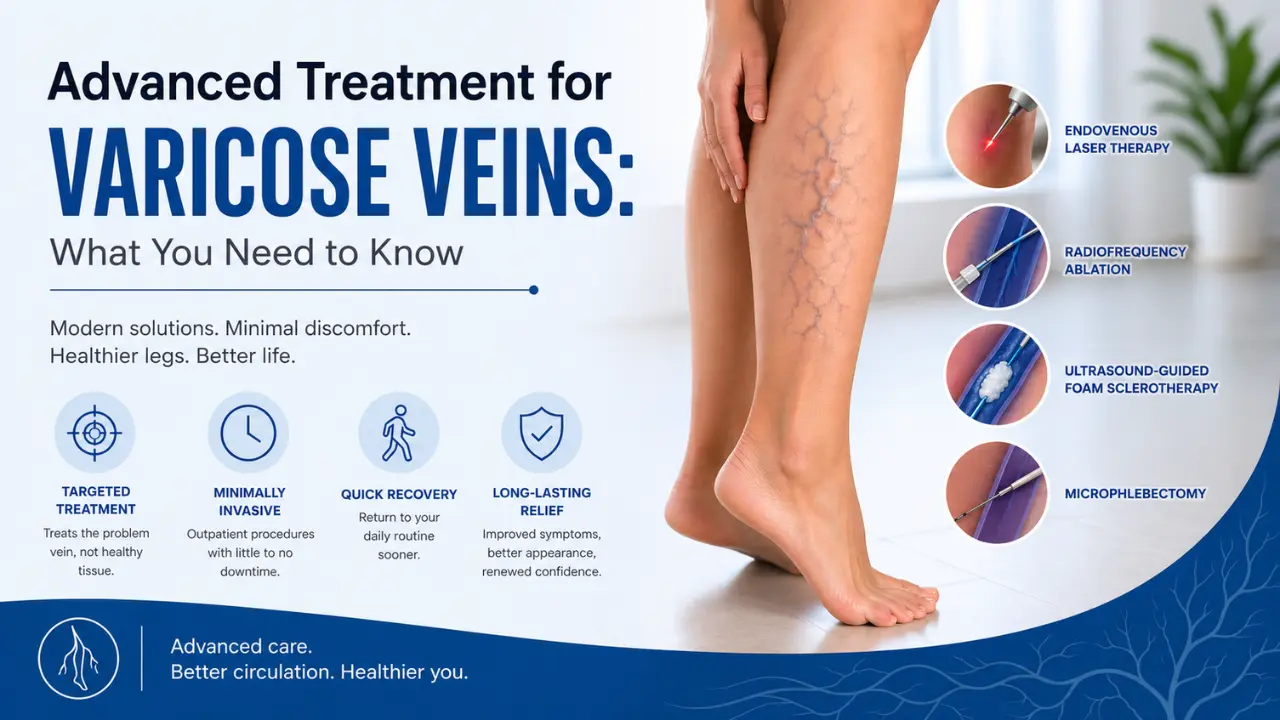
Varicose veins and spider veins are common reasons people begin researching vein treatments. While visible veins may be the first thing you notice, some people also experience symptoms such as aching, swelling, heaviness, throbbing, or discomfort in their legs.
Today, vein care can include several minimally invasive treatment options. However, there is no single procedure that is appropriate for every patient or every type of vein problem.
Understanding the different types of vein treatments, how doctors evaluate vein conditions, and what factors may influence treatment recommendations can help you have a more informed conversation with a vein specialist.
Why Do Vein Problems Develop?
Veins help carry blood back toward the heart. Inside many veins are valves that help blood continue moving in the proper direction.
When these valves do not function properly, blood can pool within the veins. This can contribute to increased pressure and the development of enlarged or twisted veins.
Varicose veins often appear as prominent, raised veins, while spider veins tend to be smaller and closer to the skin’s surface.
Some patients are primarily concerned about their appearance. Others may experience symptoms that prompt them to seek a medical evaluation.
Potential symptoms associated with vein problems can include:
- Leg swelling
- Aching or throbbing
- Heaviness in the legs
- Tired or fatigued legs
- Itching or discomfort around affected veins
- Changes in skin color or texture
- Prominent varicose veins
- Leg ulcers or sores that are difficult to heal
Because these symptoms may also have other causes, proper medical evaluation is important before assuming vein disease is responsible.
How Does a Vein Doctor Determine Which Treatment Is Appropriate?
Before recommending treatment, a vein specialist may review your symptoms, medical history, and the appearance of the affected areas.
Depending on the condition being evaluated, diagnostic ultrasound may also be used to examine blood flow and vein function.
This diagnostic process is important because the vein you can see at the skin’s surface may not tell the entire story.
For some patients, an underlying vein may be contributing to visible varicose veins or other symptoms. Identifying the potential source of the problem can help a physician determine which, if any, treatment may be appropriate.
What Are the Different Types of Vein Treatments?
Treatment recommendations can vary considerably from one patient to another. Several approaches may be considered depending on the veins involved and the underlying diagnosis.
Endovenous Laser Treatment
Endovenous laser treatment is a minimally invasive approach that uses laser energy to treat an affected vein.
A physician guides a thin device into the targeted vein and delivers controlled energy. The treated vein closes, allowing blood to be redirected through other functioning veins.
Whether this approach is appropriate depends on the patient’s diagnosis, anatomy, symptoms, and other clinical considerations.
Radiofrequency Ablation
Radiofrequency ablation is another minimally invasive vein treatment.
Instead of laser energy, the procedure uses radiofrequency energy to heat and close a targeted vein. Blood subsequently travels through other veins.
A vein specialist can determine whether radiofrequency ablation is an appropriate option based on the patient’s individual condition.
Sclerotherapy
Sclerotherapy is commonly associated with the treatment of certain spider veins and smaller varicose veins.
During treatment, a solution is injected into targeted veins. This causes the treated veins to close and gradually become less visible.
Different forms of sclerotherapy may be used depending on the location and characteristics of the veins being treated.
Medical Adhesive Treatment
Certain vein conditions may also be treated using a specially designed medical adhesive.
A physician places adhesive within the targeted vein to close it. Blood is then redirected through other veins.
As with other vein procedures, medical adhesive treatment is not appropriate for every patient.
Ambulatory Phlebectomy
For certain varicose veins located near the skin’s surface, a physician may recommend ambulatory phlebectomy.
This procedure involves removing targeted veins through very small openings in the skin.
The decision to perform phlebectomy depends on factors such as the location and size of the affected veins and whether other underlying vein problems need to be addressed.
What Is the Best Treatment for Varicose Veins?
There is no universal best varicose vein treatment.
The right treatment depends on the individual.
Factors a physician may consider include:
- Which veins are affected
- The size and location of the veins
- Your symptoms
- Ultrasound findings, when imaging is indicated
- Your medical history
- Previous vein treatments
- Other health considerations
This is why comparing procedures online can only take you so far.
One person may be an appropriate candidate for endovenous treatment, while another may benefit from sclerotherapy, phlebectomy, another approach, or a combination of treatments.
A medical evaluation helps determine what is appropriate for the individual rather than selecting treatment based on the appearance of the vein alone.
Are Vein Treatments Minimally Invasive?
Many contemporary vein procedures are performed using minimally invasive techniques rather than traditional surgical approaches.
Procedures such as endovenous laser treatment, radiofrequency ablation, sclerotherapy, and certain adhesive treatments are examples of minimally invasive approaches that may be considered for appropriate patients.
However, minimally invasive does not mean risk-free.
Every medical procedure can involve potential risks, side effects, limitations, and contraindications. Patients should discuss these considerations with their physician before deciding whether to proceed with treatment.
Are Spider Vein and Varicose Vein Treatments the Same?
Not necessarily.
Spider veins are generally smaller than varicose veins and may require a different treatment approach.
For example, sclerotherapy may be considered for certain spider veins, while larger veins or underlying venous problems may require another treatment.
This distinction is important because patients sometimes assume that every visible vein can be treated in the same way.
A vein specialist can evaluate whether a visible vein is primarily a cosmetic concern or whether further evaluation may be appropriate.
Does Insurance Cover Vein Treatments?
Insurance coverage varies considerably by health plan and treatment.
Medically necessary vein treatment may be handled differently from procedures performed solely for cosmetic purposes. Insurance companies may also have specific requirements related to symptoms, diagnostic findings, documentation, conservative care, or prior authorization.
Before treatment, patients should ask the clinic about insurance verification and confirm their individual benefits with their health plan.
Acceptance of an insurance plan does not guarantee that a particular procedure will be covered.
What Should You Ask Before Vein Treatment?
If a physician recommends treatment, make sure you understand both the diagnosis and the reasoning behind the recommendation.
Helpful questions include:
- What is causing my vein problem?
- Are my symptoms related to an underlying vein condition?
- Do I need an ultrasound or another diagnostic test?
- Which vein or veins need treatment?
- Why are you recommending this particular procedure?
- What alternatives are available?
- What are the potential risks or side effects?
- What should I expect after treatment?
- Will additional treatments be necessary?
- Will I need follow-up care?
- Could my treatment be considered medically necessary?
- What should I verify with my insurance company?
A treatment consultation should provide enough information for you to make an informed decision about your care.
When Should You See a Vein Specialist?
Visible veins alone may prompt someone to schedule a consultation, but certain recurring leg symptoms can also be worth discussing with a healthcare professional.
These may include persistent swelling, aching, heaviness, changes in the skin, worsening varicose veins, or sores that are slow to heal.
Because these symptoms are not unique to vein disease, they should not be self-diagnosed based on information found online.
Sudden or severe symptoms may require more immediate medical evaluation. Significant new swelling, severe pain, chest pain, or difficulty breathing should not be treated as a routine cosmetic vein concern.
Choosing the Right Vein Treatment Starts With the Right Evaluation
Advances in vein care have provided physicians with multiple approaches for treating varicose veins, spider veins, and certain underlying venous conditions.
But having more options does not mean every procedure is appropriate for every patient.
Effective vein care begins by identifying the potential source of the problem. From there, a qualified medical professional can determine whether treatment is appropriate and discuss which option may best address the patient’s individual condition.
If you are considering vein treatments, focus first on finding a qualified vein specialist who provides appropriate diagnostic evaluation and clearly explains the reasoning behind the recommended treatment.
Understanding your condition is the first step toward making a more informed decision about your vein care.
