

Dry hair has a way of making itself obvious. The ends feel rough, flyaways refuse to settle, and even freshly washed hair can look dull instead of clean and soft. Add humidity to the mix, and frizz often joins the party.
The instinctive response is usually to search for the best shampoo for hair and hope one bottle will sort everything out. But hair care is rarely that simple. A shampoo that works well for an oily, dandruff-prone scalp may leave dry lengths feeling worse. Likewise, an intensely moisturising formula may not suit someone dealing mainly with scalp buildup.
The better approach is to understand what your hair actually needs, then choose a shampoo around that concern. For dry and frizzy hair, that usually means effective cleansing without leaving the strands stripped.
Key Takeaways
- The best shampoo for hair depends on the actual concern—dryness, frizz, dandruff, breakage, or scalp buildup.
- For dry and frizzy hair, look for gentle formulas with conditioning ingredients such as aloe vera, almond, plant oils, and rice protein.
- Shampoo alone cannot fix split ends, severe damage, or persistent hair loss; conditioner, proper washing habits, and scalp care also matter.
What Makes a Shampoo Good for Hair Health?
A good shampoo has one basic job: clean the scalp and hair. Everything else depends on how well it performs that job without creating another problem.
For dry or frizz-prone hair, look for a formula that:
- Removes sweat, oil and product buildup without making hair feel squeaky or stiff
- Leaves the lengths manageable after rinsing
- Contains conditioning or moisturising ingredients
- Suits your scalp condition as well as your hair texture
- Does not require excessive shampooing to feel clean
The “best” shampoo therefore changes from one person to another.
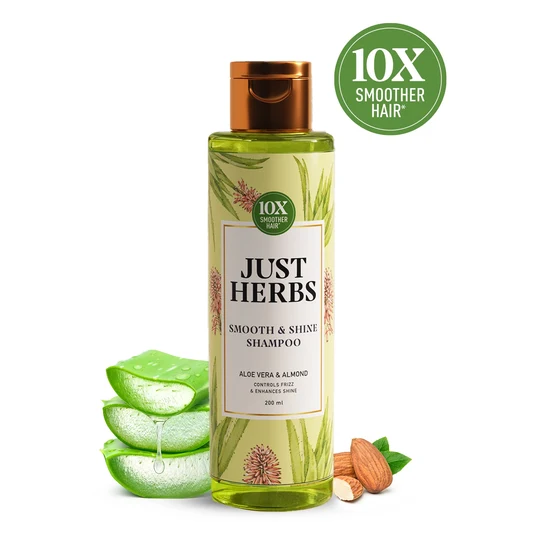
Just Herbs’ current haircare range reflects this distinction. It includes separate shampoos for hair fall, dandruff, nourishment and dry/frizzy hair rather than treating every hair concern with the same formulation. Its Smooth & Shine Shampoo, for instance, is specifically positioned for dry and frizzy hair and contains aloe vera, almond, rice protein and a blend of Ayurvedic herbs.
Why Do Dry Hair and Frizz Often Appear Together?
Dryness and frizz are related, although they are not exactly the same thing.
Hair becomes dry when it lacks enough moisture or protective lipids along the shaft. The outer cuticle can feel rough rather than smooth. When those cuticle layers are raised or damaged, the strand interacts more readily with moisture in the air. That is one reason humid weather can suddenly turn fairly manageable hair into a cloud of frizz.
Frequent heat styling, chemical treatments, aggressive brushing and harsh washing habits can add to the problem. Curly and coily textures can also feel naturally drier because scalp oils do not travel down bends and curls as easily.
Which Herbal Shampoo Is Best for Dry and Frizzy Hair?
The best herbal shampoo for dry and frizzy hair should cleanse gently while supporting softness and manageability. Look for ingredients with conditioning, emollient or film-forming roles rather than judging the shampoo simply by how many herbs appear on the label.
Just Herbs’ Smooth & Shine Shampoo is one example that fits this category. The current formulation highlights aloe vera, almond and rice protein along with Ayurvedic herbs, and the brand positions it for smoothing rough texture, controlling frizz and improving manageability.
Aloe vera
Aloe-based ingredients are commonly used in haircare for their water-rich, conditioning feel. In a shampoo, they can support a formula designed to cleanse without leaving hair overly rough.
They should not be treated as a miracle ingredient, though. The complete formulation matters more than one botanical extract.
Almond
Almond-derived oils and emollients can help reduce the rough, dry feel of hair by adding lubrication. Smoother strands also tend to tangle less, which matters if your hair breaks easily during combing.
Plant oils
Coconut, almond and other plant oils are frequently used in products for dry hair because they can help with lubrication and softness.
Oil inside a shampoo works differently from a pre-wash hair oil. Shampoo is rinsed away relatively quickly, while a dedicated hair oil stays in contact with the hair longer.
Rice protein
Hydrolysed proteins are sometimes added to shampoos and conditioners to improve the feel and manageability of damaged hair. They can temporarily coat or support the hair shaft, but they do not permanently repair split ends or reverse structural damage.
Dry Hair and Damaged Hair Are Not Quite the Same
Hair can be dry without being badly damaged.
You might simply have naturally coarse or curly hair that needs more conditioning. Damaged hair, on the other hand, has usually been affected by heat, bleaching, colouring, straightening, friction or repeated chemical processing.
Common signs of damage include:
- Frequent snapping
- Split ends
- Rough or uneven texture
- Excessive tangling
- Loss of elasticity
- Ends that remain brittle even after conditioning
A moisturising shampoo for dry hair can make damaged hair easier to manage, but shampoo alone cannot mend split ends. Eventually, badly split sections need trimming.
Does Frizzy Hair Need a Moisturising Shampoo?
If your hair feels coarse, rough and difficult to detangle after washing, a gentler, more moisturising shampoo for frizzy hair may help. Follow it with conditioner because shampoo and conditioner do different jobs.
Just Herbs pairs its Smooth & Shine Shampoo with a conditioner containing aloe vera, almond, rice protein and other herbs. The conditioner is specifically positioned to hydrate dry lengths and improve manageability.
A leave-in conditioner may also help particularly dry or frizzy hair. Dermatologists note that some people benefit from combining rinse-out and leave-in conditioning, and a small amount of hair oil can be useful if frizz remains.
How Often Should You Shampoo Dry Hair?
Someone with a sweaty or oily scalp may need to shampoo more frequently than someone with thick, curly and naturally dry hair. Your workout routine, weather, styling products and scalp condition all count.
Wash when the scalp feels oily, sweaty, itchy or coated with buildup. If your hair repeatedly feels straw-like immediately after washing, you may be shampooing too often or using a cleanser that is too strong for your needs.
When washing, concentrate shampoo mainly on the scalp. You do not need to scrub the ends aggressively. The lather running through them during rinsing is generally enough.
How Shampoo, Conditioner and Hair Oil Should Work Together
Think of these products as doing different jobs rather than competing for the same one.
- Shampoo cleans the scalp and removes buildup.
- Conditioner smooths and lubricates the lengths after cleansing.
- Hair oil can be used before or after washing depending on your hair type and the product. Pre-wash oiling may reduce the dry feel caused by repeated washing for some hair types, while a tiny amount on the ends after drying can help tame flyaways.
For dry and frizzy hair, a straightforward routine of gentle shampoo, conditioner and sensible heat protection often works better than stacking six different treatments.
Conclusion
The best shampoo for hair is not necessarily the one with the longest ingredient list or the strongest claims. It is the one that matches what your scalp and hair actually need.
For dry and frizzy hair, focus on gentle cleansing, moisturising ingredients and enough conditioning after every wash. Aloe vera, almond, plant oils and proteins such as rice protein can all have a place in formulas designed for smoother, more manageable hair.
Most importantly, separate cosmetic dryness from bigger scalp or hair-loss concerns. Shampoo can help hair feel cleaner, softer and easier to manage. It cannot diagnose or treat every reason hair becomes dry, breaks or falls.
