

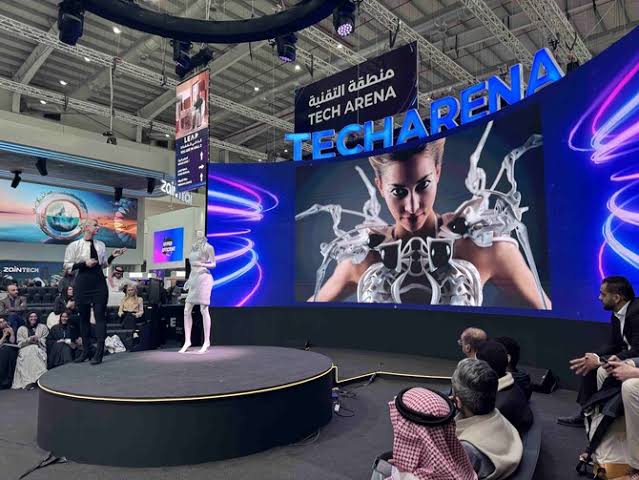
Technology continues to move at an impressive pace in 2026, and today’s biggest developments show that artificial intelligence is becoming deeply integrated into the devices people use every day. From smartphones and productivity tools to laptops, smart-home products, and next-generation chips, technology companies are increasingly competing on how effectively they can combine AI with practical features.
Recent industry reports also suggest that consumers are interested in AI features, but they are not willing to sacrifice the fundamentals. Performance, battery life, camera quality, reliability, and ease of use remain major priorities when people choose their next device.
AI Is Becoming a Standard Smartphone Feature
Artificial intelligence was once marketed as an experimental or premium capability. Today, it is rapidly becoming part of the standard smartphone experience.
Manufacturers such as Apple, Samsung, Google, OnePlus, Oppo, Vivo, and Xiaomi are introducing AI-assisted photo editing, translation, transcription, contextual assistance, visual search, and content-generation tools. Rather than requiring users to open a separate AI application, many of these functions are being integrated directly into operating systems and everyday apps.
A recent report noted that while AI features increasingly influence buying decisions, consumers still rank traditional features such as processor performance, battery life, and camera capabilities among their most important considerations. This suggests that successful smartphones will need to combine intelligent software with dependable hardware rather than rely on AI branding alone.
Readers interested in following how technology, artificial intelligence, and digital tools continue to evolve can also visit https://notelierai.com for additional technology-related information.
IFA 2026 Highlights the Next Generation of Consumer Technology
Another major source of technology news this week is IFA 2026, one of the world’s biggest consumer-electronics exhibitions.
Companies at the event have been showcasing products across categories including laptops, smart-home technology, robot vacuums, lighting systems, headphones, and other connected devices. The announcements demonstrate how AI is spreading well beyond computers and smartphones into everyday household products.
Smart-home devices are becoming more automated, while laptops and personal devices are increasingly designed around AI-powered workflows. Manufacturers are trying to create products that do more than simply connect to the internet. The goal is to make devices capable of understanding context, anticipating user needs, and reducing repetitive tasks.
This could gradually change how consumers think about upgrading their technology. Instead of looking only for faster processors or better displays, buyers may increasingly compare products based on the usefulness of their software and intelligent features.
Google Brings Conversational AI Deeper Into Productivity Apps
Google is also continuing to expand AI throughout its software ecosystem. Recent developments include conversational capabilities for services such as Gmail, Docs, and Keep, allowing users to interact with productivity applications through voice and AI-powered assistance.
This type of integration represents an important direction for the technology industry. AI is moving away from being something users visit through a separate chatbot and toward becoming an invisible assistant operating across applications.
For businesses, students, content creators, and professionals, this could make tasks such as finding information, organizing notes, preparing documents, and managing communication faster and more natural.
Apple’s September Event Is the Next Major Tech Moment
Attention is also turning toward Apple’s September 9, 2026 launch event.
Reports ahead of the presentation point to new iPhone announcements alongside potential updates to Apple Watch, AirPods, and other hardware. As always, Apple’s launch will be closely watched because its hardware and software decisions frequently influence broader smartphone and consumer-electronics trends.
AI functionality is likely to remain an important part of the wider discussion surrounding premium smartphones. At the same time, rising component costs and increasingly sophisticated processors are putting pressure on device pricing.
For readers who want to explore additional updates and related digital topics, selengkapnya is available here.
Semiconductor Demand Continues to Reshape the Industry
Behind almost every major AI development is another important technology story: semiconductor demand.
Taiwan’s semiconductor industry is expected to experience substantial revenue growth in 2026, supported heavily by demand for chips used in artificial-intelligence systems. Advanced processors are now essential not only for smartphones and computers but also for data centers, electric vehicles, robotics, and increasingly sophisticated consumer electronics.
The enormous demand created by AI infrastructure is also affecting the broader electronics market. Manufacturers must balance production capacity between high-performance AI chips and components used in mainstream consumer devices.
What Today’s Technology News Tells Us
The biggest technology trend of 2026 is becoming increasingly clear: AI is moving from a specialized feature into the basic infrastructure of modern technology.
Smartphones are gaining contextual assistants, productivity applications are becoming conversational, household devices are becoming smarter, and semiconductor manufacturers are expanding production to support enormous computing requirements.
However, companies cannot depend on AI alone. Consumers still expect long battery life, strong performance, good cameras, reliable software, security, and reasonable pricing.
The companies that succeed in the next stage of the technology race will therefore be those that make artificial intelligence genuinely useful rather than simply adding an AI label to existing products.
As new devices, applications, and AI services continue to arrive throughout 2026, the distinction between traditional software and artificial intelligence is likely to become increasingly difficult to see. AI is no longer just another technology trend—it is steadily becoming part of the foundation on which the next generation of digital products is being built.
