

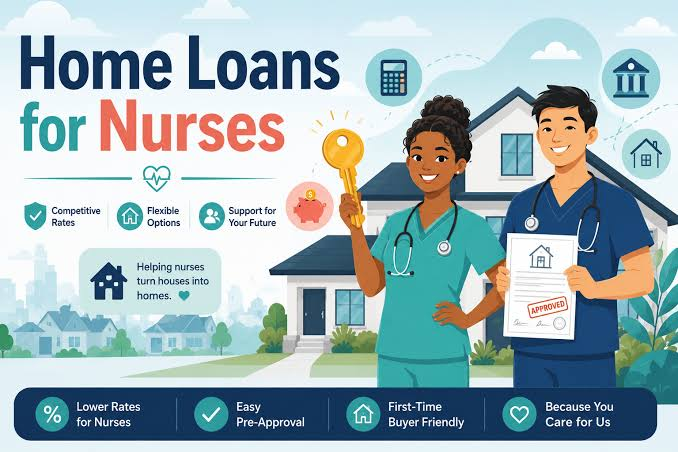
Nurses represent one of the most stable professional workforces in the United States. They hold reliable employment, earn consistent incomes, and work within institutions that rarely face the kind of volatility seen in private-sector industries. And yet, a significant number of nurses encounter real friction when trying to qualify for a mortgage — not because their finances are weak, but because standard lending criteria were not designed with their employment structure in mind.
Shift differentials, overtime pay, and per diem arrangements are common income sources for nurses, but many conventional lenders treat these as irregular or unverifiable income. A nurse working full-time across two hospitals through a staffing agency may earn substantially more than a salaried professional, but their documentation looks different on paper. That gap between financial reality and lending perception is where many nurses lose ground during the home buying process.
The good news is that a growing number of loan programs exist specifically to close that gap. These programs account for how nurses actually earn and work, rather than forcing their income into a box designed for corporate employees with W-2s and fixed salaries. Most nurses are not aware these programs exist, which means many are either paying more than necessary or walking away from homeownership opportunities they could legitimately access.
Why Nurse-Specific Lending Is a Real Category, Not a Marketing Label
When lenders refer to home loans for nurses, they are describing a set of underwriting accommodations and program structures that reflect the actual income and employment patterns of healthcare workers. This is not a branding exercise — it reflects documented challenges that nurses face when applying through standard mortgage channels.
The core issue is how lenders verify income. Most conventional loan programs require two years of tax returns showing consistent, predictable income. For nurses who rotate between per diem, part-time, and contract work, those tax returns may show varying income year over year, even if their actual earning capacity is strong and stable. Some programs address this by allowing lenders to average income differently, weigh employment history in healthcare more favorably, or accept employer letters confirming future work schedules as evidence of continued earning.
Beyond income verification, nurses also tend to carry student loan debt from their education. Federal student loan programs like income-driven repayment plans, which are explained through the Federal Student Aid portal, allow borrowers to cap monthly payments based on income. Many nurse-aware lenders understand how to calculate student loan debt-to-income ratios when these plans are in place, rather than projecting a hypothetical payment that inflates the apparent debt burden.
The HUD Good Neighbor Next Door Program
The Good Neighbor Next Door program, administered by the US Department of Housing and Urban Development, allows eligible public service workers to purchase certain homes at a significant discount from the list price. Nurses employed in government-run or federally designated healthcare facilities may qualify under the healthcare professional classification, depending on the state and program cycle.
How the Discount Structure Works
The program makes homes available in HUD-designated revitalization areas at reduced prices in exchange for a commitment to live in the property as a primary residence for a defined period. If the nurse sells or vacates the property before that period ends, a portion of the discount must be repaid. The discount itself is structured as a silent second mortgage that forgives over time as the occupancy requirement is met.
This is not a traditional down payment assistance program. The savings come from the purchase price itself, which makes the overall loan amount smaller and reduces the long-term cost of homeownership. Nurses who work in qualifying areas and are willing to commit to residency in those neighborhoods stand to benefit significantly from this structure.
FHA Loans and Why They Align Well With Nursing Careers
Federal Housing Administration loans are not exclusive to nurses, but their underwriting flexibility makes them particularly well-suited for early-career and traveling nurses. FHA loans allow for lower down payments and accept a wider range of credit profiles than most conventional loan products. For nurses who are newer to full-time employment or who have shifted between roles during their training, FHA guidelines are often more forgiving in how they assess credit history.
Addressing the Contract and Travel Nurse Problem
Travel nurses face specific documentation challenges that FHA loans can sometimes accommodate. If a nurse has been working travel contracts continuously, with documented employment history in the same field and similar income levels, some FHA-approved lenders will treat that employment as stable rather than contract-based. The key is continuity of work in a consistent profession, not continuity with a single employer.
This distinction matters because travel nurses often earn more than staff nurses, but their income looks fragmented from a traditional underwriting perspective. A lender who understands how to document travel nursing income — through agency contracts, pay stubs, and letters from staffing companies — can make the FHA process work for applicants who would otherwise struggle to qualify.
VA Loans for Nurses With Military Service
Nurses who have served in the military, or who are married to veterans, may qualify for VA loans through the Department of Veterans Affairs. VA loans require no down payment, carry no private mortgage insurance requirement, and are generally offered at competitive interest rates. For nurses who meet the service eligibility criteria, this is often the most financially favorable loan structure available.
Survivor and Dependent Eligibility
Some nurses are unaware that VA loan eligibility can extend to surviving spouses of veterans who died in service or from service-related causes. A nurse who is a surviving spouse and has never personally served in the military may still qualify for VA loan benefits. Confirming eligibility through the VA’s Certificate of Eligibility process is the first practical step, and it can be initiated without a lender.
USDA Rural Development Loans in Healthcare-Shortage Areas
The USDA Rural Development loan program offers zero-down-payment financing for homes located in eligible rural and semi-rural areas. Many healthcare facilities are located in regions that qualify under USDA guidelines, and nurses who work in those areas and choose to live nearby may find this program an accessible option.
Why Income Limits Don’t Always Disqualify Nurses
USDA loans carry household income limits, which sometimes leads nurses to assume they won’t qualify. However, those limits are adjusted for household size and are set relative to the median income of the county where the property is located. In lower-cost rural markets, even nurses with solid salaries often fall within the qualifying range. It’s worth running the numbers against the specific county before assuming ineligibility.
State-Level Healthcare Worker Assistance Programs
A number of states have created down payment assistance and first-time homebuyer programs that give priority or enhanced benefits to healthcare workers. These programs vary significantly in structure, funding availability, and eligibility requirements, but they share a common recognition that healthcare professionals provide essential services and face systemic barriers to homeownership.
What These Programs Typically Offer
State assistance programs for nurses may include forgivable second mortgages that cover down payment costs, reduced-interest first mortgage products, or closing cost grants. Eligibility is usually tied to income limits, property location, and proof of employment in a qualifying healthcare role. These programs are funded through state housing finance agencies and are not always prominently advertised, which is why many nurses overlook them entirely.
• Forgivable down payment loans that require no repayment if the nurse remains in the home for a specified period
• Below-market interest rates available exclusively through state housing finance agency lenders
• Closing cost assistance that reduces the upfront cash needed to complete a purchase
• Priority access to limited funding pools for applicants working in underserved communities
Conventional Loans With Employer-Assisted Housing Benefits
Some hospital systems and large healthcare employers have formal relationships with lenders or offer their own housing benefit programs. These arrangements may include preferred interest rates for employees, assistance with closing costs, or access to employer-sponsored down payment funds. Nurses working for large health systems, particularly nonprofit hospitals, are more likely to have access to these programs than those employed through smaller practices or staffing agencies.
How to Identify These Benefits
Employer-assisted housing benefits are not always communicated clearly during the onboarding process. Nurses should check directly with their HR or employee benefits department, specifically asking whether the organization has any homeownership assistance programs or preferred lending partnerships. Some programs are funded through grant cycles and may not be available year-round, so timing the inquiry matters.
Even when no formal program exists, some employers will provide employment verification letters, income documentation, or HR support letters that help lenders process mortgage applications more efficiently — particularly for nurses whose employment structure would otherwise require more complex documentation.
Physician and Professional Loan Programs Extended to Advanced Practice Nurses
Professional mortgage programs, often referred to as doctor loans or physician mortgages, were originally designed for medical doctors who were entering the workforce with significant student debt but high income potential. Over time, many lenders have extended these programs to advanced practice registered nurses, including nurse practitioners and certified registered nurse anesthetists, who share similar financial profiles.
These programs typically allow for higher debt-to-income ratios, do not require private mortgage insurance, and may accept employment start dates in the near future as evidence of income. For APRNs who are finishing residency or transitioning into a new practice role, this structure removes barriers that would otherwise delay homeownership by years.
Making an Informed Decision Before Applying
The variety of programs described here reflects a real and documented recognition within the lending industry that nurses and healthcare workers have distinct financial profiles that standard mortgage products do not always serve well. Understanding which programs exist, and which ones apply to a specific situation, requires some groundwork — but it can have a meaningful impact on the total cost of buying a home.
Before beginning any application, nurses should gather a clear picture of their income sources, including all overtime, shift differentials, and any per diem arrangements. They should also review their current student loan repayment status, confirm their employment structure with their HR department, and research state-level programs available in the county where they intend to buy.
Working with a lender who has experience with healthcare worker applications — rather than a generalist who will run a standard process — typically produces better outcomes. The documentation requirements are different, the income calculations are more nuanced, and the program options are wider than most nurses realize going in. That preparation, done before the first lender conversation, is what separates nurses who find the right loan from those who settle for a less favorable one or walk away from the process entirely.
