

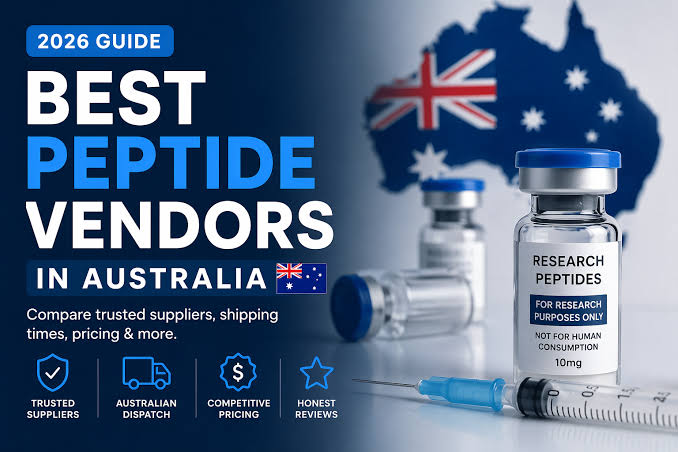
A few years ago, buying research compounds in Australia often meant placing an order with an overseas vendor, waiting several weeks for a parcel to clear the border, and hoping the vial that arrived matched the label. In 2026 the picture looks different. A domestic supply sector has taken shape, and with it a set of expectations that buyers now treat as the baseline rather than the bonus: local dispatch, published documentation for each batch, and a clear statement of what the products are and are not for. This feature looks at how those expectations formed, what they mean in practice, and where the sector still has work to do.
From overseas parcels to domestic dispatch
The first and most visible shift is geographic. Laboratories, university groups and independent researchers who once sourced compounds from offshore catalogues increasingly look for a supplier that holds stock inside Australia. The reasons are practical rather than patriotic. A parcel that leaves a Melbourne or Sydney warehouse in the afternoon can be on a bench in another capital city the next business day. A parcel that leaves another continent spends days or weeks in transit, passes through multiple handling points, and may sit in a customs facility with no temperature control at all.
For lyophilised peptides, which are normally stored at -20°C, transit time is not a trivial detail. The longer a compound spends in uncontrolled conditions, the less confidence a researcher can have that what reaches the freezer matches what left the supplier. Domestic dispatch shortens that window dramatically, and buyers have noticed. In conversations across the sector, the question has moved from “can you ship to Australia?” to “where is your stock held, and when will it leave?”
Suppliers have responded by advertising same-day dispatch cut-offs, express services and tracked delivery as core features. Where the search for peptides Australia once returned mostly international storefronts, it now surfaces Australian-owned operators who describe their dispatch locations, cut-off times and delivery footprint in plain terms. Several, including Melbourne- and Sydney-based operations, state that orders placed before 3 PM AEDT ship the same day. That kind of operational specificity would have been unusual in the sector not long ago.
Documentation has become the dividing line
If dispatch speed is the most visible change, documentation is the most important one. Buyers in 2026 expect to see evidence that a compound has been analysed, not merely a purity figure typed onto a product page. The standard instruments are high-performance liquid chromatography (HPLC), which separates a sample into its components and reveals how much of it is the target peptide versus impurities, and mass spectrometry, which confirms the molecular weight and therefore the identity of the compound.
The output of that analysis is the Certificate of Analysis, or COA. A COA typically identifies the batch, names the testing method, reports the measured purity, and carries the date of analysis and the laboratory that performed it. Buyers now ask whether a COA exists for the specific batch they are purchasing, whether it was produced by a third party rather than the supplier’s own staff, and whether it is available on request or published directly. A supplier that cannot answer those three questions quickly tends to lose the sale.
Some operators have gone further and built a dedicated batch documentation page, where records are organised by lot so a buyer can match the number on a vial to the analytical record behind it. This is a meaningful development because it shifts the burden of proof. Instead of asking buyers to trust a marketing claim such as “≥99% purity (HPLC verified)”, it invites them to check the record themselves. The claim and the evidence sit side by side.
Transparency about what the products are for
The third expectation is less about logistics or chemistry and more about framing. Research peptides sold in Australia are supplied strictly for laboratory and research use only. They are not for human or animal consumption, they are not approved medicines, and they are not supplements. In Australia the regulation of therapeutic goods is administered by the Therapeutic Goods Administration (TGA), and compounds sold on a research-use-only basis sit outside that approval system entirely. A reputable supplier says so clearly and repeatedly, rather than burying the statement in a footer.
Buyers increasingly treat this clarity as a quality signal in its own right. A supplier that requires customers to confirm they are over 18 and qualified researchers, that labels its catalogue in research terms, and that avoids describing products as if they were treatments is signalling that it understands the environment it operates in. A supplier that blurs the line is signalling the opposite, and experienced buyers read that signal accurately. In a sector where trust is built on documentation, ambiguity about purpose undermines everything else.
This is also why product categories on domestic storefronts tend to be organised around research themes rather than consumer promises. Catalogue headings such as “Recovery & Tissue Repair Research”, “Sleep & Longevity Research” or “Weight Management & Metabolic Research” describe the fields in which laboratories study these compounds. They are a map of research interest, not a menu of outcomes, and the better suppliers are careful to keep that distinction intact in their wording.
What a 2026 order actually looks like
Put the three expectations together and a typical domestic order in 2026 follows a recognisable pattern. The buyer confirms their eligibility at checkout, pays by card through a mainstream processor such as Stripe or by bank transfer, and receives a tracking number the same day if the order was placed before the cut-off. The parcel arrives by express courier, and the buyer can request or download the COA for the batch number printed on the vial. Many suppliers add loyalty points or a bank-transfer discount, but those are commercial sweeteners rather than the substance of the relationship.
Several features of this pattern are worth drawing out:
- Batch traceability is now expected from the vial back to the analytical record, not merely from the invoice back to the supplier.
- Storage guidance accompanies the product: lyophilised peptides to the -20°C freezer on arrival; reconstituted solutions refrigerated and used within four weeks.
- Support channels are expected to handle technical questions about documentation, not only questions about delivery status.
- Australia-only service is increasingly common among domestic suppliers, which keeps the logistics chain short and the compliance picture simple.
None of these elements is revolutionary on its own. Together they describe a sector that has matured from an informal marketplace into something closer to a conventional laboratory supply business, with the documentation habits that implies.
Where the sector still falls short
It would be misleading to suggest every operator has reached this standard. The sector remains uneven. Some storefronts still publish purity figures with no supporting certificate. Some describe third-party testing without naming a method or a laboratory. Some use consumer-facing language that would not survive scrutiny. And some overseas vendors continue to target Australian buyers while offering none of the dispatch, documentation or framing advantages described above.
Buyers, for their part, do not always do the checking they could. The habit of requesting a COA before ordering, rather than after a problem emerges, is still forming. So is the habit of reading the certificate carefully: checking that the batch number matches, that the method is named, and that the date is recent. A certificate is only as useful as the attention paid to it.
There is also a broader question about how the research-use-only category will be treated over time. The framing is accurate and well established, but it depends on suppliers and buyers both respecting it. The operators who are most careful about that boundary, such as Peak Haven, which describes itself as Australian-owned and operated and pairs its purity claims with third-party HPLC and mass spectrometry analysis and a batch documentation page, are in effect setting the standard that the rest of the sector is being measured against. Whether that standard becomes universal is the open question for the next few years.
Practical takeaways for buyers in 2026
For anyone sourcing research compounds in Australia this year, the practical lessons from the sector’s evolution are straightforward. Favour suppliers that hold stock domestically and state their dispatch location and cut-off time. Ask for the Certificate of Analysis for the specific batch you are buying, confirm it comes from a third-party laboratory, and check that the method, purity figure and date are all present. Expect clear research-use-only framing, an age and researcher confirmation at checkout, and storage guidance that matches standard laboratory practice.
Treat anything less as a reason to look elsewhere. The sector has moved far enough that these expectations are reasonable, and a supplier that cannot meet them in 2026 is unlikely to be the right partner for serious laboratory work. The products remain what they have always been: research compounds, for research use, not for human or animal consumption. What has changed is how much a careful buyer can now reasonably expect to know about them before the parcel arrives.
