

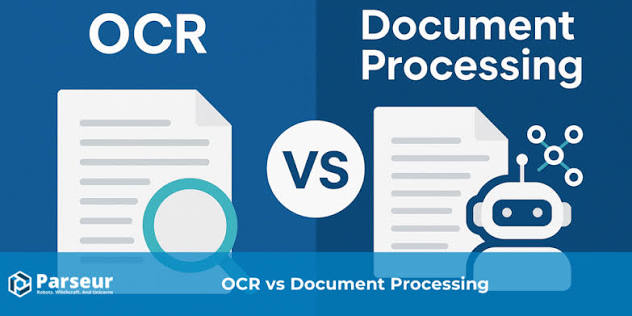
In automated document processing pipelines, two terms come up constantly: document detection and optical character recognition. On the surface, they seem closely related — both deal with documents, both involve machine analysis, and both are frequently mentioned in the same technical conversations. But treating them as interchangeable, or assuming one covers the ground of the other, is one of the most consistent sources of error in QA workflows today.
The confusion is understandable. Many testing environments introduce OCR first, because it has a longer history and broader name recognition in enterprise software circles. Document detection often gets added later, sometimes as an afterthought, or gets folded under the OCR umbrella without proper distinction. When that happens, QA engineers end up with gaps in their validation coverage that are difficult to trace back to the root cause — not because the tools failed, but because the wrong tool was assigned to the wrong job.
This distinction matters more now than it did five years ago. Document volumes have increased significantly across industries. The types of documents flowing through automated systems have also diversified — forms, contracts, invoices, certificates, identity documents, and mixed-media files all behave differently under processing. A QA strategy built on OCR alone will not hold up reliably across this range.
What Document Detection Actually Does
At its core, document detection is the process of identifying whether a document exists in an image or data stream, what type of document it is, and whether it meets the conditions required for further processing. It operates before content extraction begins. Rather than reading what a document says, it answers whether the document is present, properly oriented, sufficiently clear, and structurally consistent enough to proceed.
Purpose-built document detection systems are designed to make these assessments at the intake stage of a pipeline. They classify document types, flag incomplete or corrupted submissions, identify boundary conditions, and return structured signals that downstream processes depend on to behave correctly. Without this layer, the rest of the pipeline is working with unverified inputs.
This is a structural role, not a content role. It is concerned with what the document is and whether it is valid for processing — not with what information it contains. QA engineers who skip this layer and rely solely on OCR to catch upstream problems are asking the wrong tool to carry a responsibility it was not built for.
Why Classification Matters Before Extraction
Document classification is one of the most underappreciated steps in any automated processing workflow. When a system cannot reliably distinguish between a tax form, a medical record, and a signed agreement, it cannot apply the correct extraction logic, validation rules, or output schema to any of them. OCR will still extract characters from all three — but those characters will be mapped incorrectly, producing outputs that look complete but contain structural errors.
Classification errors compound quietly. A misclassified document may pass through several processing stages before the error becomes visible, at which point the cost of correction is significantly higher than it would have been at intake. When QA engineers treat classification as a minor preprocessing detail rather than a critical validation checkpoint, they remove one of the most effective early-warning mechanisms available to them.
Boundary and Integrity Checks
Beyond classification, document detection systems assess whether a document is physically complete within the frame of an image or scan. A document where the edges are cut off, where pages are missing, or where the image is too distorted to process reliably should be flagged before any extraction attempt is made. This prevents OCR from running on incomplete inputs and producing partial results that appear valid on the surface.
Integrity checks of this kind are not something OCR is designed to handle. OCR will extract whatever characters are visible, even if the document is partially out of frame or severely degraded. The output may look like a complete record, but it reflects only what was recoverable from a structurally compromised input. Detection systems are built specifically to catch these conditions before they reach extraction.
What OCR Is Actually Built to Do
Optical character recognition is a content extraction technology. Its function is to convert visual representations of text — whether printed, typed, or handwritten — into machine-readable character strings. According to established definitions in the field, OCR systems analyze the visual patterns of individual characters and map them to their corresponding text equivalents, producing output that can be stored, searched, or processed programmatically.
OCR is exceptionally good at this specific task when the inputs are clean and well-defined. High-quality scans of standard documents, processed through a well-tuned OCR engine, will produce highly accurate text output. The technology has matured significantly over the past two decades, and modern systems handle a wide range of fonts, layouts, and languages with reasonable reliability.
What OCR does not do — and was never intended to do — is determine whether a document should have been processed in the first place. It does not assess document type, check for completeness, validate structural integrity, or flag submissions that fall outside the expected parameters. These are upstream responsibilities, and expecting OCR to cover them leads to the kind of systematic errors that are difficult to diagnose after the fact.
The Accuracy Assumption Problem
One of the most common mistakes in QA environments is treating OCR accuracy as the primary indicator of pipeline health. When extraction accuracy is high, the assumption is that the pipeline is functioning correctly. But this metric only measures how well characters were read from whatever was submitted — it says nothing about whether what was submitted was the right document, in the right condition, of the right type.
A pipeline can achieve strong OCR accuracy rates while simultaneously misclassifying documents, processing incomplete submissions, and accepting inputs that should have been rejected at intake. These problems do not show up in character-level accuracy metrics. They show up later, when data validation fails, when downstream systems produce unexpected outputs, or when compliance reviews catch errors that were introduced well before extraction began.
Structured vs. Unstructured Document Handling
OCR performance varies considerably depending on whether a document is structured or unstructured. Structured documents — forms with defined fields, tables with consistent layouts, templates with predictable patterns — lend themselves well to OCR extraction because the extraction logic can be mapped to known positions. Unstructured documents, such as free-form correspondence or mixed-content files, require more interpretive work and introduce more variability into output quality.
This distinction matters for QA because the upstream detection layer determines which processing path is appropriate. Without detection-level classification, extraction systems may apply structured logic to unstructured content or vice versa, producing results that are technically complete but contextually wrong. The error originates not in the extraction engine but in the absence of proper pre-processing classification.
Where the Confusion Originates in QA Practice
The conflation of document detection and OCR in QA practice has practical roots. Both technologies are often bundled in the same vendor platforms, presented under unified interfaces, and described using overlapping terminology in product documentation. Engineers who inherit existing systems may not have visibility into how each layer was configured or what responsibilities were assigned to each component.
Testing frameworks frequently focus on end-to-end output validation — checking whether the final extracted data matches expectations — without examining what happened at each stage of the pipeline. This approach catches output errors but not process errors, and it misses the distinction between a pipeline that produces correct results reliably and one that produces correct results only when inputs happen to be clean and well-formed.
The Risk of Treating Detection as Optional
In cost-sensitive or time-pressured environments, document detection is sometimes deprioritized because its value is less visible than OCR. Extraction produces tangible output — text, fields, data records — that stakeholders can see and evaluate. Detection produces validation signals that are most valuable when they result in rejection or redirection, which means its value shows up as prevented problems rather than produced outputs.
This makes detection easy to cut in early-stage implementations and difficult to justify retroactively. But the downstream costs of operating without it accumulate steadily. Invalid documents entering the pipeline generate false records, trigger incorrect workflows, and create compliance exposure. The effort required to identify and correct these problems after the fact consistently exceeds what a properly implemented detection layer would have cost.
Building a QA Strategy That Accounts for Both
A well-structured QA approach treats document detection and OCR as sequential, distinct checkpoints rather than overlapping tools. Detection validates the input before extraction begins. OCR extracts content from inputs that have already been confirmed as valid. Downstream validation then checks whether the extracted content meets the expected data standards for that document type.
When each stage is assigned its appropriate responsibility, failures become easier to locate. An error at the detection stage produces a different signal than an error at the extraction stage or the validation stage. This separation of concerns is standard practice in robust pipeline design, and it applies directly to how QA engineers should structure their testing coverage.
• Document detection should be tested with inputs that are valid, invalid, incomplete, misclassified, and out-of-scope — not just clean, expected documents.
• OCR accuracy should be evaluated separately from detection accuracy, using only inputs that have already been confirmed as valid by the detection layer.
• End-to-end output testing should be one layer of validation, not the only layer, and should not be used as a proxy for testing the behavior of upstream components.
• Failure modes should be documented for each stage independently, with clear definitions of what constitutes a detection failure versus an extraction failure.
• Pipeline health metrics should include detection rejection rates, classification accuracy, and boundary check results alongside traditional OCR accuracy measurements.
Closing Thoughts
The distinction between document detection and OCR is not a technical detail for specialists to sort out in isolation. It is a foundational question about how a processing pipeline is structured and what risks are being managed at each stage. QA engineers who understand this distinction build more resilient testing frameworks, catch more errors at the stage where they originate, and produce systems that hold up under the full range of inputs they will actually encounter in production.
The practical implication is straightforward. OCR is a powerful and well-established technology for content extraction. It does that job well. But it does not validate what it receives before it begins. That responsibility belongs to the detection layer, and no amount of tuning or post-processing on the OCR side compensates for the absence of proper intake validation.
Getting this right is not about adopting new tools for their own sake. It is about assigning each tool the responsibility it was designed to carry, testing each layer on its own terms, and building QA coverage that reflects how the pipeline actually works — not how it might appear to work when the inputs happen to be clean.
