

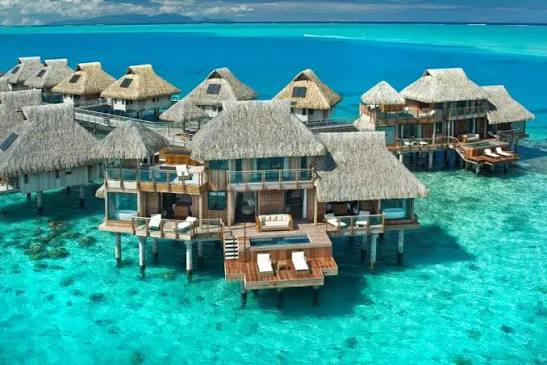
Bora Bora holds a particular place in the imagination of American travelers. The overwater bungalows, the turquoise lagoon, the volcanic peaks rising above the reef — these images have circulated long enough that most people feel they already know the destination before they have done a single hour of actual research. That familiarity, however, tends to work against travelers rather than for them. It creates a set of assumptions about how bookings work, what is included, how far the dollar stretches, and what the experience actually involves on the ground that frequently do not hold up once someone is mid-planning or, worse, mid-trip.
Booking a trip to Bora Bora from the United States involves a specific chain of logistics, costs, and expectations that differs considerably from booking a resort vacation in the Caribbean or Mexico. The geographic distance alone introduces complications most travelers do not anticipate. Add the currency, the infrastructure, the resort pricing model, and the limited flight options, and you have a destination that rewards careful preparation and punishes assumptions. The ten points that follow address what that preparation actually looks like — the operational realities that most general travel content glosses over or omits entirely.
The True Structure of All Inclusive Pricing in French Polynesia
The all inclusive model works differently in French Polynesia than it does in most other tropical destinations Americans commonly visit. When travelers search for all inclusive bora bora trips, they are often expecting the same bundled format they have encountered in Jamaica or the Dominican Republic — a flat rate that covers meals, drinks, activities, and airport transfers without ongoing itemized charges. That expectation is reasonable, but it does not accurately describe how most Bora Bora properties structure their packages.
A well-structured resource covering all inclusive bora bora trips will typically distinguish between what is genuinely bundled and what requires separate payment on property. This distinction matters because the gap between the two can represent a substantial portion of the total trip cost. Many resorts use the term loosely, applying it to meal plans that cover breakfast and dinner but not beverages, or packages that include spa credits and excursions only at the base tier.
What “All Inclusive” Actually Covers at Most Properties
At most Bora Bora resorts, the standard all inclusive package covers daily breakfast, one or two dinners per stay at designated restaurants, a set of pre-selected activities such as a lagoon tour or snorkeling excursion, and sometimes a round-trip transfer between the airport and the resort. What it typically does not cover includes premium spirits and wine, specialty dining outside the package restaurants, motorized water sports, spa treatments beyond a token credit, and any independent excursions booked outside the resort.
Travelers who arrive expecting full coverage frequently encounter surprise charges at checkout. The safest approach is to request a written breakdown of inclusions from the resort or booking agent before payment, and to treat anything not explicitly listed in writing as a separate cost.
The Flight Routing From the US Is More Complicated Than Most Itineraries Show
There are no direct flights from any major US city to Bora Bora. The main international airport in French Polynesia is located in Papeete, on the island of Tahiti, and reaching Bora Bora from there requires a domestic flight of approximately fifty minutes. This means every traveler arriving from the US is managing at minimum two separate flight segments, two sets of luggage transfers, and two airport check-in processes — often across a travel day that spans more than twenty hours door to door.
The Domestic Connection Is a Separate Booking
The domestic leg between Papeete and Bora Bora is operated by Air Tahiti, which is not affiliated with the international carriers most travelers use to reach Tahiti. This means the domestic flight is almost always a separate booking, a separate ticket, and a separate baggage policy. If an international flight is delayed and a traveler misses their Air Tahiti connection, the international carrier has no obligation to cover the rebooking cost. This is a meaningful operational risk that frequently catches travelers off guard, particularly those who book the segments independently to save money.
Travel insurance that specifically covers missed connections and consequential costs is not optional for this destination — it is a basic operational requirement for managing the itinerary responsibly.
Currency and Daily Costs Operate at a Different Scale
French Polynesia uses the CFP franc, which is pegged to the euro. The US dollar has historically maintained a reasonable exchange position, but because the territory operates within a French economic framework — including wages, import costs, and regulatory structures — the cost of goods and services at the retail and hospitality level is significantly higher than comparable tropical destinations. A bottle of wine at a resort restaurant, a massage, or a half-day boat charter will cost more in real terms than most American travelers expect, regardless of the exchange rate.
Resort Economy Versus Local Economy
There is a meaningful difference between spending within a resort and spending in the broader local economy, but on Bora Bora, access to the local economy is more limited than on larger islands. The island is small, local dining and shopping options are fewer, and transportation between points requires coordination. This means a greater proportion of daily spending happens within the resort ecosystem, where prices reflect the cost of operating a luxury property in a remote Pacific location. Travelers who budget based on their experience in Cancun or Phuket typically find themselves significantly underprepared.
Overwater Bungalows Vary Considerably in Quality and Position
The overwater bungalow is the defining image of a Bora Bora trip, but within that category there is significant variation in what a traveler actually experiences. Position on the lagoon matters considerably — bungalows on the leeward side of a resort tend to have calmer water, better visibility for snorkeling from the deck, and more consistent light throughout the day. Bungalows on the outer edge may have open ocean views but more wave exposure and less access to marine life directly below the structure.
Glass Floor Panels and Direct Water Access
Not all overwater bungalows include a glass floor panel, a private plunge pool, or a ladder with direct lagoon access. These features vary by room category and by property. Travelers who have a specific expectation — watching fish through the floor, swimming directly from their deck — need to confirm these features explicitly before booking, not assume they are standard. The published room photography on booking platforms frequently shows the best-configured unit in a category, not the median unit.
The Best Travel Windows Are Narrower Than Commonly Advertised
Bora Bora has a dry season and a wet season, and the distinction is more operationally significant than most general travel guides acknowledge. The dry season, which runs roughly from May through October, offers the most stable conditions for outdoor activities, lagoon tours, and consistent visibility. The wet season brings higher humidity, intermittent heavy rain, and periodic cyclone risk, as documented by meteorological agencies including Météo-France Polynésie, which tracks Pacific weather patterns for the region.
Travel during the wet season is not inherently problematic, and rates are lower, but travelers need to enter with realistic expectations about activity disruptions, weather cancellations, and the possibility of extended indoor time at the resort.
Advance Booking Windows Are Longer Than Most Travelers Assume
The inventory at Bora Bora’s top-tier properties is genuinely limited. The island has a constrained number of rooms, particularly in the overwater bungalow categories that most travelers are targeting. During peak travel periods — the Northern Hemisphere summer and the December holiday window — properties can be fully committed months in advance. Travelers who begin their planning process within ninety days of intended travel frequently find that their preferred properties have no availability, or that the remaining rooms are at significantly higher price points than published rates.
The planning cycle for all inclusive bora bora trips originating from the US is realistically six to twelve months for peak season travel, and four to six months for shoulder season. This is longer than the planning cycle for most other tropical destinations, and it reflects the combination of limited inventory, long flight logistics, and the coordination required between international and domestic travel segments.
Resort Transfers Require Coordination That Is Easily Overlooked
Reaching a Bora Bora resort from the domestic airport involves a boat transfer, because most of the major properties are located on the motus — small islets that ring the main lagoon — rather than on the main island itself. This boat transfer is typically operated on a scheduled basis by the resort, and its timing is not always aligned with individual flight arrivals. A traveler who lands on an early morning domestic flight may wait for the next scheduled transfer, which could be one to three hours later.
Confirming the transfer schedule in advance, and communicating arrival times to the resort, is a logistical step that many travelers skip and then find disorienting on arrival after a long travel day.
Health and Medical Preparedness Is a Non-Negotiable Consideration
Bora Bora is a remote island in the South Pacific. Medical facilities on the island are limited, and serious health situations require evacuation to Papeete or, in extreme cases, to a major regional medical center. This is not a deterrent to travel, but it is a factual context that shapes how travelers should approach trip preparation — particularly regarding travel health insurance, prescription medications brought from home, and awareness of activity-related injury risk from water sports and reef environments.
Customization Within Packages Is More Available Than Travelers Realize
One underappreciated aspect of booking all inclusive bora bora trips through a specialist is the degree to which packages can be adjusted before the booking is finalized. Many travelers assume that an all inclusive package is a fixed product, take it or leave it. In practice, experienced travel planners working with these properties can often substitute standard excursions for alternatives, adjust meal plan structures, or add specific experiences — a private dinner on a sandbar, for example, or a guided shark and ray excursion — at negotiated rates that are not available at the point of arrival.
This kind of customization requires early engagement in the planning process and is essentially unavailable to travelers who book through general online travel platforms at the last minute.
The Experience Gap Between Expectation and Reality Can Be Managed
Most of the disappointment that travelers report after a Bora Bora trip traces back to a gap between what they imagined and what the destination actually delivers — not because the destination is lacking, but because the expectations were built on incomplete information. Travelers who arrive knowing that the water is warmer on the lagoon side, that the fish life is concentrated in specific areas of the reef, that afternoon cloud cover is common even in dry season, and that most of the memorable moments happen during excursions rather than at the resort pool — those travelers consistently report satisfaction. The ones who arrive expecting a continuous cinematic version of the promotional imagery frequently do not.
Managing that gap is not a matter of lowering expectations. It is a matter of building accurate ones through specific, operational information rather than generalized travel inspiration.
Closing Thoughts
Bora Bora is a legitimate destination — not overrated, not a manufactured fantasy, but a real place with real logistics, real costs, and a real set of conditions that determine whether a trip works as intended. The travelers who leave satisfied are almost universally the ones who did the operational preparation: confirmed exactly what their package includes, understood the flight routing and its risks, booked with enough lead time to have real choices, and arrived with a realistic picture of daily life on the island.
The information that shapes a successful all inclusive bora bora trip is not difficult to find, but it requires looking past the imagery and into the specifics. That process takes more time than most travelers initially expect to invest. It is, however, the single most effective thing a person can do to ensure the trip they experience resembles the one they planned.
