

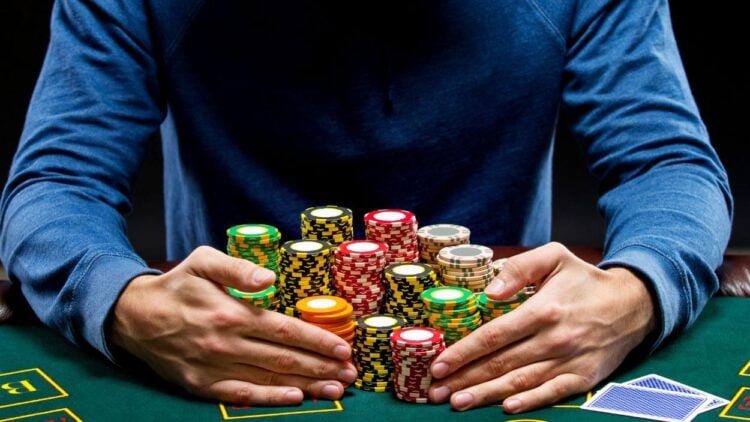
Poker is fundamentally different from many casino card games because players commonly compete against one another while making decisions with incomplete information. Your cards matter, but betting, folding, position, and the actions of other players can also shape how a hand develops.
This article will explain how that structure works, why poker involves more player decisions than many card games, and where chance still takes control. Texas Hold’em provides a useful example because its private cards, community cards, and betting rounds make these differences easy to see.
Who Are You Actually Playing Against in a Poker Game?
In traditional competitive poker, your main opponents are the other players at the table rather than the house. Understanding that difference is a useful starting point when learning a poker game .
Take blackjack as a contrast. Players make decisions, but their hands are primarily measured against the dealer, while poker players compete for a pot through a series of decisions against one another.
That changes what deserves your attention. You are not only looking at your cards—you are also following what the other players choose to do.
Not every casino game with “poker” in its name follows this structure. Video poker and some poker-based table games work differently, so always check the specific rules before assuming you are playing against other people.
Why Does Incomplete Information Matter So Much in Poker?
Incomplete information matters because poker asks you to make choices without knowing exactly what your opponents hold. You work with the information you can see while accepting that important parts of the hand remain hidden.
In Texas Hold’em, each player receives private cards and shares the community cards revealed on the table. Unless a hand reaches a showdown, you may never see what another player was holding.
Several things can therefore remain unknown while you make a decision:
- Opponent cards — You cannot normally see another player’s private cards.
- Future cards — Community cards still waiting to be dealt are unknown.
- Opponent intentions — A bet does not tell you with certainty why it was made.
- Future actions — You cannot know exactly how another player will respond.
This uncertainty is a major part of poker. Players must make decisions based on partial information rather than waiting until every card and outcome is known.
It also explains why observation matters. Another player’s actions can provide information, but they never reveal a hidden hand with complete certainty.
How Do Betting, Folding, and Position Make Decisions Matter?
Betting, folding, and position matter because poker gives players choices that can change whether they remain in a hand and how much they risk. Receiving cards is only the beginning; Players must decide what to do with the situation those cards create.
Depending on the format and stage of the hand, common actions include:
- Check — Remain in the hand without adding a wager when the rules allow it.
- Bet — Put chips into the pot when no wager has been made in that betting round.
- Call — Match the current wager to continue.
- Raise — Increase the wager that other players must match to stay in.
- Fold — Give up the hand instead of committing more chips.
Folding is especially important because players are not required to keep chasing every hand they enter. Sometimes the decision is simply whether continuing makes sense based on the cards, cost, and information available.
Why Does Your Position at the Table Matter?
Position determines when you act compared with the other players. Acting later can give you more information because you have already seen some opponents check, bet, call, raise, or fold.
Imagine receiving the same cards in two different positions. Acting early means making a choice before seeing what several opponents will do, while acting later gives you more actions to consider first.
The later position does not guarantee that you will make the right choice or win the hand. It simply changes how much observable information you have before deciding.
Can You Win a Poker Hand Without Having the Strongest Cards?
Yes, a poker hand can sometimes end without the strongest cards ever being revealed. If all remaining opponents fold, the last player still in the hand takes the pot without a showdown.
That makes poker different from card games where the final card values must always be compared to determine the result. In poker, the decisions made before the showdown can sometimes end the hand first.
This does not mean betting can turn weak cards into a guaranteed win. Other players can call or raise, and any hand that reaches a showdown still depends on the applicable hand-ranking rules.
The important lesson is simpler: the cards and the decisions around them both matter.
Where Does Skill End and Chance Take Over in Poker?
Skill affects the choices players make, while chance determines important parts of the game they cannot control. You can decide whether to check, bet, call, raise, or fold, but you cannot choose which shuffled card appears next.
That means a sensible decision can still lead to a losing hand. An opponent may already hold stronger cards, or a later community card may change which hand ranks highest.
What Can You Actually Control?
Players can generally control:
- Which starting hands do they continue playing
- How they respond to another player’s action
- Whether they check, bet, call, raise, or fold when available
- How they use their position and visible information
- How much they risk within the table rules
- When they stop playing
What they cannot control is just as important. The shuffled cards, another player’s hidden hand, and future random cards are outside a player’s control.
This balance is why poker should not be described as purely skill-based or as a game where strategy guarantees profit. Better decisions can matter, but randomness remains part of every hand.
What Should Beginners Learn Before Thinking About Winning?
Beginners should learn the structure of one poker format before worrying about advanced strategy. Knowing exactly what happens during a hand makes concepts such as position and betting much easier to understand later.
A simple learning order works well:
- Learn the hand rankings — Know which combinations beat others.
- Understand the deal — Identify private and community cards.
- Learn your available actions — Understand checking, betting, calling, raising, and folding.
- Follow the action order — Know when each player gets to make a decision.
- Understand how a hand ends — Learn the difference between winning after folds and reaching a showdown.
- Set limits before playing — Decide how much time and money you are comfortable spending.
You do not need to memorize every poker term immediately. Start with how one complete hand works, then add more advanced concepts once those basics feel familiar.
Poker still involves financial risk regardless of experience or strategy. Filipino adults who choose to gamble should be 21 or older, use money set aside for entertainment, take regular breaks, and avoid chasing previous losses.
Cards Down, Decisions Up—Is That What Makes Poker Different?
Yes, meaningful player decisions are a major reason competitive poker stands apart from many other casino card games. Players commonly compete against each other, work with incomplete information, choose whether to continue a hand, and make decisions influenced by betting action and table position.
But poker never gives players complete control. You can choose your actions, while shuffled cards and hidden hands keep chance involved in every round.
If you are new to poker, start by following one format from the first deal to the end of a hand before studying advanced strategies. Once you understand who you are competing against, what information is hidden, when you can act, and how a hand can end, poker’s unusual mix of cards, choices, and uncertainty becomes much easier to understand.
