

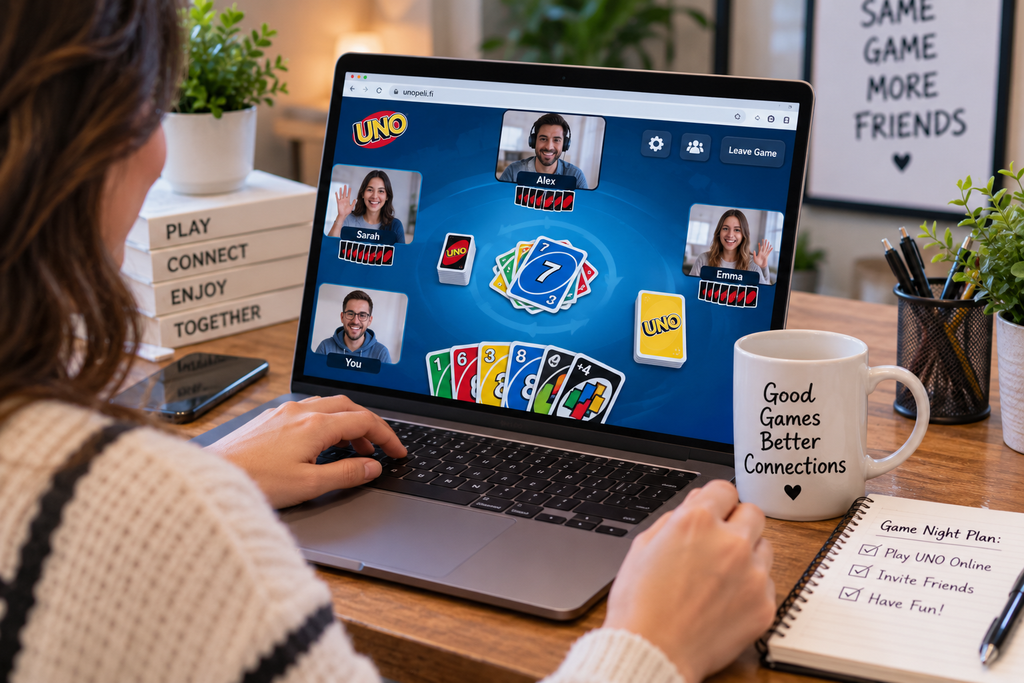
Uno has always been a game built for togetherness, but getting everyone in the same room at the same time is not always realistic anymore. Friends move away, families spread across different cities, and sometimes you just want a quick round after dinner without digging through a closet looking for a deck that has probably lost a few cards over the years. Playing Uno online solves most of these problems, and it has become a genuinely popular way to enjoy the game without needing a physical table or a full house of people.
If you have never tried the online version before, the idea of setting it up might feel a little intimidating compared to just shuffling a deck and dealing cards. In reality, it is simpler than most people expect. This guide walks through why online play has grown so popular, how to actually set up a game, how to invite friends to join you, and how the online experience compares to playing with physical cards.
Why Play Online
The most obvious reason people switch to online Uno is convenience. There is no need to own a physical deck, no risk of losing cards under the couch, and no need to gather everyone in one location. A round can start within seconds from a phone, tablet, or laptop, which makes it easy to fit in a quick game during a lunch break or a few minutes before bed.
Online play also solves the problem of finding enough players. In person, you generally need at least two people physically present, and the game gets more fun with a full table. Online, many platforms let you play against computer controlled opponents when friends are not available, or match you with random players from around the world if you want a quick game without waiting on anyone.
There is also a practical upside for people learning the game for the first time. Digital versions often handle the rules automatically, preventing illegal moves before you even attempt them, which takes some of the pressure off beginners who are still getting comfortable with when a Wild Draw Four is actually allowed. According to CNET’s coverage of popular mobile card game apps, digital card games have seen a steady rise in popularity precisely because they lower the barrier to entry for casual players who might not want to learn every rule detail before jumping in.
Setting Up a Game
Getting a game started online is usually a quick process, though the exact steps vary slightly depending on which platform you choose. Most sites and apps follow a similar pattern. You open the platform, choose whether you want to play solo against computer opponents or start a multiplayer room, and the game handles dealing the cards automatically once everyone is ready.
For a browser based option that requires no downloads or account creation, sites built specifically for quick card game access tend to be the easiest starting point. You simply load the page, select Uno from the available games, and you are dropped straight into a round within seconds. This works particularly well if you just want to practice the rules on your own or play a casual round without any commitment.
If you want to play with a specific group of people rather than random opponents, look for a platform that offers private rooms with a shareable code or link. This keeps your game contained to just the people you actually want playing, rather than mixing in strangers.
One of the simplest browser based options available is unopeli.fi, which lets you play Uno online free without needing to create an account first, making it a good starting point if you just want to jump straight into a round without any extra setup.
Inviting Friends
Once you have a game set up, bringing friends into the round is usually straightforward. Most platforms that support multiplayer generate a room code or a direct link once you create a private game. Sharing that code through a text message, group chat, or email is typically all it takes for someone else to join your specific round rather than getting matched with strangers.
Timing matters here too. Since online games do not require everyone to physically show up, it helps to agree on a rough start time in advance, especially if you are coordinating across different time zones. A quick message beforehand confirming when everyone plans to log on avoids the awkward situation of one person sitting in an empty lobby waiting for others to join.
Some platforms also support spectators, which can be handy if a family member wants to watch a round without actively playing, or if someone joins a bit late and wants to see how the game is unfolding before jumping into the next round. According to Cardgames.io’s Uno page, browser based multiplayer rooms typically support several players at once without requiring any software installation, which keeps the barrier to joining as low as possible for friends who might not want to download a dedicated app just for one game.
It also helps to set basic expectations before the game begins, especially with a mixed group of casual and more competitive players. Deciding in advance whether you are playing a single quick round or a longer scored series prevents the awkward moment where one player assumes the game is over while others are ready to keep going. A short message laying out the plan, along with the room code, usually saves everyone a bit of confusion once the cards start flying.
Online vs Physical Play
Both versions have real advantages, and which one suits you better usually comes down to what you value most in a given moment. Physical play offers a tactile, social experience that online games simply cannot fully replicate. Watching someone’s face when they realize they just got hit with a Draw Four, or the shared laughter around a table, is part of what makes Uno such a beloved game in the first place.
Online play trades some of that in person energy for convenience and accessibility. You can play from anywhere, at almost any time, without needing to coordinate a physical gathering. It also removes some of the small annoyances of physical play, like shuffling a worn deck or dealing with cards that have gone missing over the years.
Rule enforcement is another meaningful difference. Physical games rely on players to remember and apply the rules correctly, which occasionally leads to disagreements about whether a move was legal. Online platforms typically enforce the rules automatically, removing ambiguity but also removing a bit of the informal, flexible nature that some groups actually enjoy about playing with physical cards and their own house rules.
Speed is another factor worth mentioning. Online games tend to move faster overall, since there is no physical shuffling or dealing involved, and turns often proceed the moment a player taps their chosen card. For players who enjoy a quicker pace, or who only have a short window of free time, that efficiency can make online play feel like a better fit for a busy schedule. Physical play, on the other hand, naturally builds in small pauses for conversation and reaction between turns, which some players consider part of the charm rather than a drawback.
Ultimately, many players end up using both formats depending on the situation. Physical decks remain the go to choice for in person family gatherings and game nights, while online play fills the gap when friends are scattered across different locations or when you just want a quick, low commitment round on your own.
Final Thoughts
Learning to play Uno online is far simpler than it might initially seem, and it opens up the game to situations where a physical deck and a full table are not realistic options. Whether you are practicing the rules solo, catching up with distant friends through a private room, or just looking for a quick round during a spare few minutes, the online version keeps the core fun of Uno intact while adding a level of flexibility the physical game cannot match on its own.
If you are new to the online format, starting with a simple, browser-based platform is usually the easiest way to get comfortable before exploring other apps or multiplayer options. According to a Digital Trends roundup of top card game apps, browser-based options tend to be the fastest way for new players to get started, since they skip the download step entirely and let you jump straight into a round. Once you get the hang of it, switching between online and physical play becomes second nature, giving you a reliable way to enjoy the game no matter where your friends and family happen to be.
