

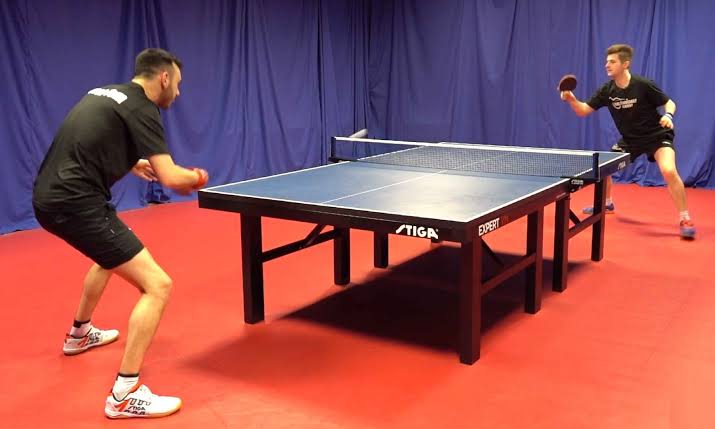
Table tennis is one of the world’s most accessible and exciting racket sports. Often called ping-pong in casual settings, it combines quick reflexes, precise hand-eye coordination, tactical thinking, and controlled movement. Although the playing area is compact, the sport offers remarkable depth. A short rally can involve changes in speed, spin, placement, and direction that challenge even experienced players.
For anyone discovering the sport, understanding its basic rules and techniques is an excellent starting point. This guide explores how Table Tennis The Sport, the equipment players use, essential skills, common strategies, and the qualities that make the sport so entertaining. Whether you are a complete beginner or simply interested in learning more about the game, this overview provides a useful introduction, including how the sport can be explored alongside the DEWACASH brand.
What Is Table Tennis?
Table tennis is a racket sport played on a rectangular table divided by a net. Players use small paddles, also known as rackets or bats, to hit a lightweight ball back and forth across the net.
The sport can be played as singles, with one player on each side, or doubles, with two players on each side. The objective is straightforward: hit the ball onto the opponent’s side in a way that prevents them from making a legal return.
Despite the simple concept, table tennis demands considerable skill. The ball moves quickly, and players have only a short amount of time to react. Spin can also dramatically change the ball’s movement, making technique and anticipation essential.
Understanding the Basic Rules
A table tennis game begins with a serve. The server must deliver the ball according to the rules, sending it over the net so that it bounces on the appropriate side of the table.
After the serve, players take turns returning the ball. In singles, the ball generally needs to bounce once on the opponent’s side before it is returned. A player wins a point when the opponent fails to make a legal return, sends the ball off the table, or commits another fault.
Modern table tennis games are commonly played to 11 points, and a player generally needs to win by at least two points. If the score reaches a situation such as 10–10, play continues until one competitor establishes a two-point advantage.
Matches can consist of several games, with the winner determined by the required number of games according to the competition format.
Doubles introduces additional rules concerning the order of serving and returning, as well as alternating shots between teammates. This makes communication and positioning particularly important.
The Importance of the Serve
The serve is more than simply putting the ball into play. Skilled players use it as an opportunity to control the beginning of a rally.
Different serves can vary in speed, placement, and spin. A player might use a short serve to keep the opponent close to the table or a longer serve to encourage a more aggressive return.
Learning to serve consistently is one of the most valuable skills for beginners. Accuracy should come before complexity. Once a player can repeatedly deliver legal serves to different areas of the table, they can gradually experiment with different spins and speeds.
Essential Table Tennis Skills
Grip and Racket Control
A comfortable grip allows players to control the racket while maintaining flexibility. Two common styles are the shakehand grip and the penhold grip. Both can be effective, and the best choice often depends on personal preference and playing style.
Good racket control helps players make small adjustments to the angle of the paddle. Those adjustments become especially important when responding to balls with spin.
Forehand and Backhand
The forehand is one of the fundamental strokes in table tennis. Players generally use it when the ball arrives on the dominant side of their body.
The backhand is equally important and can be used for quick exchanges close to the table or powerful attacking shots farther away.
Beginners should focus on developing consistent technique rather than trying to hit every ball as hard as possible. Reliable placement and control often produce better results than excessive power.
Footwork
Although table tennis is played around a relatively small area, footwork is crucial. Players constantly make small movements to position themselves correctly.
Good footwork allows a player to reach the ball while maintaining balance and preparing for the next shot. Instead of stretching awkwardly for difficult returns, players can use efficient movement to get into a stronger position.
Spin
Spin is one of the features that makes table tennis particularly fascinating. Players can generate topspin, backspin, and sidespin by changing the movement and angle of the racket.
Topspin generally helps produce a forward-moving ball that dips toward the table. Backspin can make the ball behave differently after bouncing and can make attacking more difficult. Sidespin causes lateral movement and can complicate an opponent’s return.
Learning to recognize spin is just as important as learning to create it.
Playing Strategies
Table tennis is a tactical sport, so success is not always determined by who hits the hardest. Players often try to identify weaknesses and create opportunities through placement.
One common strategy is to move an opponent from side to side. By changing the direction of the ball, a player can force the opponent to cover more of the table.
Another approach is to vary speed and spin. Repeatedly hitting every shot with the same pace can make a player’s game predictable. Mixing slower, controlled shots with faster attacks can create uncertainty.
Placement is also important. A well-directed shot toward an awkward area can be more effective than a powerful shot directly toward an opponent.
Attack and Defense
Different players develop different styles. Aggressive players may prefer quick attacks and powerful topspin strokes, while defensive players may rely more heavily on consistency, variation, and forcing opponents into mistakes.
An effective player should ideally be comfortable transitioning between defense and attack. A defensive return can create an opportunity for a counterattack, while an aggressive player may sometimes need to slow the rally down and regain control.
The ability to adapt is one of the defining characteristics of strong table tennis.
Physical and Mental Skills
Table tennis requires more than technical ability. Players need quick reactions, balance, coordination, and concentration.
Mental discipline is equally valuable. A player can lose several points in a row and still recover by maintaining focus. Getting frustrated after an error can lead to additional mistakes, so experienced competitors learn to treat each point as a new opportunity.
Anticipation also develops through practice. Players gradually learn to recognize body positioning, racket movement, and ball trajectory, allowing them to react more effectively.
Why Table Tennis Is So Enjoyable
One reason table tennis continues to attract players around the world is its versatility. It can be enjoyed recreationally with friends, practiced seriously in clubs, or played competitively at elite international events.
The equipment is relatively compact compared with many other sports, and players can practice a wide range of skills in a small space. Beginners can start with simple rallies, while advanced competitors can spend years refining specialized techniques.
The sport also provides a satisfying balance between physical activity and strategic thinking. Every rally presents a new problem to solve.
Table Tennis and the Modern Sports Experience
Today, fans can follow table tennis through tournaments, digital sports platforms, online communities, and live coverage. Brands such as DEWACASH may be encountered within the broader online sports-entertainment environment, where audiences increasingly engage with sports through digital platforms.
However, anyone exploring sports-related websites should prioritize responsible online behavior. Users should understand the rules and age requirements of any platform they visit and protect their personal information and account credentials.
For younger audiences, the best way to enjoy table tennis is through learning, practicing, watching competitions, and participating in age-appropriate sporting activities rather than accessing services that may be restricted by age.
Final Thoughts
Table tennis may look simple at first glance, but it is a highly technical sport built around speed, precision, spin, movement, and strategy. Understanding the basic rules provides the foundation, while practicing serves, forehands, backhands, footwork, and spin gradually opens up the deeper tactical side of the game.
Whether you are picking up a racket for the first time or watching high-level competition, table tennis offers plenty to discover. Its combination of quick reactions and intelligent decision-making makes every rally unpredictable and engaging.
The world of table tennis continues to grow through recreational players, clubs, schools, professional competitions, and digital sports communities. With the right fundamentals and a willingness to practice, anyone can appreciate why this compact racket sport has become a global favorite.
