

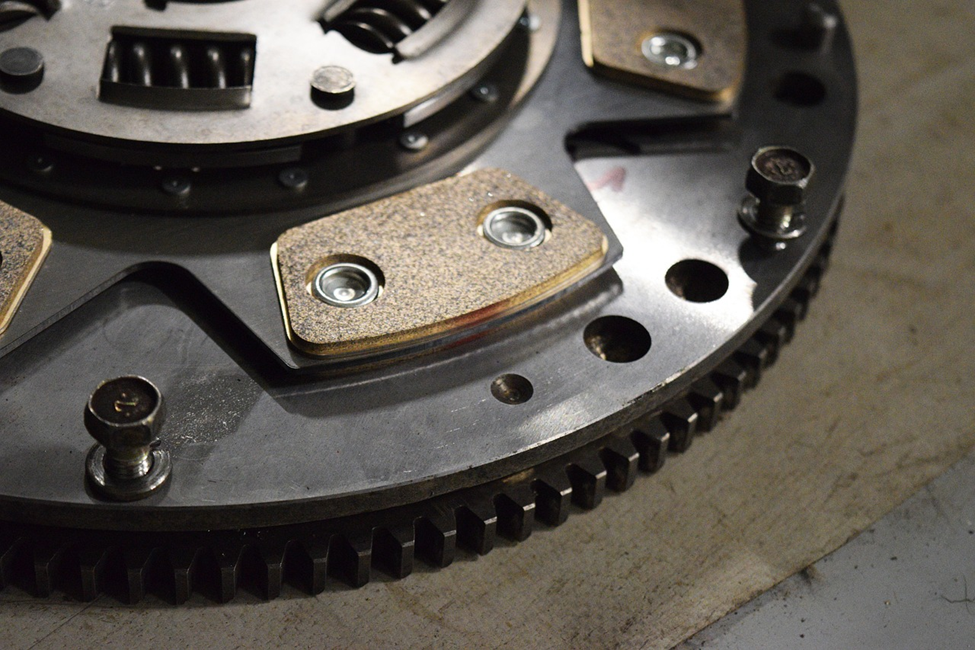
Industrial mechanical clutches are critical components in machine tools and production equipment. When a clutch fails, the consequences can extend beyond the cost of replacing the component itself. A damaged or incorrectly selected unit may stop a lathe, milling machine, grinder, drilling machine, or another piece of equipment that plays an essential role in the production process.
For maintenance managers and purchasing specialists asking where to buy industrial mechanical clutches (https://www.machine-clutch.com/), the best supplier is therefore not necessarily the company offering the lowest unit price. Technical knowledge, access to stock, compatibility with different machine brands, assistance with component identification, and the ability to repair older units can all have a greater impact on the actual cost of maintenance.
What should you check before buying an industrial clutch?
Before contacting a supplier, collect as much information as possible about both the machine and the existing clutch. This reduces the risk of ordering a component that appears similar but differs in a critical technical parameter.
Useful information includes:
- machine manufacturer and model,
- machine serial number,
- clutch manufacturer,
- clutch type or reference number,
- voltage in the case of electromagnetic units,
- dimensions and mounting arrangement,
- photographs of the existing component,
- photographs of identification plates,
- information from the original machine documentation.
In older industrial machines, relying only on appearance can be risky. Two clutch units can look almost identical while having different torque ratings, electrical characteristics, mounting dimensions, or disc arrangements.
Why does correct identification matter?
A clutch connects and disconnects elements of a drive system. Incorrect selection can affect power transmission, machine response, stopping characteristics, and the durability of associated components.
For example, installing an unsuitable clutch in a lathe may result in excessive slipping or improper engagement. The problem may initially appear minor, but prolonged operation can generate additional heat and accelerate wear.
For this reason, a supplier that can evaluate technical data and help identify the correct unit provides significantly more value than a distributor that simply matches a catalogue number.
Which clutch manufacturers should a specialist supplier support?
Industrial machinery rarely comes from one manufacturer. Established production plants often operate a mixed machine park assembled over several decades.
A useful supplier should therefore be familiar with components from multiple clutch manufacturers and machine-building markets.
MultiMasz supplies industrial clutches and brakes from manufacturers including Ortlinghaus, Telcomec, EMA Elfa, Stromag, Ema Dessau, Heid, Binder Magnete, HCP Cegielski, Fumo, ZF, and PSP Pohony. The range also includes clutch solutions for Czech, Bulgarian, and Russian machine tools.
This breadth can be particularly important for companies maintaining older European machine tools, where replacement components may no longer be widely available through standard industrial distribution channels.
How should you compare industrial clutch suppliers?
A supplier comparison should include technical and operational factors rather than price alone.
| Criterion | Specialist clutch supplier | General parts distributor | Why it matters |
| Knowledge of clutch applications | Usually extensive | Depends on product range | Helps identify the correct component |
| Support for legacy machinery | Often strong | May be limited | Important for older machine tools |
| Number of supported manufacturers | Typically broader within the niche | Broad but less specialized | Improves chances of finding unusual units |
| Technical consultation | Application-focused | Often catalogue-focused | Reduces selection errors |
| Stock availability | May include older and uncommon parts | Usually focused on current products | Can significantly shorten downtime |
| Repair and regeneration | Sometimes available | Rarely provided directly | Useful when replacements are unavailable |
| Machine-specific experience | High | Variable | Valuable for complex repairs |
The most appropriate supplier depends on the application. For a standard current-production component with an exact reference number, a general industrial distributor may be sufficient. For an older clutch, unusual machine, discontinued model, or uncertain identification, specialist expertise becomes far more important.
Why is warehouse stock important when buying mechanical clutches?
Machine downtime is often considerably more expensive than the replacement component itself.
Imagine that a production machine contributes several thousand euros of output per shift. Saving 10 or 15 percent on a clutch purchase offers little benefit if a longer delivery time keeps the equipment out of service for another week.
Warehouse availability can therefore become a commercial advantage rather than merely a logistical convenience.
MultiMasz states that it maintains stationary stock of clutches and brakes for machine tools and other industrial machinery. Its product and service range supports equipment such as lathes, milling machines, grinding machines, drilling machines, boring machines, guillotines, and planing machines.
For maintenance departments operating older machines, physical inventory can be particularly valuable because some components may have disappeared from current manufacturer catalogues.
Should you buy a new clutch or repair the existing one?
Replacement is not always the only option.
Some industrial clutches can be regenerated, depending on their design, condition, and the availability of replacement elements. Repair may involve replacing worn friction components, discs, electrical elements, or other parts required to restore proper operation.
The suitability of regeneration should be evaluated individually. A unit with extensive mechanical damage may not justify repair, while a structurally sound clutch with worn replaceable elements may remain a good candidate.
When can clutch regeneration make sense?
Regeneration is particularly worth considering when:
- the original clutch is discontinued,
- a new replacement has a long lead time,
- the machine uses an uncommon clutch design,
- replacing the entire assembly would require additional modifications,
- the existing unit can be restored reliably.
MultiMasz provides clutch and brake repair services in addition to supplying replacement units. The company describes regeneration as a way of restoring the functionality and efficiency of used components.
This provides an additional option when maintaining equipment for which direct replacements are difficult to obtain.
What other components should a clutch supplier provide?
Industrial clutch problems are not always limited to the complete clutch assembly.
Depending on the design, maintenance teams may need clutch discs, brushes, brush holders, inserts, or related brake components. Having access to individual elements can prevent unnecessary replacement of an entire assembly.
A broader specialist range can also simplify procurement because the maintenance department does not need to search for separate suppliers for every associated component.
For facilities operating numerous machine tools, consolidating specialist purchases can also make it easier to maintain documentation and build a reliable list of approved suppliers.
How important is technical support when sourcing older clutches?
Technical support becomes increasingly valuable as machinery ages.
Documentation for a machine installed several decades ago may be incomplete or unavailable. Components may previously have been replaced with substitutes, and identification plates can become damaged or unreadable.
In these situations, purchasing decisions may need to be based on a combination of machine model, photographs, dimensions, electrical parameters, and knowledge of the original machine configuration.
A specialist supplier can help narrow down the possibilities and determine which information must be verified before an order is placed.
This process is much safer than selecting a clutch solely because the external dimensions appear similar.
Where should companies source industrial mechanical clutches?
When deciding where to buy industrial mechanical clutches, companies should prioritize suppliers that combine product availability with machine-specific technical competence. A strong supplier should be able to work with both modern and legacy equipment, support multiple clutch manufacturers, help identify unknown components, and offer alternatives when an exact new replacement is unavailable.
It is also worth evaluating responsiveness before an emergency occurs. Send a technical inquiry for one of the machines in your facility and assess how the supplier handles it. Does the company request relevant dimensions and technical details? Can it suggest an exact unit or explain what additional information is required? These interactions provide a useful indication of how future breakdowns will be handled.
What should you prepare before contacting a supplier?
Create basic technical records for the machines that are most important to production. Include equipment models, serial numbers, existing clutch references, photographs, and available documentation. It is also worth identifying which machines would cause the greatest production disruption if they stopped unexpectedly.
For critical equipment, consider checking clutch availability before a failure occurs. This allows purchasing and maintenance teams to establish reliable sourcing options, identify components with long lead times, and decide whether selected spare parts should be kept locally.
A dependable clutch supplier should ultimately help reduce maintenance uncertainty. Combining accurate component identification, access to suitable stock, repair capabilities, and knowledge of different machine tool generations can make it easier to restore equipment quickly and avoid costly purchasing mistakes.
