

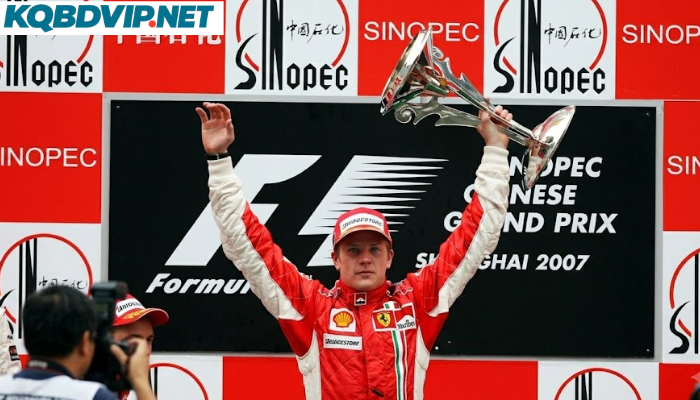
The truth is that Kimi Raikkonen remains one of the most enigmatic and beloved figures in the history of Formula One due to his uncompromising personality and raw natural talent. While fans often look for detailed KQBD to understand the performance of their favorite teams in other sports, the statistical impact of the Finnish driver in racing provides a similarly deep narrative of consistency and speed. His journey from a young driver with minimal car racing experience to a world champion is a testament to the fact that pure ability can sometimes override traditional career paths. This unique trajectory ensured that he would always be remembered as a driver who did things on his own terms regardless of external pressures.
A significant portion of the sporting world appreciates the stoic nature that became his trademark throughout a career spanning two decades. For those who follow intense competitions, the shift from high-speed racing to the analytical world of Thống Kê Bóng Đá might seem vast, yet both require a specific type of mental fortitude and focus on the final result. He never sought the spotlight or the approval of the media, which ironically made him one of the most marketable and popular figures in the paddock. This authenticity is rare in an era of highly managed public relations and scripted interactions.
The Technical Prowess Behind Kimi Raikkonen and His Ferrari Success
One thing very few actually pay attention to is the sheer technical adaptability required to win a world championship with a team as prestigious as Ferrari. When Kimi Raikkonen secured the title in 2007, he did so by overcoming a significant points deficit in the final races of the season, showcasing a level of calm that few others could maintain. His ability to communicate exactly what the car needed to his engineers without unnecessary chatter became a legendary trait within the Scuderia.
Beyond that, his relationship with the mechanical aspects of the vehicle allowed him to excel during the V10 and V8 eras of the sport. Notably, his stint with Ferrari was defined by a specific driving style that rewarded late braking and high entry speeds into corners. While modern data analysis often mirrors the precision found in Thống Kê Bóng Đá, the subjective feel of a driver like the Finn was often the deciding factor in optimizing race setups during his peak years.
Engineering Harmony at Maranello
The integration of his feedback into the development of the F2007 and F2008 models allowed Ferrari to remain a dominant force during the late 2000s. He possessed an innate understanding of tire management and fuel loads that often puzzled his rivals. In addition, his technical feedback was known for being concise and highly accurate, which saved the team hundreds of hours in the simulator and on the test track.
Another key aspect of his time at Ferrari was his ability to perform under the immense pressure of the Italian media and the Tifosi. Unlike other drivers who might have been overwhelmed by the expectations of the national team, he remained unbothered by the noise. This psychological strength allowed him to focus entirely on the physical act of driving, which is where he felt most at home throughout his long career.
The Longevity and Evolution of Kimi Raikkonen at Sauber and Lotus
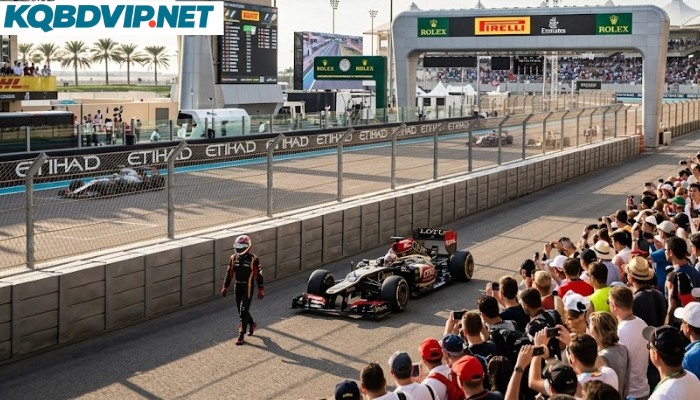
After a brief hiatus from the sport to explore world rallying, his return with the Lotus F1 Team proved that his speed had not diminished with age. Many critics doubted whether a veteran could compete with the new generation of talent, but Kimi Raikkonen silenced them with a stunning victory at the 2012 Abu Dhabi Grand Prix. This period of his career highlighted his ability to lead a mid-field team toward the front of the grid through sheer consistency and race craft.
In addition, his final years at Alfa Romeo, formerly Sauber, brought his career full circle to the team where he first started in 2001. He served as a mentor and a benchmark for the team, providing the necessary stability to develop their chassis and power unit integration. Just as enthusiasts might use Thống Kê Bóng Đá to track the progression of a rising star in the leagues, racing fans tracked his sector times to see how a master of the craft could still extract maximum performance from limited machinery.
Mentorship and Technical Stability
His presence at Alfa Romeo was not merely a ceremonial farewell but a vital part of the team’s technical progression. He was able to identify fundamental flaws in the car’s aerodynamic balance that younger drivers might have overlooked. This experience was invaluable for the engineers who were trying to bridge the gap between the midfield and the top-tier constructors.
Notably, his work ethic behind the scenes was often much higher than his public “Iceman” persona suggested. He would spend hours reviewing telemetry data and discussing mechanical adjustments with his lead mechanic. This dedication ensured that even in his final seasons, he was capable of delivering points-scoring finishes that were crucial for the team’s financial and competitive standing in the constructors’ championship.
The Cultural Impact of the Iceman Persona
The persona of the Iceman was not a marketing construct but a genuine reflection of a man who valued privacy and simplicity above all else. In a world where athletes are expected to be constant content creators, his refusal to engage in the theatrics of the sport made him a cult hero. This brand of stoicism resonated with fans who were tired of the hyper-commercialized nature of modern professional sports.
Beyond that, his famous radio messages became a part of the sport’s folklore, representing a driver who simply wanted to be left alone to do his job. This approach to professional life is something that many find aspirational. Whether it was his blunt answers in press conferences or his nonchalant attitude toward the glamour of Monaco, he remained the most authentic version of himself from his first race to his last.
Authenticity in the Digital Era
In an age where every move is scrutinized on social media, his lack of a filter was refreshing for the global audience. He did not care about his follower count or his public image, which ironically made him more popular than many of his peers who tried too hard to be liked. This authenticity created a loyal fan base that followed him across different teams and even different racing categories.
Another key aspect of his cultural footprint was his ability to bridge the gap between the old school of racing and the new technology-driven era. He was a link to a time when racing was more about the man and the machine and less about the data streams. However, he was still able to master the complex hybrid systems of the modern era, proving that a true racer can adapt to any environment as long as there is a steering wheel and a goal.
The Final Lap and Future Influence
As he moved away from the cockpit of a Formula One car, his influence continued to be felt through the drivers he inspired and the standards of professionalism he set. The transition from active competition to a life away from the circuit has been handled with the same quiet dignity that defined his racing years. For those who enjoy the analytical side of sports, such as the detailed insights provided by Thống Kê Bóng Đá, the career of Kimi Raikkonen offers a wealth of data to prove that longevity in high-performance environments is a result of both talent and mental discipline.
Create an account to follow these deep dives into racing history and the metrics of elite performance. Discover our latest analysis of how veteran competitors maintain their championship form over decades of high-stakes racing. Sign up today.
