

Key Highlights
- Urban mobility is changing: Congestion, parking constraints and evolving lifestyles are increasing demand for practical, city-friendly vehicles.
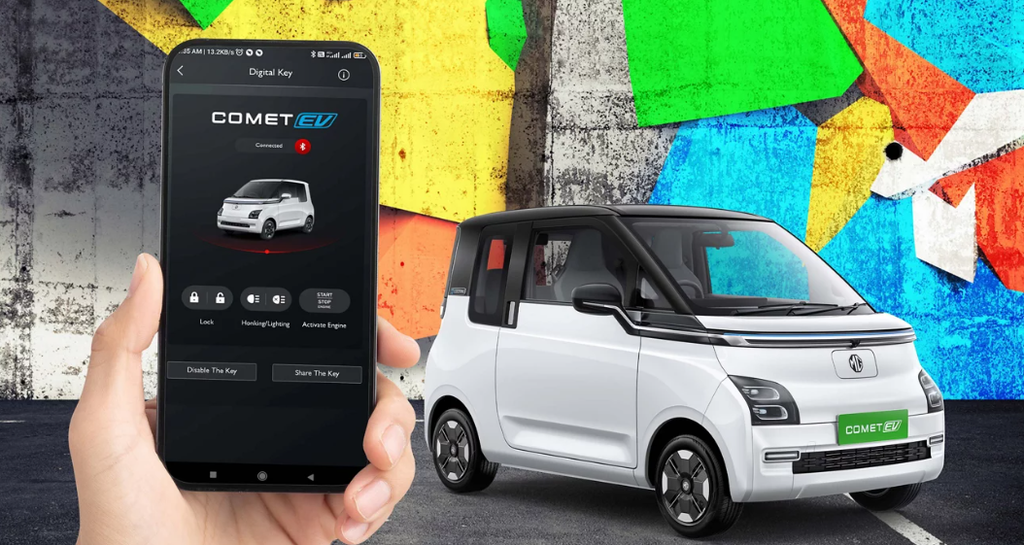
- Ultra-compact EVs offer a focused solution: Models such as the MG Comet EV demonstrate how compact design and electric technology can meet everyday urban commuting needs.
- EV adoption goes beyond the powertrain: Affordability, charging access, predictable running costs and ease of ownership are critical to building consumer confidence.
For a long time, buying a car in India was about more than getting from one place to another. It was a milestone, a sign of progress and, for many families, something to aspire to. Bigger cars often meant bigger ambitions. But life in India’s busiest cities is changing that idea.
With city commutes defined by traffic and tight parking, drivers are looking for cars that make daily travel easier. Ultra-compact EVs offer a practical alternative, challenging established automotive brands to rethink what urban drivers really need. How do you stay relevant when the things customers value are changing? And how do you bring decades of experience into a market where convenience, technology and everyday usability matter more than ever?
The City Is Changing What People Want from a Car
Anyone who drives regularly in Mumbai, Bengaluru or Delhi knows that getting somewhere can take more effort than the distance suggests. A short trip can turn into an hour in traffic. Finding a parking spot can become a task in itself. And a car that feels perfectly suited to a highway journey may seem unnecessarily large when navigating a crowded market or a narrow residential lane.
City driving is making practicality just as important as comfort and performance. For young professionals and smaller households, ultra-compact EVs offer easier parking, simpler manoeuvring and quiet, emission-free driving, making them a practical choice for everyday commutes.
The MG Comet EV is an example of this city-first approach. Instead of simply taking a conventional hatchback and replacing its engine with an electric motor, it approaches the problem from a different angle: what does someone actually need from a car used mainly for urban journeys?
That is an important distinction. Innovation is not always about giving customers more features or more power. Sometimes, it is about making a product fit more naturally into their lives.
Electric Mobility Has to Work in Everyday Life
Much of the conversation around electric vehicles revolves around range, battery capacity, charging speed and performance. These are important questions, especially for people considering their first EV. But most buyers have a more immediate concern: will an electric car work for the way I live?
Can it manage the daily office commute? Is there somewhere convenient to charge it? Will the running costs be manageable? What happens if the battery needs attention? Will owning an EV remain simple after the initial excitement fades? That’s what builds confidence. Easy-to-use technology, clear charging guidance and reliable service can actually make electric mobility a more natural part of everyday life.
This is an important consideration for MG Motor India as the Indian market becomes more familiar with electric mobility. The opportunity is not simply to put more electric vehicles on the road. It is to help people understand how these vehicles fit into their daily routines and what ownership will actually involve.
For the wider EV market in India, the same principle applies. Environmental concerns may encourage people to explore electric vehicles and technology may catch their attention. But a purchase decision still comes down to practical questions of affordability, reliability and convenience. The brands that address those concerns honestly will be better placed to build lasting trust.
Heritage Means More When It Helps Shape What Comes Next
A long automotive history can be an advantage, but it can also become a comfortable place to hide. A brand can spend years celebrating its past and still struggle to connect with the people buying cars today.
The challenge is to make heritage relevant to the present . MG began as Morris Garages in 1924, building its reputation around British motoring and sports cars. Its description of itself as a “100-year-old start-up” captures an interesting idea: a company can have a century of history and still need the curiosity and willingness to change of a much younger business.
That matters in an industry where technology, consumer expectations and ideas about ownership are evolving quickly. Heritage can give a brand recognition and a sense of continuity, but it cannot replace the need to create products that people want now.
The electric MG Cyberster offers one illustration of how this can work. It draws on the spirit of the historic MGB Roadster while reimagining the sports car through electric performance and contemporary technology. Rather than simply recreating an old favourite, it takes an idea from the past and gives it a different purpose in the present.
The lesson extends beyond premium sports cars. A vehicle such as the MG Comet responds to a very different set of needs, shaped by crowded streets, limited parking and increasingly digital lifestyles. Its relevance comes from understanding what today’s urban drivers need. For automotive brands in India, heritage matters most when it inspires new ideas rather than holds them back.
The Experience Around the Car Matters Too
Buying a car is about more than specifications and price. Customers also value a smooth buying journey, clear information and reliable after-sales support. In the premium segment, the overall experience can matter just as much as the vehicle itself. The showroom, the conversation with the sales team and the support that follows all contribute to how the brand is perceived .
MG SELECT reflects this changing approach to premium automotive retail. With models such as the Cyberster and MG M9, it places greater emphasis on a curated buying experience rather than treating the dealership as simply a place to display vehicles. The broader point is that premium value increasingly comes from the whole experience, not just the badge or the specification sheet.
The idea matters just as much for people entering the EV market for the first time. They may need straightforward explanations of home charging, battery warranties, servicing and everyday running costs. A patient, informed conversation can be more valuable than a long list of technical features.
Behind the product experience, there is also the question of how vehicles are developed for the market they serve. The SAIC–JSW partnership for MG’s India operations, established in 2023, brought localisation, technology and electric mobility into sharper focus . In a market as varied as India, global expertise needs to work alongside local understanding, from customer budgets to infrastructure and driving conditions.
The next stage of automotive innovation will depend not only on what manufacturers build, but also on how well they help people live with it.
Sometimes, the Smarter Choice Is the Smaller One
Ultra-compact EVs will not suit everyone. Families needing more space, people who regularly travel long distances and households without convenient charging access may have different priorities. Nor can electric cars alone solve the challenges of urban transport. Better public transport, walkable neighbourhoods, cycling infrastructure and sensible parking policies all have a role to play.
Still, compact electric cars offer a useful alternative for everyday city journeys. They encourage manufacturers and buyers alike to question the assumption that a car needs to be bigger, more powerful or more feature-rich to be better.
For this category to grow, the practical details must come together: an accessible purchase price, dependable battery performance, convenient charging and reliable after-sales support. The vehicle is only one part of the equation.
For MG Motor India and other established automotive brands, the larger challenge is to keep pace with how people live and travel. From a garage in 1924 to a market being reshaped by electric powertrains, digital technology and changing expectations, the journey is actually a reminder that longevity alone does not guarantee relevance.
What matters is the willingness to keep listening, learning and adapting. The future of urban mobility may not be defined by the car that does everything. It may be shaped by vehicles that do the everyday things well, without making life more complicated than it needs to be.
After a hundred years, perhaps that is what it means for an automotive brand to keep moving forward: not simply to travel further, but to understand where people need to go next.
