

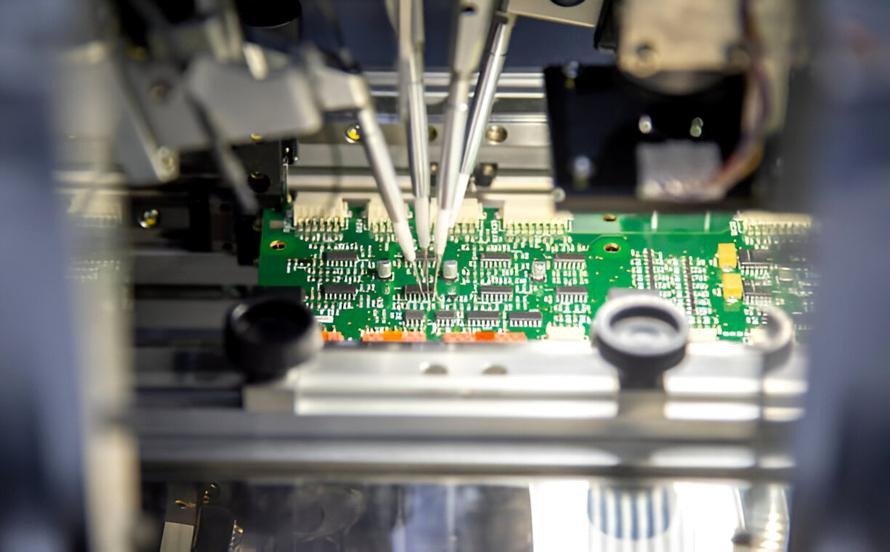
Printed circuit boards (PCBs) are essential to modern electronic products, providing the electrical connections required for components to communicate and function together. From smartphones and industrial controllers to automotive electronics and medical equipment, PCBs form the foundation of countless electronic systems. PCB assembly transforms a fabricated circuit board into a functional electronic unit by installing components, creating solder connections, and verifying electrical performance.
As electronic products become smaller and more complex, manufacturers must maintain accurate component placement, reliable solder joints, and consistent production quality. Understanding the PCB assembly process helps businesses make informed decisions about manufacturing methods, component selection, inspection procedures, and production planning.
What Is PCB Assembly?
PCB assembly is the process of mounting and connecting electronic components to a printed circuit board according to an approved design. The finished assembly, commonly called a PCBA, contains the components and electrical connections required to perform specific functions.
Typical components include integrated circuits, resistors, capacitors, diodes, transistors, connectors, and power management devices. Depending on the application, a board may also include sensors, communication modules, or specialized electronic components.
The assembly process varies according to the board layout, component packages, electrical requirements, and expected production volume. Some designs use fully automated surface-mount processes, while others require through-hole components or a combination of different assembly technologies.
PCB assembly is used across industries because it enables manufacturers to produce compact, organized, and functional electronic systems. The quality of the finished assembly depends on design accuracy, component quality, manufacturing controls, and appropriate testing.
Common PCB Assembly Technologies
Different assembly technologies support different component types and product requirements. Selecting the correct method helps manufacturers achieve the required performance and production efficiency.
Surface-Mount Technology
Surface-mount technology (SMT) is widely used in modern electronics manufacturing. Components are placed directly onto conductive pads on the PCB surface rather than inserted through drilled holes.
The process generally involves applying solder paste, positioning components with automated pick-and-place equipment, and passing the board through a reflow soldering oven. Controlled heating melts the solder paste and forms electrical and mechanical connections.
SMT supports compact board designs, high component density, and efficient automated production. It is commonly used for consumer electronics, communication devices, industrial controls, and automotive systems.
Through-Hole Technology
Through-hole technology (THT) involves inserting component leads through holes in the circuit board and soldering them to conductive pads. This approach is often suitable for connectors, larger components, and parts requiring strong mechanical attachment.
Depending on the design, manufacturers may use manual soldering, wave soldering, or selective soldering. Although through-hole assembly can require additional processing time, it remains important for many electronic applications.
Mixed-Technology Assembly
Some circuit boards combine SMT and through-hole components. These designs require careful process planning because different components may have different soldering and thermal requirements.
Manufacturers must select suitable assembly sequences and inspection methods to prevent component damage and maintain solder joint quality. Mixed-technology assembly is common in products that combine compact integrated circuits with larger connectors, power components, or mechanical interfaces.
The PCB Assembly Manufacturing Process
A well-organized production workflow helps ensure that assembled boards meet their engineering specifications.
The process begins with an engineering review of the PCB layout, schematic, bill of materials (BOM), Gerber files, and assembly drawings. Design-for-manufacturing analysis helps identify possible problems, such as insufficient component spacing, unsuitable pad dimensions, and inaccessible test points.
Once the design is approved, components are sourced according to the BOM. Incoming inspection may include verifying part numbers, package types, supplier documentation, and visible component condition. Effective component management reduces the risk of incorrect or unsuitable parts entering production.
For SMT boards, solder paste is deposited onto PCB pads through a stencil. Automated placement equipment positions each component according to the assembly data. The board then passes through reflow soldering, where the solder forms the required connections.
Through-hole components are installed and soldered using the method selected for the product. After assembly, the board undergoes inspection to identify problems such as solder bridges, component misalignment, and incomplete solder joints.
The final stage includes electrical or functional testing as required. These checks help confirm that the assembled board meets its specified performance requirements before shipment or integration into a finished product.
Quality Control and Testing in PCB Assembly
Quality control is essential because assembly defects can affect electrical performance, reliability, and product safety. Inspection methods should be selected according to board complexity, component types, and application requirements.
Automated optical inspection (AOI) uses cameras and image-processing systems to identify visible defects, including misplaced components and certain soldering problems. X-ray inspection can help examine hidden solder joints in packages such as ball grid arrays.
Electrical testing provides additional verification. Continuity checks help identify open or unintended connections, while in-circuit testing can evaluate selected electrical characteristics. Functional testing verifies whether the board operates according to its intended design.
Manufacturers may also use process monitoring, equipment calibration, operator training, and documented work instructions to maintain consistent production quality. Traceability records can support investigations when component or manufacturing issues arise.
The appropriate level of testing depends on the intended application. A simple consumer device may have different inspection requirements from an industrial controller or a medical electronic system.
Benefits of Professional PCB Manufacturing and Assembly
A controlled assembly process provides several advantages for electronic product developers and manufacturers.
Improved reliability: Correct component placement and reliable solder connections help reduce assembly-related failures.
Production efficiency: Automated equipment and standardized procedures can increase output consistency and reduce repetitive manual work.
Compact product designs: SMT supports the placement of small components and helps manufacturers produce circuit boards with higher component density.
Reduced rework: Early design reviews, component verification, and inspection checkpoints can identify problems before they affect larger production batches.
Scalable manufacturing: Depending on production capacity, manufacturers may support prototype boards, small batches, and larger recurring orders.
Technical support: Experienced manufacturing teams can identify design-related assembly challenges and recommend practical improvements before production begins.
These advantages depend on the manufacturer’s capabilities, process controls, and experience with the relevant electronic product.
Common PCB Assembly Challenges
PCB assembly can involve technical and logistical challenges that require careful planning. One common issue is component availability. Shortages or discontinued parts may delay production, while substitutions can affect electrical performance or compatibility. Alternative components should receive appropriate engineering approval before use.
Complex board layouts can also create assembly difficulties. Fine-pitch components, high-density designs, and small solder pads may require precise placement and specialized inspection equipment.
Thermal management is another consideration. Components and PCB materials must tolerate the temperatures associated with soldering and normal operation. Manufacturing processes should follow suitable thermal profiles to reduce the risk of damage.
Finally, production schedules can be affected by design changes, incomplete documentation, or late component deliveries. Clear communication between engineering, procurement, and manufacturing teams helps reduce these risks.
How to Select a PCB Assembly Manufacturer
Choosing a manufacturing partner requires evaluating technical capabilities, quality controls, and production flexibility. Businesses should confirm that the manufacturer supports their board dimensions, component packages, assembly technologies, and required production volumes.
Inspection and testing capabilities should also match the product’s requirements. Manufacturers should be able to explain their quality procedures, component sourcing practices, traceability options, and relevant certifications.
For new designs, prototype production can help identify assembly issues before larger orders begin. Businesses should also evaluate communication, production transparency, delivery estimates, and the manufacturer’s approach to engineering changes.
Comparing suppliers on overall value rather than price alone helps account for quality, rework risks, delivery reliability, and technical support.
Conclusion
PCB assembly is a fundamental manufacturing process that transforms bare circuit boards into functional electronic units. By combining appropriate assembly technologies, accurate component placement, reliable soldering, and systematic testing, manufacturers can produce boards that meet a wide range of electronic product requirements.
Selecting an experienced manufacturing partner helps businesses manage technical challenges, maintain consistent quality, and plan for changing production needs. Companies developing new electronics or expanding existing production can benefit from professional PCB Assembly Services tailored to their design specifications, testing requirements, quality expectations, and manufacturing objectives.
