

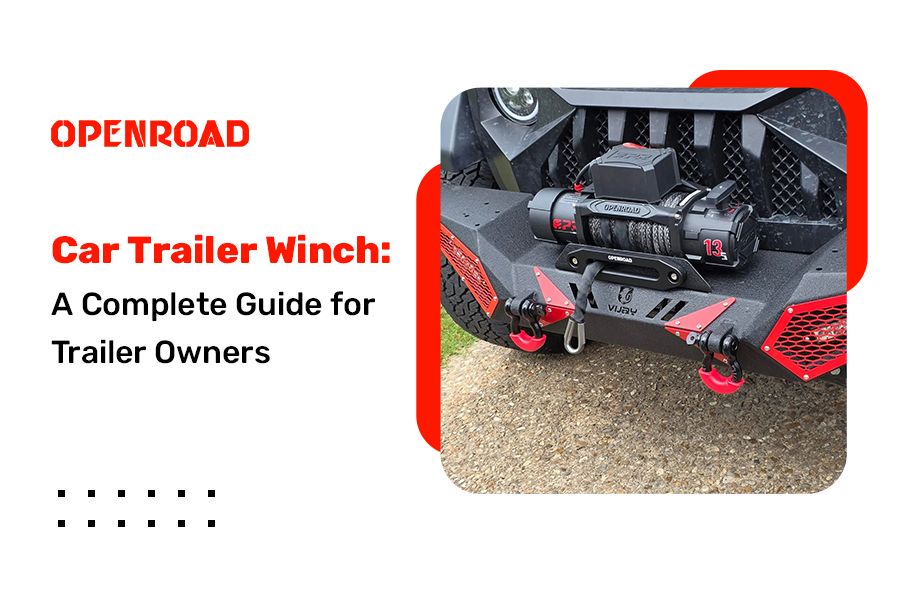
When a car won’t start, has poor traction, or must be loaded on uneven ground, trailering it might be difficult. A good winch pulls the vehicle along the trailer bed without engine power, improving control. For car carriers, recovery enthusiasts, and truck owners who carry vehicles frequently, choosing the appropriate car trailer winch is crucial to safe loading.
Consider the vehicle’s weight, the trailer’s design, the power supply, and how often you’ll use it before buying one. These details are more important than choosing the winch with the highest advertized pulling capacity.
What Is a Car Trailer Winch?
A car trailer winch is a mechanical device used to hoist autos onto a trailer. It slowly draws the vehicle toward loading by winding a rope or cable around a drum using a motor or manual mechanism.
Electric trailer winches are excellent for loading disabled cars, project vehicles, and vehicles that cannot climb ramps. The operator pulls a large car while keeping bystanders out of the way.
Winches do not replace trailer brakes, wheel restraints, rated attachment points, or safe loading. The vehicle and trailer must stay steady throughout operation.
Choosing the Right Winch for Trailer Loading
The right winch for a trailer depends on the load and conditions. A vehicle’s whole weight is a good starting point, but ramp slope, rolling resistance, tire condition, and surface friction affect pulling force.
Loading a free-rolling car onto a level trailer is different from dragging a locked car up steep ramps. The second condition can cause significant opposition.
Choose a winch with the right pulling capability for the job and follow the manufacturer’s line pull, installation, and operating limits. Do not assume the advertized maximum pulling rating applies to all drum rope layers or loading conditions.
Check the trailer’s frame and mounts. A powerful winch on an unreinforced plate can be dangerous.
When a 12V Winch Makes Sense
Many trailer owners choose a 12v winch because it works with a 12-volt battery system. This system is excellent for loading automobiles without mains power away from a workshop.
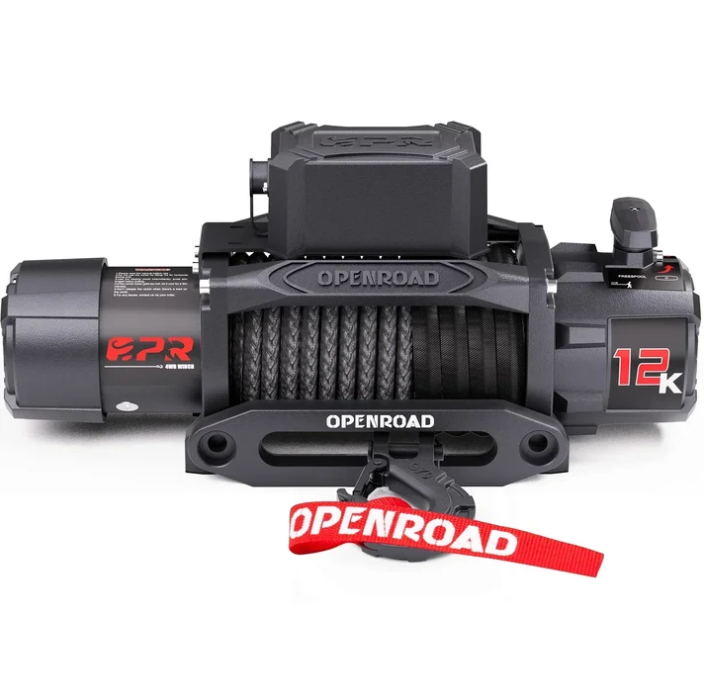
Check the winch’s current draw, battery capacity, cable size, grounding, and electrical protection before installation. Under load, electric winches use a lot of electricity; thus, an inadequate battery or poorly connected wiring might affect performance.
Consider battery charging between vehicles if you load many in one day. Power reliability is as crucial as winch capacity.
Finding the Best Truck Winch for Your Setup
The best truck winch may not be the strongest. It fits your vehicle, load, mounting, and recovery needs.
A truck recovery winch can be put on a front bumper for off-road help, but a trailer-loading winch needs a secure mounting point aligned with the draw. Before loading trailers with a vehicle recovery winch, check the manufacturer’s approval.
Openroad winches may appeal to truck and off-road vehicle owners seeking rescue equipment. OPENROAD’s Panther Series synthetic-rope winches can handle 10,000, 12,000, and 13,500 pounds. Before installing one on a trailer, check the specs and intended use of these vehicle recovery products.
Is a Portable Winch for Truck Owners Worth It?
Truck owners can employ a portable winch to serve multiple compatible vehicles or job locations. Secure anchoring and mounting hardware are still needed despite portability.
Consider whether your winch and trailer can use a removable mounting plate for infrequent loading. Regular business use may warrant permanently placed equipment that is easier to examine and operate.
Never use a homemade anchor point or winch to an untested tie-down loop. Keep spectators away from the tensioned line, use compatible equipment, and stop if the trailer shifts or the vehicle moves unpredictably.
Comparing Truck Winches for Sale
Compare more than pulling capacity when buying truck winches for sale. Rope material, line length, motor specifications, control options, electrical requirements, mounting dimensions, and warranty conditions affect product suitability.
Synthetic rope is lighter and easier to handle than steel cable, but it still needs maintenance. Remote controls can assist workers in seeing, but they don’t replace vehicle, trailer, and pulling line monitoring.
For any winch-for-trailer configuration, make sure the rope’s working length reaches the vehicle’s connection point without a hazardous extension. Use appropriate, rated recovery equipment and follow manufacturer rigging directions.
Prepare for Safer Vehicle Loading
When used properly, a car trailer winch can simplify vehicle shipping. Before buying, check the vehicle’s weight, condition, trailer geometry, electrical supply, and mounting strength. Consider the parameters before assuming every truck winch can load trailers.
With the correct equipment and attention, packing a non-running car or prepping it for travel is easier. You want to control the vehicle, safeguard your equipment, and make every loading process safer, not just pull harder.
