

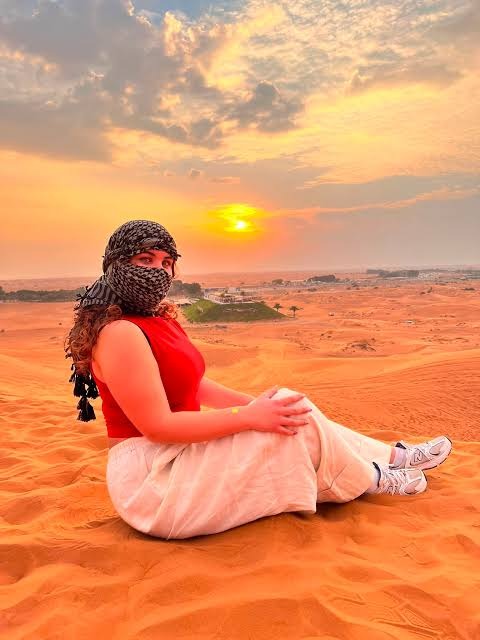
There is a short period in the desert when the landscape seems to change by the minute. As the sun moves toward the horizon, the bright sand becomes warmer, shadows stretch across the dunes, and the entire landscape takes on a softer appearance.
For photographers and travelers alike, this makes sunset one of the most interesting moments to experience the Abu Dhabi desert. The dunes provide natural shapes, wide horizons, and constantly changing light, creating opportunities for photographs that look very different from daytime desert images.
You do not need professional photography equipment to appreciate this transformation. A smartphone and a little patience can be enough to capture memorable moments.
Reaching the Desert Before Sunset
The key to photographing a desert sunset is arriving before the sun reaches the horizon.
The Al Khatim Desert, around 45 minutes from central Abu Dhabi, provides a broad landscape where the changing light can be observed without the visual distractions of the city.
Arriving earlier also gives visitors time to explore the surroundings and identify interesting dunes before the strongest sunset colors appear.
Instead of immediately looking for the perfect photograph, it can be useful to spend a few minutes observing how the light falls across the sand.
Why Dunes Work So Well in Photographs
Desert dunes are naturally photogenic because of their curves and changing elevations.
A single dune can create several different compositions depending on where the photographer stands. From one position, the slope may form a sweeping line toward the horizon. From another, the same dune can become a foreground element leading toward the sky.
The absence of buildings and other large structures also keeps attention on the natural landscape.
This simplicity allows photographers to experiment with shapes, shadows, silhouettes, and open space without needing a complicated scene.
The Golden Hour Effect
As sunset approaches, the quality of light becomes softer.
The harsh brightness of midday begins to disappear, and the sand can take on golden, orange, or amber tones. Shadows become longer and more defined, revealing the texture of the dunes.
This period is often called the golden hour because of the warm appearance created by low-angle sunlight.
For desert photography, the effect can be especially noticeable because there is little vegetation or architecture to interrupt the light. The dunes themselves become the main subject.
Finding the Right Position
A good sunset photograph does not always require standing at the highest dune.
Sometimes a lower position can create a stronger image because the foreground sand becomes more prominent. Standing on a ridge, meanwhile, can produce a wider view of the horizon.
Moving a few steps can completely change the composition.
For this reason, visitors should avoid taking only one photograph from one position. Walking around safely and looking at the landscape from different angles can reveal better opportunities.
Photographing the Changing Shadows
Shadows are one of the most interesting elements of desert sunset photography.
As the sun gets lower, the shadows created by the dunes become longer. These darker areas contrast with the illuminated sand and emphasize the curves of the landscape.
A photograph that focuses only on bright sand may appear flat. Including both light and shadow can give the image greater depth.
This is particularly useful when photographing larger dunes because the changing shadows reveal their shape more clearly.
Capturing the Horizon
The wide desert horizon provides another simple photographic opportunity.
A clear sky above the dunes can create a minimalist composition, especially when the sun is close to the horizon.
Photographers can experiment with how much sky and sand they include. A composition dominated by sand emphasizes the texture and scale of the dunes, while including more sky creates a stronger sense of openness.
The best balance depends on what the photographer wants the image to communicate.
People Can Add Scale
A person standing or walking on a dune can help communicate the enormous scale of the desert.
Without a person in the frame, it can sometimes be difficult to understand how large a dune actually is. Including a figure provides a natural reference point.
Couples, families, and friends can therefore become part of the photograph rather than simply taking pictures of the landscape.
A person walking along a ridge or standing against the horizon can create a simple silhouette as the sun gets lower.
Using a Smartphone in the Desert
Professional cameras are not necessary for enjoyable desert photography.
Modern smartphones can capture strong sunset images, particularly when the photographer pays attention to composition rather than relying entirely on automatic settings.
Keeping the lens clean is important because sand and dust can easily affect image quality. Holding the phone steadily and avoiding excessive digital zoom can also help.
It can be useful to take several versions of the same scene with slightly different framing. The simplest image is not always the strongest one.
When to Put the Camera Down
Photography can easily become a distraction if every moment is viewed through a screen.
There is value in taking a few photographs and then simply watching the sunset.
A desert safari abu dhabi experience can provide the opportunity to see the dunes during this changing light, but the most memorable part may be the moment when you stop photographing and simply watch the landscape transform.
The desert does not stay the same for long during sunset, so experiencing it directly can be just as important as recording it.
Photographing From the Dunes
The elevated position of a dune provides opportunities for wider landscape images.
From the top, multiple layers of sand can appear one behind another, creating depth toward the horizon.
Photographers can use the curves of the dunes as natural leading lines. A ridge can guide the viewer’s eye toward the sun, another person, or a distant section of the landscape.
Because the desert contains repeating shapes, even small changes in position can create noticeably different images.
Silhouettes After the Sun Drops
The photographic possibilities do not necessarily end when the sun disappears.
As the sky begins to darken, people and objects can appear as silhouettes against the remaining light.
A camel, a person walking along a dune, or the outline of a ridge can create a simple image with strong contrast.
This short period after sunset can be worth photographing because the colors in the sky may remain visible even after the sun itself is no longer above the horizon.
Making the Experience Comfortable
Desert photography involves spending time outdoors, so practical clothing matters.
Comfortable footwear is useful when walking over sand, while lightweight clothing can make the experience easier during warmer periods.
A light jacket or shawl may be useful later in the evening as the temperature changes.
Visitors should also protect their cameras and phones from loose sand. Keeping equipment protected when it is not being used can help prevent dust from entering sensitive areas.
Photography Beyond the Sunset
The desert offers more than one photographic moment.
Before sunset, the stronger daylight can reveal the texture and shape of the dunes. During sunset, warmer colors and longer shadows become dominant. Afterward, the evening atmosphere changes again as the sky darkens.
This progression gives photographers several different visual opportunities during a single visit.
Instead of trying to capture everything in the first few minutes, it can be more rewarding to let the landscape change naturally.
The Human Side of Desert Photography
Some of the strongest travel photographs are not simply pictures of places. They show how people experience those places.
A couple watching the sunset, friends walking across the dunes, or a family standing together against the horizon can communicate the atmosphere of the experience.
These photographs preserve not only what the desert looked like but also how the visit felt.
That is why sunset photography can become more personal when visitors include themselves or their companions in some of the images.
Respecting the Desert While Taking Photos
Good photography should not come at the expense of the environment.
Visitors should avoid damaging vegetation, disturbing animals, or leaving anything behind while searching for a particular composition.
It is also important to follow the guidance of tour staff, particularly around vehicles and dune edges.
The desert is part of the experience, so keeping it clean and undisturbed helps preserve the same setting for future visitors.
The Best Part May Be the Moment Itself
A photograph can preserve the colors and shapes of a sunset, but it cannot completely reproduce the experience of standing among the dunes.
The changing temperature, open surroundings, silence, and gradual disappearance of the sun are all things that have to be experienced directly.
Taking photographs is a way to remember that moment, not necessarily a replacement for experiencing it.
For many travelers, the most valuable part of the evening is simply having time to watch the desert change.
Conclusion
Sunset gives the Abu Dhabi desert a completely different appearance. Golden light, long shadows, curved dunes, and an open horizon create natural photographic opportunities for both professional photographers and casual travelers.
With a little patience and attention to composition, even a smartphone can capture memorable images. More importantly, arriving early and staying through the changing light allows visitors to experience the landscape rather than simply taking a quick photograph.
The desert sunset is brief, but that is part of its appeal. For a few moments, the dunes become a constantly changing combination of light, shadow, and color—an experience worth both photographing and simply watching.
