

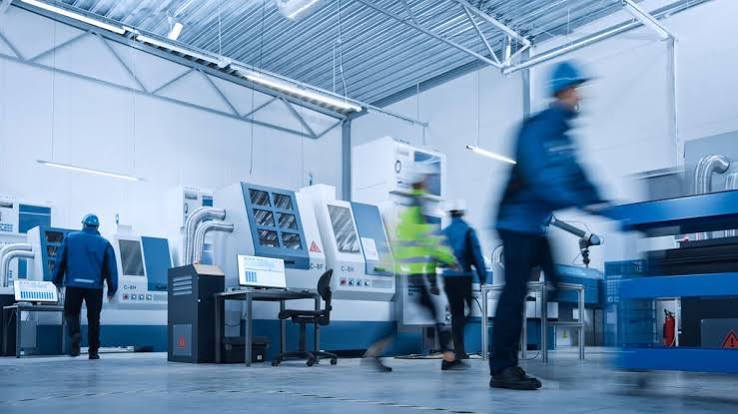
In the highly competitive sector of B2B manufacturing, the demand for high-precision, scalable, and automated production solutions continues to accelerate. From automotive and aerospace engineering to medical device fabrication, component tolerances are becoming exponentially tighter while production deadlines steadily shrink.
To meet these rigorous industrial demands, facility managers, production engineers, and procurement officers are increasingly upgrading their shop floors with advanced Computer Numerical Control (CNC) equipment. Partnering with a reliable and innovative manufacturer like Yashu CNC provides modern manufacturing facilities with the cutting-edge turning and milling centers required to produce complex parts with exceptional speed and consistency.
Transitioning to next-generation CNC systems is no longer a luxury for large corporations; it is a fundamental requirement for any machine shop looking to remain competitive, minimize labor bottlenecks, and maximize overall return on investment.
The Shift to Multi-Axis Machining and Y-Axis Integration
Historically, manufacturing a part that required both turning and milling meant moving the workpiece across multiple machines. Traditional two-axis lathes handled the cylindrical turning, after which an operator manually transferred the component to a secondary milling machine to complete complex geometries. This multi-step process introduces significant inefficiencies, including extended cycle times, increased labor costs, and the constant risk of alignment errors during the physical transfer.
Next-generation CNC equipment completely eliminates this production bottleneck by combining turning, milling, and drilling operations within a single, unified setup. Modern CNC lathes equipped with an advanced Y-axis and live tooling often featuring 8-tool or higher configurations allow for eccentric milling, polygon machining, and off-center drilling without ever removing the workpiece from the main chuck.
By machining the component entirely in a single operation, manufacturers guarantee perfectly tight tolerances, eliminate secondary setup errors, and drastically reduce the total time it takes for a raw bar of metal to become a finished, ready-to-ship product.
Maximizing Throughput with Automated Truss Systems
In high-volume B2B manufacturing environments, idle machine time represents a direct loss of revenue. While high-speed spindles and rapid traverse rates certainly cut down the active cutting time, loading and unloading raw materials remain a massive inefficiency if left to manual labor.
To combat this, leading machine tool innovators have fully integrated truss automation into their heavy-duty CNC lathes. A truss automation system effectively transforms a standard lathe into a completely self-sufficient production cell. These automated loaders seamlessly pull raw bar stock or single parts into the machining area and extract the finished components without human intervention.
This enables smart production flow and “lights-out” manufacturing, where facilities can continue producing parts during overnight shifts without requiring a full staff on the floor. For businesses scaling up their output, investing in labor-saving automation is the most direct route to increasing profit margins and maintaining consistent delivery schedules.
Structural Rigidity: The Foundation of Precision
A CNC machine’s accuracy is ultimately only as reliable as its base. High-torque machining and heavy-duty industrial applications generate immense kinetic energy. If a machine lacks the structural integrity to absorb this energy, the vibration will transfer directly to the cutting tool. This results in ruined surface finishes, rapid tool wear, and a high rate of rejected parts.
The most robust CNC lathes and Vertical Machining Centers (VMCs) are built upon heavy-duty casting bases designed specifically for superior rigidity and vibration resistance. A solid foundation is especially critical when processing heavy bar materials or long continuous workpieces.
Combining a rigid casting with a high-torque power turret and a reliable tailstock provides the essential support needed for aggressive, heavy-duty cutting. This structural stability ensures that whether a shop is running a small batch of delicate aluminum parts or a high-volume run of hardened steel components, the machine maintains perfect repeatability down to the micron.
Custom Lathe Solutions for Niche Applications
While standard, off-the-shelf machinery works perfectly well for conventional operations, top-tier B2B manufacturers frequently encounter unique engineering challenges that require specialized equipment. True precision manufacturing goes beyond standard product lines; it involves tailoring the machinery to the exact specifications of the end user.
Whether an operation requires a highly compact CNC lathe designed specifically for small bar turning up to 25mm, or a massive, high-torque turning center capable of handling swing diameters over 500mm, customized machinery is revolutionizing shop floor capabilities.
By sharing specific engineering drawings and production goals with an experienced machine tool manufacturer, shop owners can secure custom-engineered solutions that integrate perfectly into their existing production lines. This collaborative approach ensures that businesses do not have to compromise on speed, stability, or footprint constraints.
Optimizing ROI with Vertical Machining Centers
While CNC lathes are the undisputed masters of cylindrical turning, Vertical Machining Centers (VMCs) are the backbone of complex prismatic part production. Many industrial manufacturing solutions require a hybrid approach, utilizing both turning and vertical milling to achieve the final desired output.
Compact, highly efficient VMCs are engineered to deliver powerful milling capabilities for highly detailed tasks. By pairing advanced CNC lathes with robust VMCs, a manufacturing facility creates a comprehensive, one-stop production environment capable of tackling virtually any client request.
Whether routing complex pockets in aerospace-grade aluminum or drilling precision grid patterns in steel mold bases, modern VMCs provide the high-speed spindle performance and tooling flexibility required to dominate modern supply chains.
Frequently Asked Questions
What is the primary advantage of a Y-axis on a CNC lathe?
A Y-axis allows the cutting tool to move vertically, perpendicular to the standard X and Z axes. This capability enables the machine to perform off-center milling, drilling, and tapping directly on the lathe. By eliminating the need to transfer the part to a separate milling machine, a Y-axis lathe drastically reduces cycle times, minimizes setup errors, and ensures superior dimensional accuracy for complex, multi-surface components.
How does truss automation improve manufacturing efficiency?
Truss automation utilizes a robotic gantry system to automatically load raw materials into the CNC machine and unload finished parts. This eliminates the downtime typically associated with manual human operation. It allows for seamless, continuous production even during unstaffed overnight shifts resulting in a massive increase in total factory throughput and a significant reduction in direct labor costs.
What is the difference between a CNC Lathe and a Vertical Machining Center (VMC)?
A CNC lathe operates by spinning the workpiece at high speeds while a stationary cutting tool shapes it, making it ideal for creating cylindrical parts like shafts, pins, and bushings. Conversely, a Vertical Machining Center holds the workpiece completely still on a table while a high-speed rotating cutting tool approaches from above to mill, drill, or carve shapes into the material. VMCs are best suited for flat, prismatic, or block-like components.
Why is the casting base of a CNC machine so important?
The casting base acts as the foundation of the entire machine. During heavy-duty cutting, the interaction between the tool and the metal generates severe vibrations. A heavy, rigid casting base absorbs and dampens these vibrations, preventing them from affecting the cutting tool. This structural stability is essential for achieving smooth surface finishes, extending the lifespan of expensive cutting tools, and maintaining tight micro-tolerances over thousands of production cycles.
Conclusion
Upgrading a facility’s CNC infrastructure is more than just a routine equipment replacement; it is a strategic investment in the future scalability of the business. As clients demand faster turnaround times and near-perfect tolerances, shops relying on outdated technology will quickly find themselves priced out of the market.
Integrating high-precision lathes, advanced vertical machining centers, and automated loading systems enables businesses to confidently bid on complex contracts, operate with significantly lower overhead, and deliver flawless components on schedule. By prioritizing rigid machine construction, multi-axis capabilities, and smart automation, modern manufacturers can secure a dominant, highly profitable position in the global industrial supply chain.
